

What Melinda French Gates Learned The Hard Way About Her Own Body
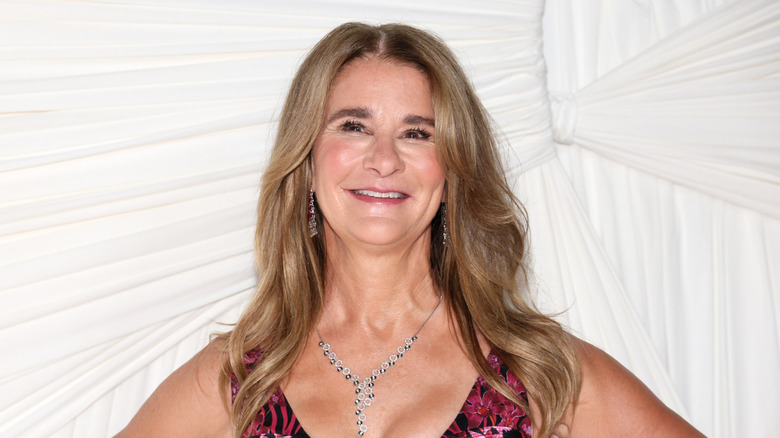
Melinda French Gates recently spoke about experiencing a health reality that millions of regular women have. In a 2026 appearance on the "Healthful" podcast, she shared that she started to get an inkling she was experiencing perimenopause as she entered her 40s. Initially, she tried brushing off the symptoms because she had a hard time believing that she could enter perimenopause shortly after welcoming a child in her late 30s.
However, after hearing her older friends' perimenopause experiences, Gates felt compelled to get a doctor's opinion. Although she took the right step, she found that she still had ways to go in her perimenopausal journey. "It was kind of unbelievable to me that, even in this, you know, unbelievably privileged situation I'm in, where I feel like I can get some of the best health care, it took me three doctors to really diagnose what I was going through and to get the right treatments for where I was," Gates explained.
With that, she shone a light on a glaring disparity in women's healthcare needs. A 2023 study in the Journal of Women's Health found that 49% out of 964 women who talked to a healthcare provider about their perimenopausal symptoms were dissatisfied with their response or found it negative. Some women were told that they were either too young or that their periods were too regular to warrant a perimenopause diagnosis. Others were diagnosed with perimenopause, but it was presented as "a part of life." Some respondents also noted that they had to see multiple healthcare providers, and many others reported that they didn't ultimately get the help they sought.
Healthcare providers may not be as informed about menopause
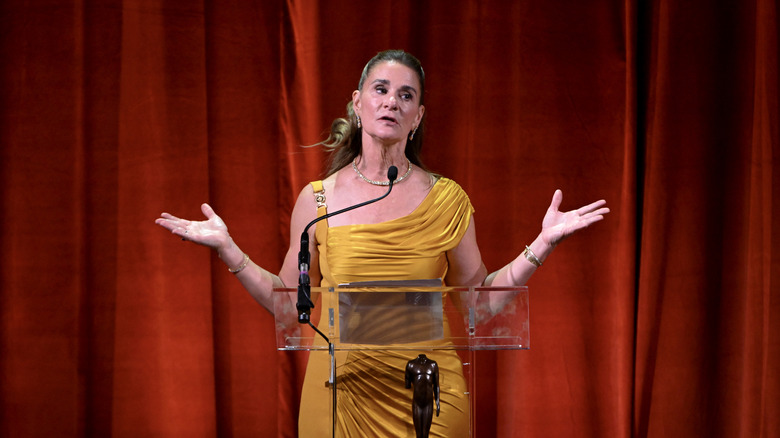
In a 2023 study in Menopause, 92.9% of the 145 US ObGyn residency Program Directors who responded to a questionnaire agreed that residents from across the country should be given a standardized menopause curriculum. However, only 31.3% of the respondents reported having a menopause curriculum in their residency program.
A 2017 survey of 183 residents published in Mayo Clinic Proceedings produced similar results, with 93.8% of respondents reporting that they believed it was important or very important to be trained to manage the symptoms of menopause. However, only 6.8% could say that they were adequately prepared to manage women who were experiencing menopause. Additionally, many of these residents gave incorrect answers on how to deal with menopausal symptoms. Moreover, in a chat with the New York Times, Dr. Stephanie S. Faubion, medical director for the North American Menopause Society, explained that menopause "might be covered in an hour in medical school."
Dr. Faubion shared another reason why something that every woman experienced was a blind spot for doctors. "The barrier is they've never been in this space and they don't know how to be in the space. There's a little bit of provider discomfort about the periods and uncomfortable sex and hot flashes." Ultimately, she believed that the idea that many practitioners had of menopause as being "one of those female things that will go away" would only go away once they realized that menopause could cause several health issues. Melinda French Gates did notably draw attention to some of these issues.
Knowledge about menopause is also limited amongst women
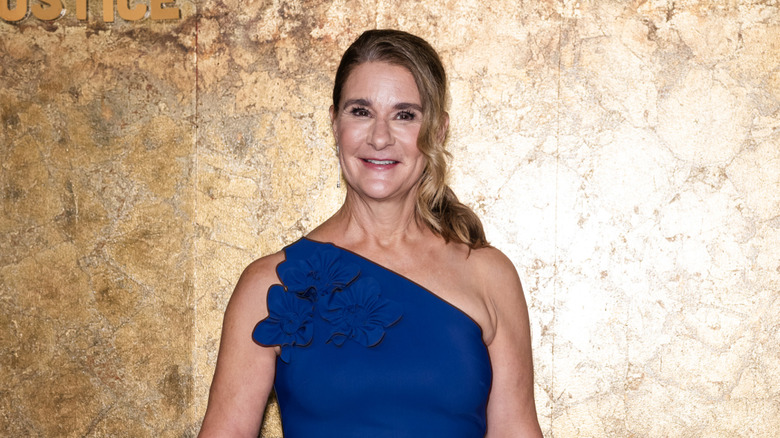
In Melinda French Gates' June 2026 op-ed for the New York Times, she wrote that as she was going through perimenopause, she realized that even with her decades of experience as a women's health advocate and all the knowledge from medical professionals at her disposal, she was still inadequately informed about menopause. The advocate described what she had learned in her health journey, writing, "Some symptoms, I learned, can have lasting consequences if left untreated: Insomnia can increase the risk of losing cognitive function or developing type 2 diabetes, and hormonal shifts can lead to heart disease."
According to John Hopkins Medicine, women who had experienced depression in the past were at a higher risk of having a depressive episode due to the hormonal fluctuations during menopause. Meanwhile, the Office on Women's Health notes that menopause can also lead to incontinence and increase the risk of osteoporosis and stroke. Menopause might also affect your sex drive.
With her words, Gates also drew attention to another lesser-talked-about aspect of menopausal care: the lack of knowledge among women. A 2021 study in Post Reproductive Health surveying 829 postmenopausal women found that 49% did not feel they had adequate knowledge about menopause. Several respondents noted that they were unsure how to recognize the symptoms of menopause since they were only aware of night sweats and hot flashes. 60% of women also said that they did not turn to a healthcare professional to get information about menopause, relying instead on social media and friends.