

The Biggest Hygiene Mistakes People Make At The Beach

Who doesn't love a day at the beach? Sun, sand, and the calming sound of the ocean waves lapping up against the shore. Alas, even the best day at the beach filled with loads of rest and relaxation can quickly go south when one throws caution to the wind and makes mistakes with their beach hygiene.
Aside from the various health hazards you should avoid at the beach, there are a number of unsanitary behaviors that experts advise against, not only for your own sake but also for the sake of your fellow beachgoers. "I think going to the beach is an art," travel expert Sarah Greaves-Gabbadon told The Washington Post in 2025. "A lot of people don't know how to beach, but there is an art to it."
From leaving your trash scattered across the sand to failing to wash your hands before you eat, here's a handy list of hygiene no-nos you can use as a guide for your next beach trip. Oh, and when in doubt, remember: Always leave the beach the way you found it.
Don't leave your cigarette butts on the beach
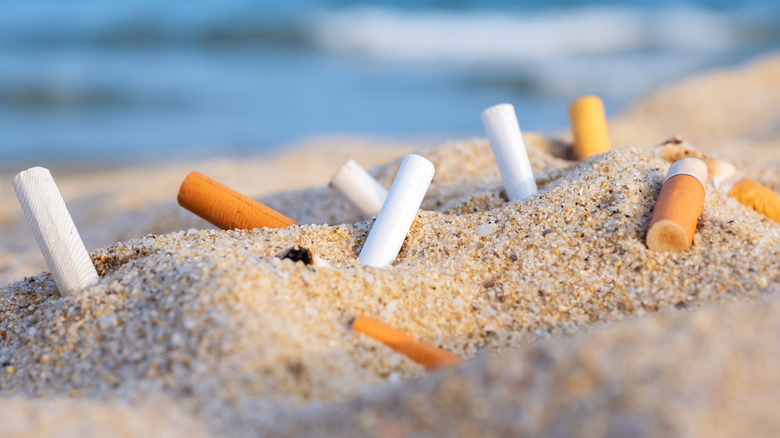
Smoking on the beach is generally frowned upon, as you're subjecting everyone around you to secondhand smoke. Worse, some smokers then litter the beach with the remnants of said cigarettes, committing one of the most common and serious beach-hygiene offenses. "Each year, billions of cigarette butts end up on our beaches, and in our oceans, lakes and rivers," Tom Novotny, chair of the Cigarette Butt Advisory Group and professor of public health at San Diego State University, explained to the school.
Do not wear socks on the beach
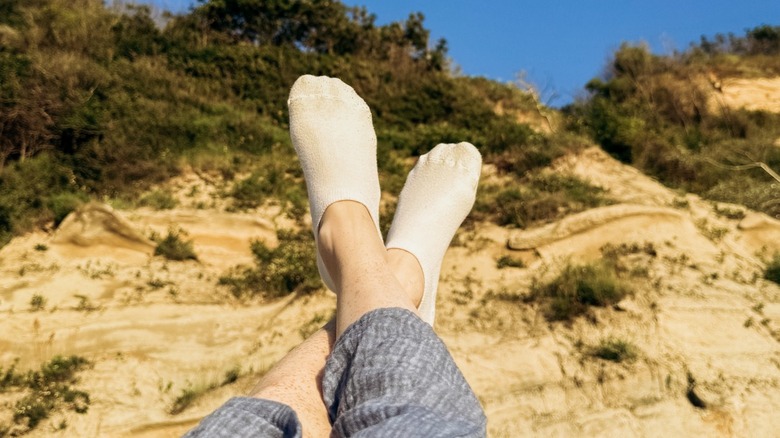
It's no secret that sand can be very bothersome for many. However, wearing socks with sandals on the beach just because you don't like the feeling of sand between your toes is absolutely not advised. Staying in wet shoes or socks is worse than you think, as it can cause skin maceration. When your skin becomes waterlogged and wrinkly, its protective barrier can break down because of the prolonged moisture exposure. Eventually, itchy sores can form, and your skin becomes more prone to infection.
Never swim in the ocean with an uncovered open wound
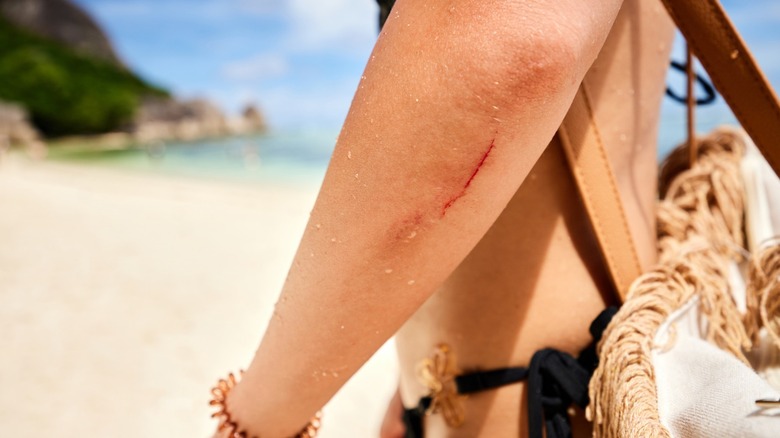
Despite what you may have been led to believe about the supposed healing properties of seawater, getting in the ocean with an open wound isn't advised (or at least without covering it with a waterproof bandage first). And, yes, that also goes for the fresh body piercings you're itching to show off at the beach. "It is well documented that seawater, especially warmer water, is a popular host of bacteria and viruses," family medicine physician Dr. Christopher Cave explained during an interview for The Good Health Blog. You don't want to risk contracting an infection!
Wash your hands before you eat on the beach

If you're planning to enjoy a peaceful picnic on the beach, don't forget about hand hygiene! As it turns out, even the most beautiful white sand can be home to dangerous bacteria, animal waste, and parasites. But there's more: In a 2012 study in Epidemiology, researchers found a connection between those who spent time on the sand and illnesses that affect the intestinal tract. So, make sure to wash your hands or use hand sanitizer before your seaside meal (and after you do pretty much anything else on the beach, too).
Don't forget to pick up your pet's poop
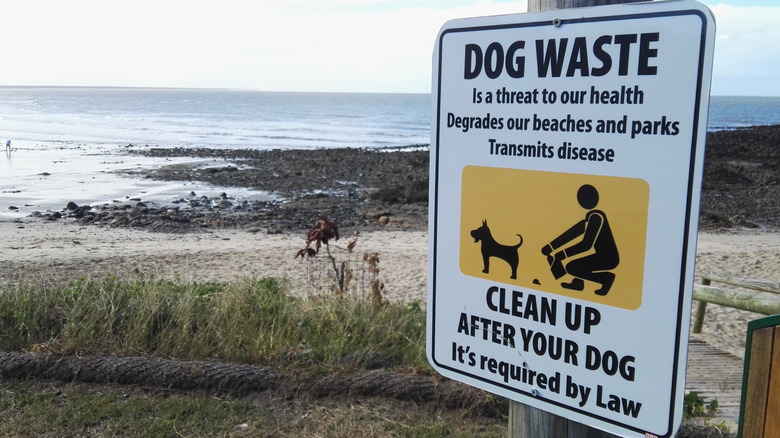
Speaking of dirty sand, please clean up after your pets! According to a 2010 study in the Marine Pollution Bulletin, just one incident of dog droppings left behind on a public beach in Florida had a microbial load equivalent to that of nearly 7,000 bird fecal events. It should be noted, however, that many U.S. beaches prohibit dogs on the beach altogether. In that case, be sure to adhere to the rules and leave Fido at home.
No sand angels, please

Please don't lie down directly on the sand, as that increases your chance of contracting a plethora of nasty fungal infections. Aside from that, you also risk irritating your skin and even contracting sand fleas, the same bugs responsible for your feet being covered in bug bites after a long day at the beach. "Because the sand flea cannot jump very high, these clusters are usually located on feet, ankles, and lower legs," Dr. Eric Ascher told Prevention in 2022.
Don't forget to take a shower before leaving
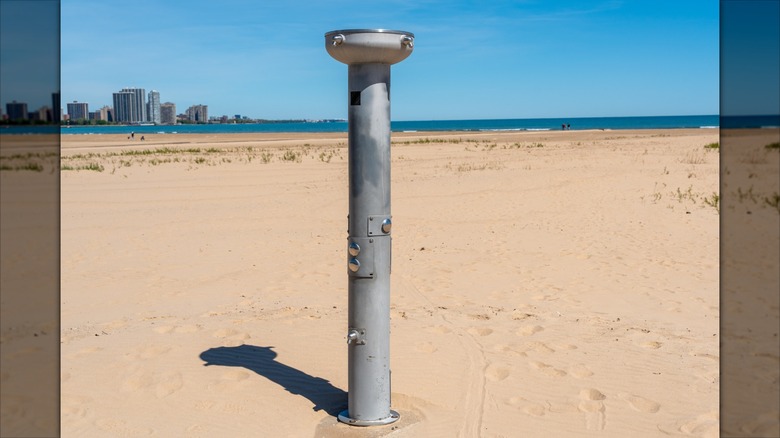
Before you head home, don't forget to shower. Researchers of a 2021 study in Environmental Research found that subjects who swam in the ocean had more antibiotic resistance genes (ARGs) on their skins post-swim, increasing their risk of skin infections. "Beach water is much less homogenous than a chlorinated pool — every time you swim in the ocean, you will be exposed to a different mix of organisms, salt levels, water from different tributaries," dermatologist Dr. Deshan Sebaratnam told Body+Soul. Additionally, saltwater can be very drying on the skin, especially for people with eczema.