

Caregiver Burnout Is Real — Dolly Parton Taught Us The Hard Truth Of Recognizing It

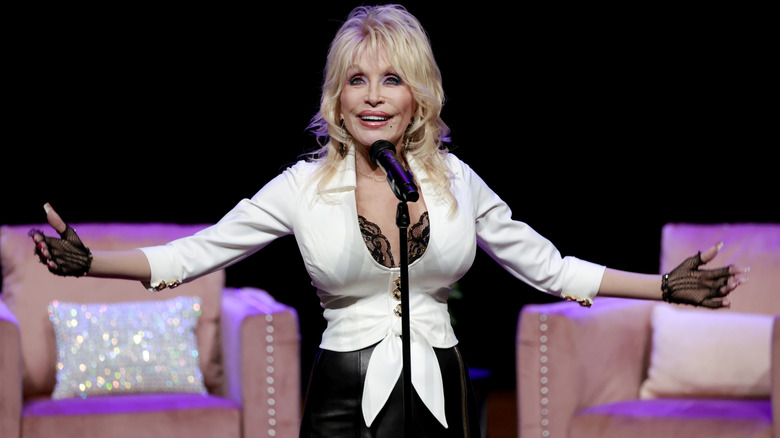
Dolly Parton spent a large portion of her life looking after others. In her younger years, the country legend helped raise some of her younger siblings, and in her older years, she became a caregiver to her late husband, Carl Dean. Somewhere along the way, the "9 to 5" hitmaker admittedly forgot to care for her own well-being. In fact, Parton admitted to dealing with unspecified health issues in an October 2025 update posted to YouTube, saying, "Back when my husband Carl was very sick, that was for a long time, and then when he passed, I didn't take care of myself." She added, "So, I let a lot of things go that I should have been taking care of."
When she eventually found the time and mental space for her own health, doctors recommended a few treatments for her medical issues, which she pursued until her own tragic passing in August 2026, less than a year later. With her words, Parton shone a light on caregiver burnout, a state in which caregivers acutely feel the emotional, physical, and mental tolls of their duties. It's not uncommon for people with caregiver burnout to neglect their health due to limited mental bandwidth.
A 2018 survey conducted by The Associated Press-NORC Center for Public Affairs Research found that a third of caregiver respondents neglected their health due to being too occupied with their patients. Many respondents admitted to skipping essential healthcare steps like setting routine dental and physical checkup appointments, visiting a doctor for an injury or illness, or filling their prescriptions. What's more, 40% of caregivers reported having a physical or mental health condition or a disability of their own that affected their quality of life.
Caregiver burnout can manifest in several ways
An estimated 60% of caregivers have experienced burnout, with many dealing with anxiety, depression, or stress, among other symptoms that affect their quality of life. In a 2023 study conducted by Guardian Life, only 23% of caregivers reported "good" mental health. In contrast, 47% reported having anxiety, depression, or other mental health issues in the previous year.
When all is said and done, caregiving can be a life experience that increases your risk of early death. A 2011 study published in the American Journal of Hypertension found that long-term caregivers are at risk of developing hypertension, which is responsible for a few of the top 10 causes of death in the world, like chronic obstructive pulmonary disease. While there are several reasons people should know how to deal with the stresses of being a caregiver, caring for yourself while looking after someone else's needs is incredibly challenging. In a chat with CNN, Allison Applebaum, a professor of geriatrics and palliative medicine, explained that the reasons caregivers neglect their health go beyond limited mental bandwidth.
According to her, some caregivers may not be able to plan doctor's visits because they have to adjust their schedules in accordance with their care receiver's needs on a day-to-day basis. Moreover, some caregivers may have zero interest in spending more time at the hospital than they already do, while others may feel like they're better off not knowing about their health issues because it would only complicate their lives further. With all this in mind, it's obvious that caregiver burnout is a real issue that's far more complex than most people realize but should become more widely discussed.
If you or someone you know is struggling with mental health, please contact the Crisis Text Line by texting HOME to 741741, call the National Alliance on Mental Illness helpline at 1-800-950-NAMI (6264), or visit the National Institute of Mental Health website.