

5 Odd Habits That Might Actually Extend Your Lifespan

After listening to celebrities talk about the wild things they have done in the name of longevity, it can be easy to think the key to living a long and healthy life is complicated. However, research has indicated that longevity might just boil down to the basics: good mental and physical health. To some extent, adopting healthy habits that help us achieve those two basics can reduce the risk of dying of some of the top causes of death in the world, including coronary heart disease and diabetes.
While some may accomplish these goals through basic healthy habits, others may find success with unconventional routes. In many experts' views, the path doesn't really matter as long as you get to the destination. In a Harvard Gazette quiz, Immaculata De Vivo, a professor in the Department of Epidemiology at Harvard T.H. Chan School of Public Health, pointed out that any habit that promotes stress relief, even if it may seem unusual, can help improve longevity, since stress can shorten the DNA structures linked to an organism's life span.
The idea that unconventional habits can lead to longevity is further supported by the stories of celebrities who lived to 90, despite breaking unspoken health rules. Their stories largely serve as a reminder of how a positive mindset can promote longevity and improve overall mental health. It's also important to remember that genetics play a big role in longevity. In fact, according to a 2022 study in the International Journal of Molecular Sciences, approximately 40% of human life expectancy can be chalked up to genetics. Still, there are plenty of unusual yet simple habits that you can adopt to better your mental and physical health and potentially even live longer.
Forgiveness can help the mind and the body
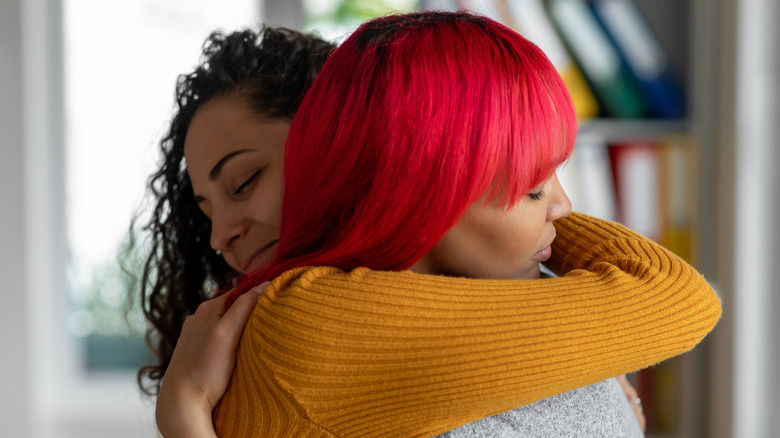
Practicing forgiveness may benefit health in more ways than one. Dr. Karen Swartz, director of the Mood Disorders Adult Consultation Clinic at The Johns Hopkins Hospital, explained that holding onto grudges can lead to chronic anger. Over time, chronic anger can put you into a constant state of fight-or-flight, which alters heart rate, blood pressure levels, and immune responses. After dealing with those biological changes for a prolonged period, a person may develop depression, heart disease, diabetes, and other conditions. According to Dr. Swartz, forgiveness has somewhat of an opposite effect on the body: "Forgiveness, however, calms stress levels, leading to improved health."
Unsurprisingly, studies have also shown that forgiveness may also be the key to better mental health. In a 2024 study published in BMJ Public Health, a group was asked to complete a workbook that helped them overcome their resentment toward someone. At the end of two weeks, researchers found that the group showed fewer symptoms of depression and anxiety. Meanwhile, a 2016 study in Annals of Behavioral Medicine found that participants who practiced forgiveness experienced lower levels of stress.
Additionally, in a chat with the American Psychological Association, Dr. Bob Enright, a psychologist at the University of Wisconsin, pointed out that people often end up blaming themselves when they are facing injustice. Explaining how forgiveness can help shift that perspective and ultimately help self-esteem, Dr. Enright said, "When you stand up to the pain of what happened to you and offer goodness to the person who hurt you, you change your view of yourself."
Short naps might be good for the brain

Some may be pleased to know that short naps can benefit health. A 2021 study in General Psychiatry found that napping might help improve cognitive functioning. For the study, researchers analyzed how adults aged 60 and older who napped measured against those who didn't in mental areas like concentration, calculation, memory, naming, attention, and orientation. The group that napped scored higher on cognitive functioning than their counterparts. Interestingly, the duration and frequency of naps also affected the results, since those who napped for less than 30 minutes four times a week were more likely to have better cognitive functioning. Meanwhile, those who took the longest and most frequent naps were the least likely to experience cognitive benefits.
A 2023 study in Obesity (Silver Spring) similarly highlighted the significance of napping duration, since people who napped for less than 30 minutes were less likely to experience high blood pressure than those who napped for over 30 minutes. Additionally, a 2019 study in Heart found that people who napped once or twice per week had a lower risk of having a cardiovascular event compared to those who didn't.
Short naps may also prove beneficial for mental health. For some, a nap may be an easy way to lower stress and cortisol levels. In a 2025 study in the Annals of Medicine & Surgery, researchers also wrote that naps have been shown to improve moods, reinforce positive psychology, and improve emotional resilience. With all this in mind, it appears that a power nap does actually work.
Research has indicated that volunteering might help longevity
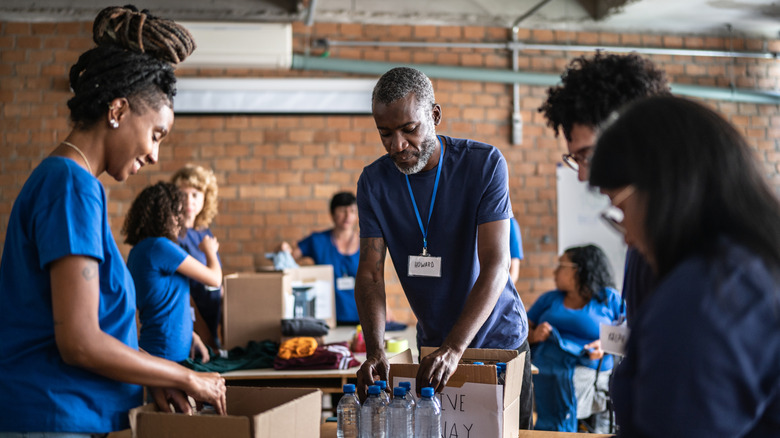
Volunteering doesn't solely benefit your local communities but also potentially your mental and physical health. A 2020 study in the American Journal of Preventive Medicine found that people who volunteered for over 100 hours per year had a lower risk of dying and were also less likely to develop physical functioning limitations over time. Volunteers were also found to be more physically active while also having better social relations, an optimistic attitude, and fewer symptoms of depression and anxiety.
Meanwhile, a 2023 study in the Journal of Psychosomatic Research found that people who volunteered or donated to charities experienced less physical pain. In a chat with NPR, Laura Kubzansky, a co-author of the AJPM study and a professor of social and behavioral sciences at Harvard T.H. Chan School of Public Health, explained that there are several possible explanations for why volunteering may be beneficial for health. One of the most obvious reasons is that it may help reduce stress, which in turn can reduce the risk of cardiovascular diseases and other serious conditions.
Moreover, volunteering involves being physically active and forming social connections, both of which can help longevity. "Volunteering or doing an act of kindness can distract you from some of the problems that you might be having, so you might be a little bit less reactive yourself," said Kubzansky, adding, "It may help to give you more perspective on what your own problems are."
Being grateful might help you live longer
Research from over the years has indicated that practicing gratitude can be beneficial in more ways than one. In a 2024 study in JAMA Psychiatry, researchers analyzed data from the Nurses' Health Study, which included a gratitude questionnaire completed by around 50,000 women aged between 69 and 96. After looking at the data three years after the questionnaire was completed, researchers found that the participants who were the most grateful had a 9% lower risk of all-cause mortality, which includes cardiovascular diseases and neurodegenerative disorders.
Out of the 4,608 people who died during the study period, 2,153 were women who had the lowest level of gratitude, and 1,273 deaths were from the middle tier of gratitude levels. Another physical health benefit of gratitude was highlighted in a 2019 research review published in The Journal of Positive Psychology, which found that people who kept gratitude journals had lower diastolic blood pressure levels.
Incidentally, practicing gratitude can also improve your mental health. After analyzing 62 studies for a 2021 meta-analysis in the International Journal of Depression and Anxiety, researchers found that people who practiced gratitude had lower levels of depression. Additionally, practicing gratitude when we are feeling stressed out helps trigger a parasympathetic nervous system response, which acts as an antidote of sorts to the nerve-wracking feelings of a fight-or-flight response. Moreover, practicing gratitude can be a grounding tool for people with anxiety, since it shifts your thoughts to the present moment and helps challenge negative thoughts.
Having intergenerational friendships can be beneficial for cognitive health
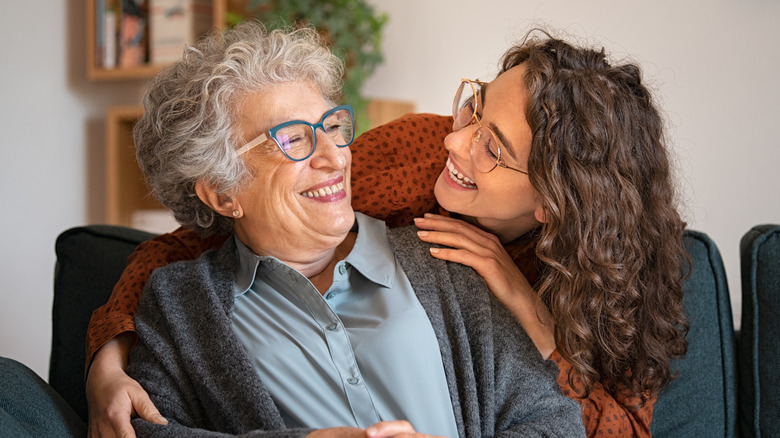
Having strong social connections in general has been proven to help improve overall health time and time again. However, intergenerational friendships come with their own set of benefits. A 2022 study in the European Journal of Aging found that older adults who befriend people over 10 years younger felt more youthful themselves and more comfortable with the natural process of aging. Plus, research has shown that your attitude towards aging can influence your health as you get older.
A 2002 study in the Journal of Personality and Social Psychology notably discovered that people who saw aging through a positive lens lived 7.5 years longer than those with negative perceptions of aging. Additionally, in a chat with Today.com, Dr. Stephanie Rogers, a geriatrician and professor of medicine at the University of California San Francisco School of Medicine, explained that intergenerational friendships can also be beneficial for cognitive health. In Dr. Rogers' view, a common thread among her healthy older patients is the ability to adapt to changes rather than comfortably settling into the familiar.
When someone from the older generation speaks with a member of the younger generation, they may have to overcome social and cognitive hurdles, which can ultimately help them grow on a personal level. From a biological perspective, the process of adapting and communicating with a younger person with cultural differences may trigger mental stimulation that slows the pace of cellular aging. Dr. Rogers also noted that intergenerational friendships can be beneficial for the younger person as well since they can help them see aging in a more positive light.