

8 Popular Diets Are Linked To Slower Aging. Can You Guess Which Ones?

Over the years, countless diets have been touted for their supposed anti-aging properties. To examine whether a diet could affect aging, researchers analyzed 10 diets and published their findings in Nature Communications in August 2026. Out of the 10 diets researchers analyzed, eight were associated with slower biological aging.
It's important to remember that biological aging and chronological aging are different. In a chat with the Cleveland Clinic, family medicine provider Dr. Saadia Hussain explained that chronological age is simply measured by how many candles you blow out on your birthday. Meanwhile, biological age measures your internal clock, namely the speed at which your organs, cells, and tissues are aging. Scientists have also described biological age as an accumulation of damage to the cells over time. Researchers use two major ways to determine a person's biological age. The first is taking a closer look at DNA, which is what researchers did for the Nature Communications study. The second is evaluating health markers, including blood pressure, blood sugar, cholesterol, heart rate, height, and weight. Research has indicated that the rate of biological aging can be reduced through lifestyle changes, like exercising, consistently getting good sleep, and eating a good diet.
Interestingly, the diets linked to slower biological aging in the Nature Communications study weren't packed with complicated or expensive ingredients. Instead, they focused on a balanced approach to eating centered around simple, nutrient-dense foods. However, it's worth noting that no diet out of the lot was crowned the best for slowing biological aging. Instead, researchers concluded that eating more nutrient-dense foods overall could be more important for slowing biological aging than diligently sticking to a specific diet.
The DASH diet is a simple approach for hypertension management

The DASH (Dietary Approaches to Stop Hypertension) eating plan is often deemed the best diet for people with hypertension. The simple approach encourages people to fill their plates with fruits, vegetables, whole grains, low-fat dairy items, poultry, fish, and nuts.
People following this approach limit their intake of sugary beverages, desserts, and foods that are high in saturated fats. The 2026 Nature Communications study found that the DASH diet had one of the strongest links to slowing biological aging out of all the other diets that had positive links.
The Mediterranean diet supports both the heart and the skin
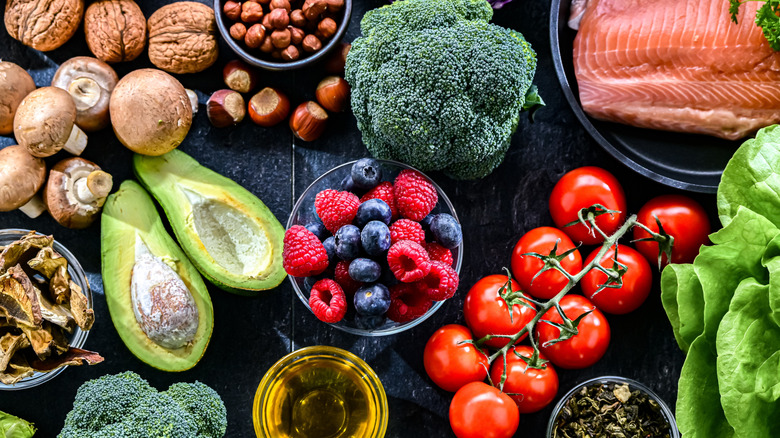
The Mediterranean diet encourages the consumption of whole grains, vegetables, and extra virgin olive oil daily, and fish, poultry, and eggs a few times a week. While it calls for a restriction on red meat and sugary foods, it permits moderate amounts of dairy. Several studies have found that the eating pattern supports heart health, as well as balanced cholesterol and blood pressure levels.
There's also evidence suggesting that it can lower inflammation in the body, which is linked to diabetes, some cancers, and Alzheimer's disease. Additionally, looking at photos of celebrities over 40 who follow the Mediterranean diet, it's easy to see why the eating approach is often associated with healthy skin.
The Nordic diet is rich in vitamins and healthy fats
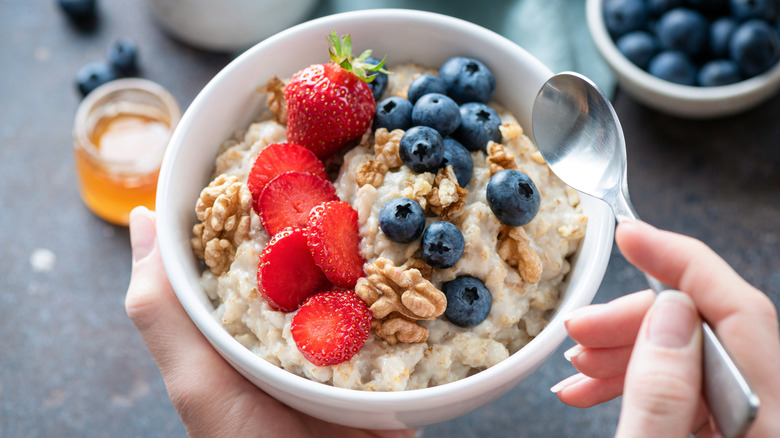
The Nordic diet is yet another diet centered around whole grain foods, limited quantities of fish and eggs, and an avoidance of sugary and high-salt foods. As the name suggests, it encourages eating Nordic staples like rye bread, oats, barley, and berries.
While it shares plenty of similarities to the Mediterranean diet, the major difference between the two is that the Nordic diet swaps extra virgin olive oil for canola oil. To some extent, canola oil is a healthy oil since it's packed with monounsaturated fat and contains vitamins E and K and a plant-based omega-3 fatty acid. The Nordic diet notably showed consistent links to slower biological aging in the Nature Communications study.
The Alternative Healthy Eating Index can help you stick to a nutrient-dense diet

The Alternative Healthy Eating Index (AHEI) is a means for researchers to gauge how healthy a person's diet is using a score based on how often they eat nutrient-dense and nutrient-poor foods. To give an example, someone who meets their daily recommended intake of whole grains would score a 10 out of 10, while someone who never eats them would score a 0. Meanwhile, a perfect score would be awarded for not having sugary drinks daily.
The index's ultimate aim is to determine whether people are eating enough foods that lower their risk of chronic illness. Some examples of these foods are vegetables, fruits, whole grains, legumes, fish, and healthy fats.
The Planetary Health Diet may have brain health benefits
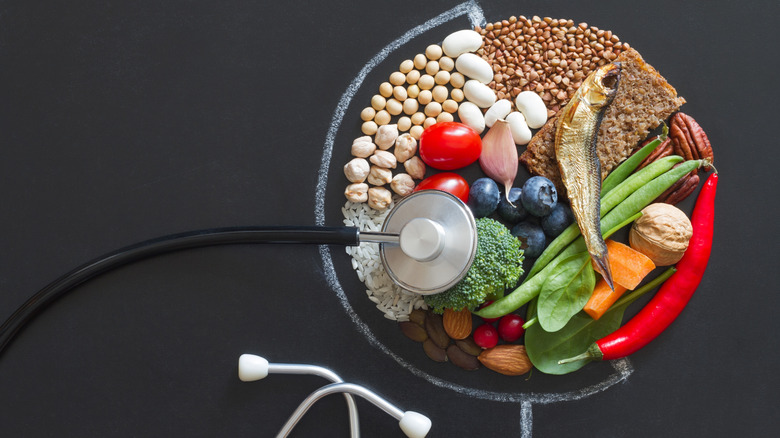
The truth about the Planetary Health Diet is that it's an eating pattern centered around whole foods that permits moderate consumption of poultry and fish and encourages people to cut out or cut back on processed and sugary foods.
A 2026 paper in the Journal of Affective Disorders noted that the diet can support brain health. It was also linked to a lower risk of stroke and depression. However, it's worth noting that the Nature Communications study found that the Planetary Health Diet had the weakest link to slowing biological aging among the other diets with positive links.
Plant-based dieting could reduce hypertension risk
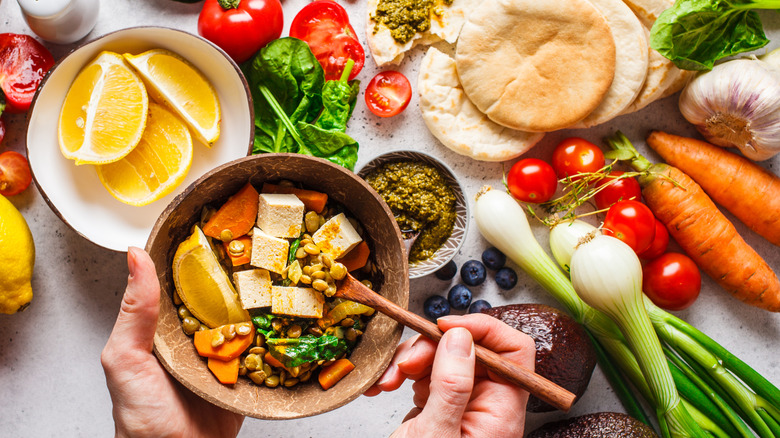
For the Nature Communications study, researchers used the plant-based diet index (PDI), a method that assigns positive scores for the consumption of all plant-based foods and negative ratings for all animal-based products. Research from over time has shown that when you go vegan, a lot of good things can happen to your body.
A 2019 research article in the Journal of the American Heart Association found that people with a higher PDI score had a lower risk of developing cardiovascular disease. Moreover, a 2014 review in Nutrients found that folks following a vegan diet were 75% less likely to have hypertension than non-vegetarians. However, the vegan group's lower-than-average BMI could have also influenced that statistic.
Healthful plant-based dieting may benefit heart health
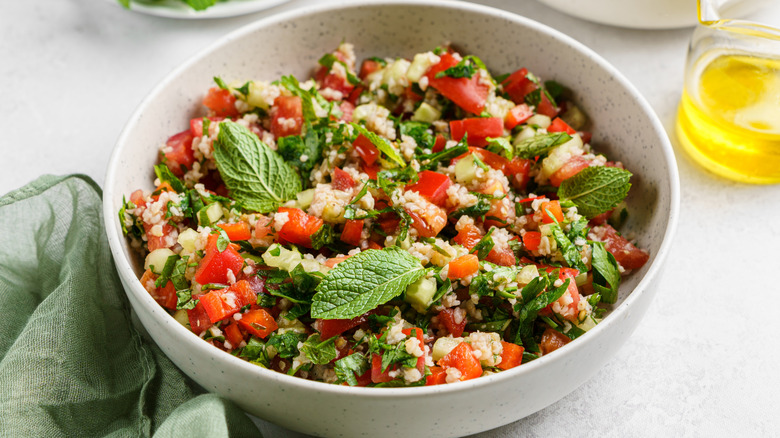
The major difference between a healthful plant-based diet index (hPDI) and a plant-based diet index (PDI) is that the hPDI only assigns a positive score for the consumption of nutrient-dense plant-based foods like whole grains and vegetables. Meanwhile, a negative score is given for the consumption of animal-based foods and nutrient-poor plant-based foods like heavily processed foods.
A 2017 study in the Journal of the American College of Cardiology analyzed data from over 209,000 adults on three indices: a general plant-based diet, a healthful plant-based diet, or a plant-based diet high in nutrient-poor foods. Researchers found that people who followed a healthful plant-based diet were the most likely to be physically active and leaner, and had the lowest risk of heart disease.
The MIND diet may benefit cognitive health
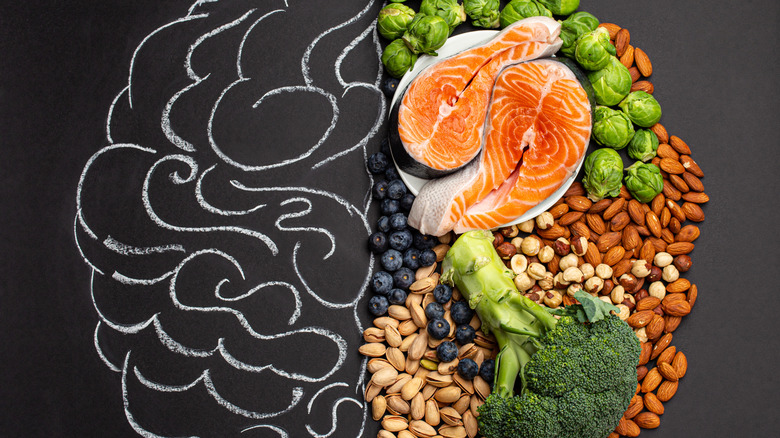
The MIND (Mediterranean-DASH Intervention for Neurodegenerative Delay) diet is a combination of the Mediterranean and the DASH diets that focuses on brain health. People following this diet fill their plates with vegetables (especially leafy greens), nuts, whole grains, berries, fish, beans, and poultry, while cutting back on eating fried food, desserts, cheese, butter, and red meat.
After analyzing studies for a 2025 systematic review in the Journal of Nutrition, Health and Aging, researchers concluded that 10 out of 11 studies showed that the MIND diet was linked to a reduced risk of dementia and Alzheimer's. The Nature Communications study notably linked the MIND diet to positive DNA changes in pathways involved in memory and learning.
On the other hand, 2 eating patterns have been linked to faster biological aging

In the 2026 Nature Communications study, researchers linked two diets to faster biological aging: an unhealthful plant-based diet and an inflammatory diet. To gauge the unhealthy plant-based dietary pattern, researchers used the uPDI (Unhealthful Plant-based Diet Index), assigning higher scores for the frequent consumption of unhealthy plant-based foods (like sugary beverages and refined grains) and lower scores for healthy plant-based foods (like whole grains, nuts, and legumes).
For the inflammatory diet, researchers enlisted the Dietary Inflammatory Index (DII) and gave negative scores to anti-inflammatory foods and positive scores to inflammatory foods. An overall negative score indicates that a diet has more anti-inflammatory foods. Eating a diet that's rich in inflammatory foods has been linked to conditions like arthritis, diabetes, and heart disease.