

The Cowboy Hygiene Staple From The 1800s That's Making A Big Comeback

What do cowboys and some TikTok fans have in common? They share a growing appreciation for beef tallow, or fat that comes from rendering cow meat. Basically, it's a purified version of the fatty globs that can form on a cooled pot of beef stew. In the 1800s, beef tallow was a hot commodity for a couple of reasons. For one, it could be used to make soap. Add the right amount of lye to the rendered fat, and you could craft a bar that would get you decently clean. Moreover, beef tallow could be swabbed on the skin to soothe the painful chafing that riders experienced on their hands and other parts of their bodies.
The use of beef tallow as a skincare product went by the wayside for generations. Around 2024, the beef tallow skincare trend took off on TikTok. And it may actually work as described, according to cosmetics expert Marisa Plescia (via NPR). When asked about the validity of beef tallow, she responded that because it's a saturated fat, it may help lock in moisture on the skin. But another expert, dermatologist Dr. Delila Foulad, offered a slightly less rosy piece of insight. "Putting that on your skin could clog your pores," she cautioned. Likewise, dermatologist Dr. Sandy Scotnicki told Women's Health that sunflower seed oil and squalane are better alternatives.
Does beef tallow really work wonders for the skin?
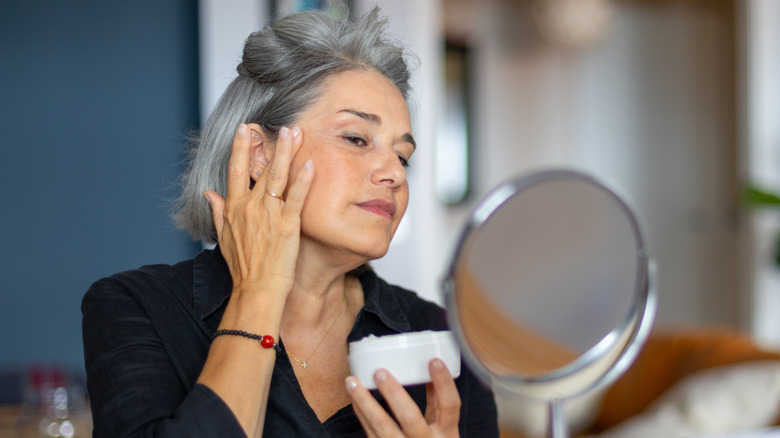
Despite warnings about beef tallow potentially being problematic for acne-prone users, the Internet has given the cowboy fave a boost. However, a 2025 review in the Journal of Cosmetic Dermatology determined that there just isn't enough evidence to say whether or not beef tallow gets a thumbs up or down. In fact, the review warned that a lot of social media anecdotes about beef tallow seem to be driven by possible monetary gain. And there's plenty to gain — the beef tallow cosmetics sector is expected to grow to almost $25 billion by 2033 (per KATV).
So, is this one of those popular skincare hacks that could pose health risks? Perhaps, explained dermatologist Dr. Alexandra Bowles to NBC News, especially if you may be sensitive or allergic to the proteins found in animal products, which might be a surprising allergy you probably never even realized you had. "No matter what, I always recommend patch-testing on a small area to see how your skin reacts," she advised.
Dr. Bowles also recommended speaking with a dermatologist before trying any new skincare item, even if everyone else seems to be going whole hog for one of the most old-fashioned moisturizers that helped soothe discomfort for people living on the frontier.