

Not Smallpox, Not Scurvy: This Disease Was The Leading Cause Of Death For Pioneers
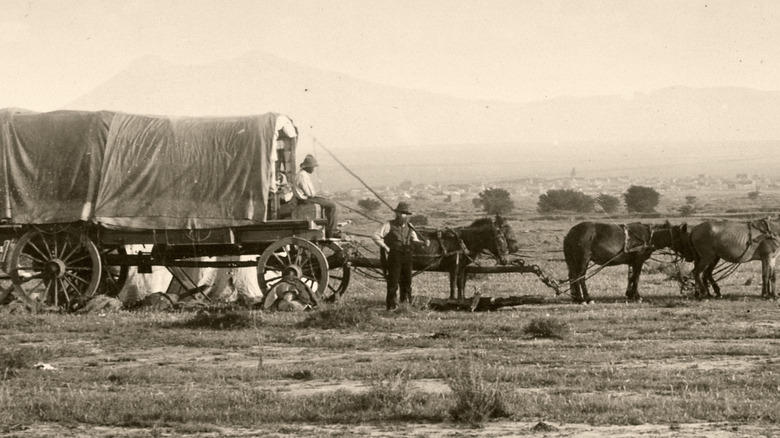
To say that the pioneers faced their fair share of deadly diseases would be an understatement. However, none of them affected them quite like cholera, which caused more emigrant deaths than diseases like dysentery, mountain fever, measles, smallpox, pneumonia, and scurvy. Cholera is an infection of the intestines caused by drinking water or consuming food contaminated with cholera bacteria.
According to a 2008 article in the Transactions of the American Clinical and Climatological Association, sanitation wasn't exactly a priority for pioneers. Their water supply came from dug wells, rivers, and lakes, while they disposed of their waste in cesspools or streams positioned near those water sources for convenience. This resulted in the contamination of the water supply, even affecting the taste and odor of their drinking water. With those conditions, it's not hard to see how cholera spread swiftly among pioneers.
In the modern day, most people affected by cholera have mild or no symptoms. However, back in those days, the symptoms affected pioneers differently. Pioneers affected by cholera faced severe diarrhea, vomiting, abdominal pain, and cramps. For some, these symptoms came on so quickly and so intensely that they passed away only 12 hours after the onset. Unfortunately, the cure for cholera hadn't been discovered back then, so affected pioneers had no choice but to rely on painkillers and cough suppressants that didn't do much to fend off the infection.
There was a cholera pandemic in the 1800s
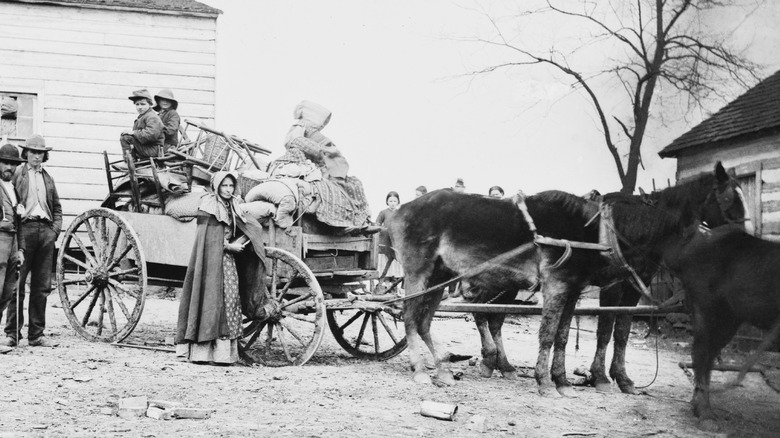
The cholera pandemic started in India and eventually spread to the rest of the world through trade routes. In the 1800s, North America saw three major waves of cholera in 1832, 1849, and 1866, and it's estimated that these waves caused the deaths of between 5% and 10% of people living in major cities in the country. Of course, knowledge about waterborne diseases was fairly limited in those days. For example, there was a period when authorities didn't consider cholera an infectious disease. There were even theories suggesting that cholera was an airborne disease or that it was the result of the wrath of a higher power. As a result, treatment options were mostly misaligned with the disease.
In the 1830s, doctors prescribed bloodletting, a procedure that removes some of a patient's blood through leeches or venesection, as a part of the cholera treatment process. The idea behind the treatment was that it would reduce the stress on the lungs and the heart and ultimately help them function better as the body fought off the disease. Unfortunately, the first two waves of the disease didn't lead researchers to accurately answer the question, "What is cholera?," let alone discover proper treatment and prevention options. Ultimately, the lack of information about the disease greatly affected life expectancy on the 19th-century prairie.