

Hygiene Habits From The '70s That Are Seeing A Surge In Popularity Again
You don't have to be a baby boomer to live like one, especially in 2026. Right now, the 1970s — the decade in which many boomers grew up — is making a major comeback in numerous ways. Indeed, many of the coolest "new" hygiene trends are actually throwbacks from 50 years ago.
But why does society seem to regularly revisit past hygiene habits? It may be a sense of nostalgia at play. In a 2023 review published in Current Opinion in Psychology, researchers found that a sense of longing or affection for the past can have an impact on various health-related behaviors, from following a healthier diet to exercising regularly, likely because it can reinforce self-esteem and the feeling of having social support.
Regardless of the reasons, here are a few health-related practices and preferences from the '70s that the people of today have been slowly incorporating into their routines.
A bar of soap may be more eco-friendly and cost-effective than liquid soap
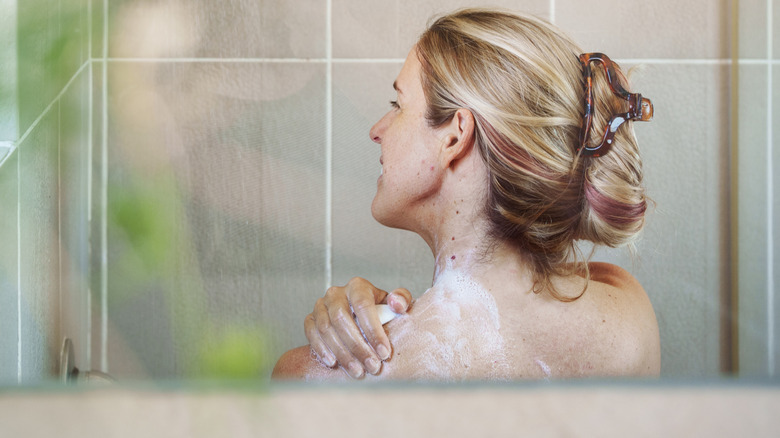
Dislike body wash? Channel the 1970s and use bar soap instead of liquid soap. A 2009 study in Environmental Science & Technology found that, from an environmental perspective, using bar soap is preferential to using liquid soap; we tend to use more liquid soap for handwashing than when we use bar soap, so there's a greater impact on the supply chain of the former than the latter.
Moreover, you may find that you spend less if you're using bar soap. This may not be immediately apparent if you were to compare the prices of name-brand soap bars versus branded body wash options at major retailers like Walmart. However, because bar soaps are highly concentrated compared to liquid soap (which is diluted with water), you're likely to run out of liquid soap in a couple of weeks' time, while a bar soap can last for up to a month or even longer.
More US households are having bidets installed
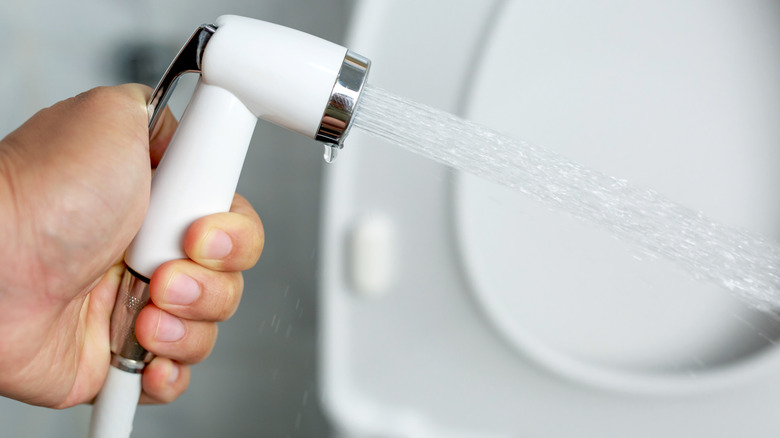
In the 1970s, residential bidets were common outside of the United States. Yet since the 2020 COVID-19 pandemic, they've apparently gained momentum. "I've seen more bidet requests from my elder millennial clients," Chicago-based designer Brooke Lang told Architectural Digest in 2023, noting that before the pandemic, most bidet requests came from her clients in Asia and London.
But why trade wiping for water? Is a bidet better for your butt health? Although toilet paper gets the job done, it doesn't clean your nether regions as completely as a bidet can. Moreover, a bidet rinse can make your privates feel more pleasant than they would if you were to use paper wipes, as a stream of water is less likely to cause irritation than paper-to-skin contact, especially on sensitive skin. Plus, having a bidet installed in your home could be much easier on your wallet in the long run, as it would mean you'll use less toilet paper.
Washing your hair every day may not be necessary
Though this may sound disgusting to some folks nowadays, daily hair washing wasn't exactly a standard practice in the 1970s, particularly for people who had dry hair. But if you're in the camp that believes shampooing every day isn't necessary, you may be in luck; depending on your hair type, washing your hair every day may actually be bad for you. Experts say that while it's okay to wash your hair daily if you have a very oily or dirty scalp, this habit can cause dryness and hair breakage for folks with thin or curly hair. Thus, for many people, washing their hair once a week is perfectly fine.
Be warned, though: If you're struggling with hair loss, don't wait too long between hair washing sessions, and definitely don't believe the myth that you should avoid shampoo altogether. Otherwise, your overall scalp hygiene could suffer in the form of microbial imbalances or inflammation, which could result in further hair shedding.
The global roll-on deodorant market is growing
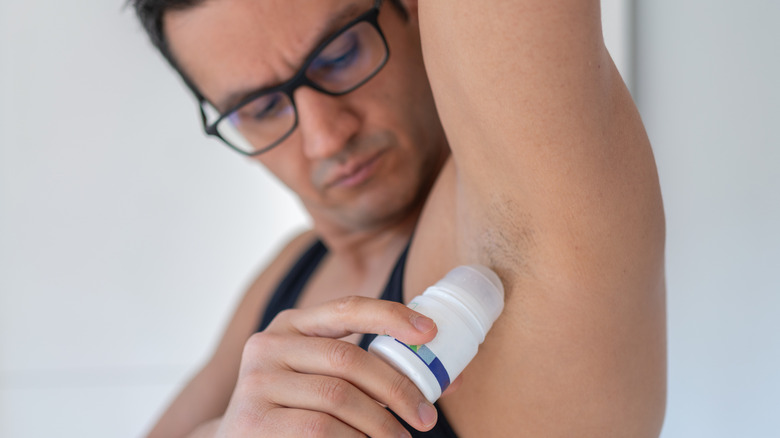
People in the 1970s wanted to smell good, as evidenced by the responses in a Reddit thread about hygiene and deodorant use in the '70s and '80s. Roll-on deodorants in particular were a favorite, and seem to be becoming increasingly popular: The roll-on deodorant market has an estimated value of $7.6 billion as of 2026 and is expected to grow to $11.1 billion in 2033, per a press release from Persistence Market Research.
But what's so cool about roll-ons? For starters, they offer a consistent release of product, ensuring thorough coverage. They also don't generate airborne particles, making them safer to use for people with allergies. Additionally, because they allow you to apply deodorant evenly on your armpits, roll-ons tend to be less wasteful than spray-ons. With that said, when you apply your roll-on matters: You'll get a better result by applying deodorant when your pits are clean and dry, either in the morning — right before you start your busy day — or immediately before you go to sleep.
Women are letting their body hair grow long again

Did women shave during the 1970s? Of course, and they used depilatory creams like Nair, too. However, many women also embraced their natural body hair, allowing their hair to grow everywhere from their pits to their pubic areas. The presence of body hair in women was perceived as a feminist signal, as well as a cultural norm at the height of the hippie movement. Alas, going au naturel became less popular as time went on, especially when Brazilian waxing entered the beauty scene in 1987.
However, contemporary women have begun to rethink the routine removal of their body hair, with many experimenting with allowing their body hair to simply grow. In a 2023 poll of 63 women from PureWow, a quarter of the respondents indicated that they only remove body hair occasionally, while more than half of them said they only remove some of their body hair. As one respondent put it, "I'm trying to focus more on what feels comfortable to me as opposed to what is expected of women more generally."