

Allison Janney Had A Wake-Up Call About How Difficult Women's Fertility Can Be
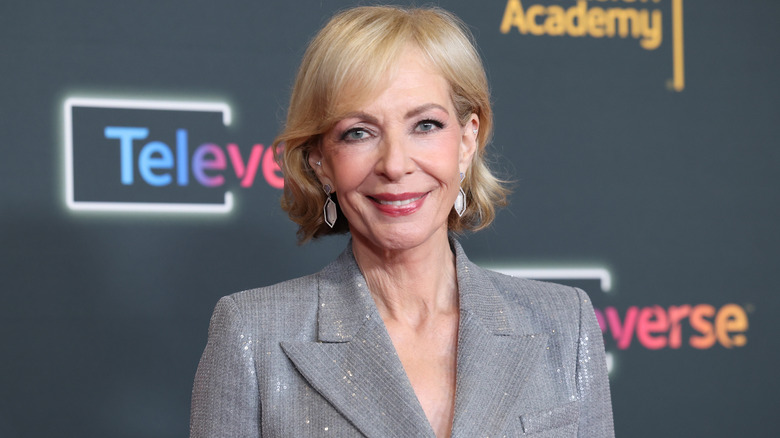
For the longest time, Allison Janney held a common misconception about women's fertility. During an October 2025 appearance on the "Reclaiming with Monica Lewinsky" podcast, the "I, Tonya" actor confessed that she was "sort of under the impression that women could have kids until they were 50 or something." That belief was only challenged when a fertility doctor informed her that her chances of conceiving in her 40s weren't all that strong. Research has indicated that Janney isn't alone in this belief.
A 2018 survey of 990 adults published in Archives of Sexual Behavior found that people generally believe that women become infertile at the age of 49. In reality, though, women start experiencing a gradual decline in fertility starting at the age of 30. The rate of this decline starts increasing in the mid-30s. By the time a woman enters her 40s, she has an estimated 5% to 10% chance of conceiving naturally. A woman's age is often considered the biggest determinant in chances of conceiving.
Additionally, one of the many things that you should know before starting in vitro fertilization (IVF) is that its effectiveness declines with age. For instance, a 2017 study published in The Medical Journal of Australia found that the odds of having a live birth after a single cycle of assisted reproductive technology for women in their early-to-mid 40s were about 11%. What's more, a 2011 survey by the pharmaceutical company EMD Serono indicated that, similar to Janney, many women may not be aware of the difficulties of conception. Of the 1,010 respondents, who were all women aged 25 to 35, 73% reported that they "anticipate that they would have an average, or easier than average, time conceiving than most women."
Allison Janney is happy with how her life turned out
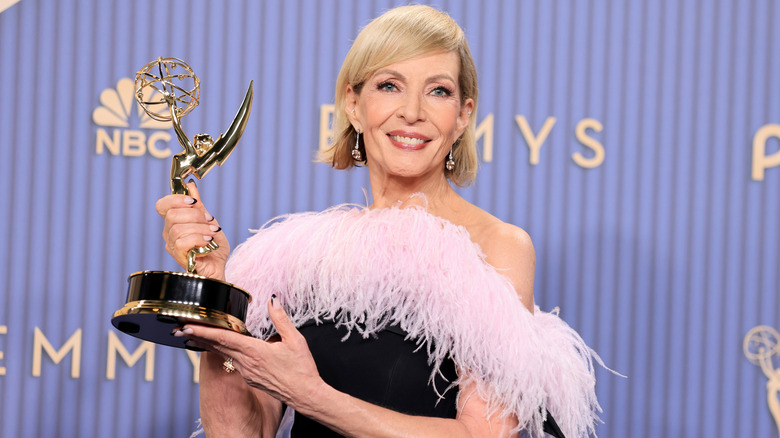
While appearing on "The Drew Barrymore Show" in April 2021, Allison Janney shared that she had never been entirely sure whether she wanted kids in the first place. The Oscar winner then shared a unique perspective on the matter, saying, "I would rather regret not having kids than have kids and regret that." However, Janney had no real issues with how life without kids had been playing out. "I'm OK with it. I really am, at this time in my life, getting to know who I am and what I want," the star of "The West Wing" said.
Over the years, Jennifer Aniston and other celebrities who have been transparent about being unable to conceive on IVF have shared similar sentiments about not having kids. Some researchers would agree that their views on not having children represent a greater population that is often viewed through a pessimistic lens. To put that population into numbers, a Census Bureau report found that, in 2024, an estimated 3.84 million women between the ages of 40 and 50 had never had a child.
After conducting a literature review on childlessness, Thomas Hansen, a researcher at the Norwegian Social Research (NOVA) institute, told OsloMet that people who don't have children don't experience significant differences in loneliness, life satisfaction, and overall mental health compared to those who do. According to Hansen, being optimistic and social and forming good relationships are more important for a good quality of life than solely having children. Of course, those things aren't just important for quality of life, as research has shown that optimism and extroversion are also among the personality traits that will help you live longer.