
Sharon Stone's Journey Toward A 'Drug-Free Life' Wasn't Without Health Risks

You might initially think that Sharon Stone's decision to live a drug-free life would be 100% beneficial for her. However, the move poses some risks to her health, because some of the drugs she quit were prescription medications that typically need to be taken for life.
Stone didn't specify which types of drugs she had been taking, but she mentioned that they were prescribed for her after she had a major health scare – a stroke — in 2001. In that case, at least one of the drugs likely falls in the statin category. Statins help keep plaque from building up in the blood by lowering a person's amount of low-density lipoprotein (LDL) cholesterol, and are used to treat patients like Stone who have experienced cardiovascular events.
In a 2026 interview with Variety, Stone explained that her doctors had warned her not to go off her drugs; this suggests that the drugs were statins. "They said, 'You can't go off of it. You can never go off of it." Unwilling to heed their recommendations, she stopped taking her drugs, only to experience intense physical withdrawal for months. But like she's done before, Stone did what she felt was right for her, just like when she opted for a mastectomy that reportedly led to her divorce.
A break from a common prescription drug could become dangerous
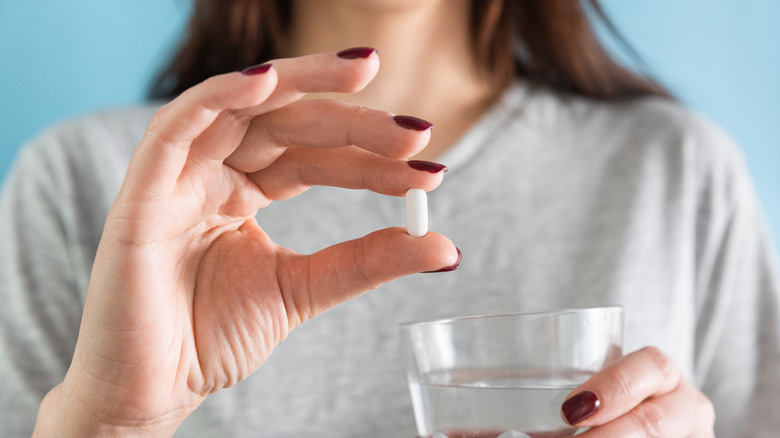
Why would doctors want a patient to stay on a statin? As cardiologist Dr. Leslie Cho told Cleveland Clinic, "If you stop taking cholesterol medicine, your cholesterol will rise again, and that means you have an increased risk of very serious complications." Those complications can include heart attacks, heart failure, aneurysms, and stroke, any of which can be deadly. "A lot of people stop taking statins because they think it's an almost moral failing to be on medication. And it's really not," observed Dr. Cho.
A 2017 study in the Journal of the American Heart Association found that nearly one-fifth of stroke patients stop taking their statins between the 90- and 180-day marks after their stroke events. The study also revealed that stroke patients who stopped taking statins within half a year of having their stroke had a 42% higher likelihood of having another stroke. In contrast, patients who simply took a lower dose of statin instead of discontinuing it entirely didn't lose any of the value they gained from taking the drug. Study co-author Dr. Bruce Ovbiagele told TCTMD that a better choice for patients who dislike the side effects of statins is to switch brands or experiment with different dosages.
Quitting marijuana could be beneficial to Sharon Stone's health

To her credit, Stone's decision to quit smoking marijuana alongside her discontinuation of statins may benefit her in the long run. A 2024 analysis in Neurology found a significant link between marijuana use and ischemic stroke (when a clot prevents the flow of blood to your brain). Moreover, a 2023 review in the journal Heart found an association between cannabis use and a 20% increase in stroke risk. On the other hand, according to a 2019 article in Stroke, using cannabis medicinally may help some stroke patients.
Regardless, Stone, an adult over 50 who smoked weed, didn't seem to have a problem choosing to give up marijuana. Indeed, she even complained to Variety that she believed the pot she had been smoking today was more intense than what she smoked when she was much younger. Her proof? After quitting, she struggled through a month-long withdrawal period. Fortunately, Stone seems to have come through her ordeals unscathed so far.