

43 Years Ago, Dallas' Miss Ellie Had Major Heart Surgery — And Another TV Icon Replaced Her
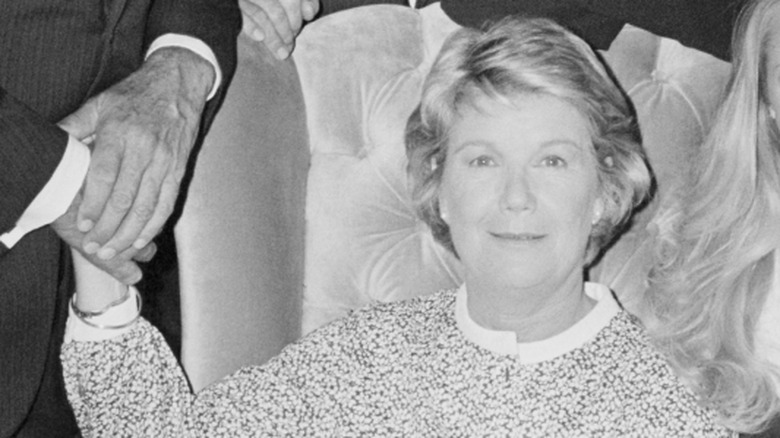
Many characters came and went over the 14-season run of the hit evening drama "Dallas," but the presence of Miss Ellie, the matriarch of the fictional Ewing family, never wavered. However, the face of Miss Ellie briefly changed when, in 1983, the original actor, Barbara Bel Geddes, needed a temporary replacement after a major heart event. Actor Donna Reed – known for her roles in TV shows like "The Love Boat" and "The Donna Reed Show" – took over the iconic Miss Ellie role during the 1984-1985 season while Bel Geddes recovered. The substitution only lasted for a limited number of episodes before Bel Geddes was reestablished.
During her health-related absence, Bel Geddes underwent an open-heart procedure in the form of a quadruple bypass surgery, a procedure that addresses blockages within four heart blood vessels. During bypass surgery, surgeons harvest other vessels to create new routes for blood to travel to and from the heart. This clears the way for the heart to function properly. According to the National Heart, Lung, and Blood Institute, each year, around 2 million people require open heart surgery.
Bel Geddes' experience prompts two questions: How has quadruple bypass surgery evolved in the decades since the early 1980s when she had the procedure? And, if so, what would the recovery journey for Bel Geddes have been like in today's world?
A dramatic improvement in heart bypass surgery over the past 40 years
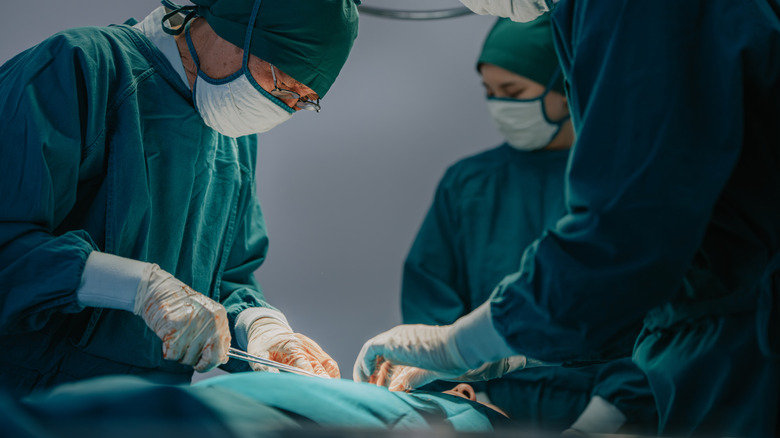
Within the last four decades, advancements in medicine have paved the way for improved heart bypass surgeries. Per a 2026 study in JAMA Surgery, patients who undergo internal mammary artery (IMA) grafting are better positioned to enjoy long-term benefits. As study co-author Dr. Faisal Bakaeen told Cleveland Clinic, IMA "provides not only superior long-term survival and graft patency but also unique prophylactic protection against future atherosclerotic events that alternative therapies cannot match."
The speed of bypass surgeries has also progressed, explained cardiothoracic surgeon Dr. Julian Smith to ABC News. Dr. Smith noted that bypasses were "quicker and a lot safer" today, with each operation taking about half to two-thirds the time it once did. This allows more high-risk patients to get bypasses rather than be denied. Advised Dr. Smith, "We are doing probably harder operations on sicker patients but they're doing well."
What can people expect after a coronary artery bypass in terms of getting back to normal life? The recovery period has shortened to as little as two or three months. Bel Geddes had her surgery in March 1983 and rejoined her castmates six months later. Today, she might have had a speedier recovery and perhaps wouldn't have needed a replacement, though returning to work immediately is still one of the things you shouldn't do after surgery.