

Not Just Patrick Stewart: Celebrities Who Kept Their Dementia Diagnoses Private
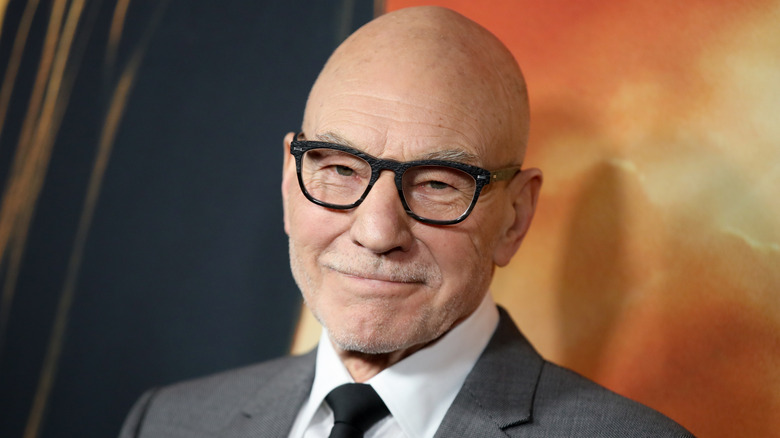
Many celebrities choose not to disclose their personal health diagnoses, including actor Patrick Stewart. In fact, the announcement of Stewart's death from complications of Alzheimer's disease and Lewy body dementia in October 2026 came as a surprise because his family had kept his condition private. According to a statement on his official Instagram page, Stewart, who was 86 when he died, had reportedly lived with the most common of the different types of dementia for a short time. Interestingly, he gave a positive, enthusiastic TV Insider interview in July 2026, and seemed upbeat about his future, noting, "I still continue to receive interesting offers and I love being challenged by new work." Understandably, few people would have guessed that he was dealing with an incurable and progressive neurodegenerative disease.
It's certainly reasonable for celebrities to maintain a level of privacy about their medical problems, especially for those who have developed dementia. According to a 2025 paper in Nature Medicine, U.S. adults over age 55 have a 42% risk of experiencing dementia. Additionally, a stigma around the disease persists. As a 2020 article in the Journal of Alzheimer's Disease explains, dementia stigmatization — sometimes accompanied by discrimination — can affect a person's social world and relationships. With that said, Stewart's family hasn't specified why they maintained confidentiality around his condition. Regardless, their decision to be tight-lipped about it mirrors that of other public figures who also kept their dementia diagnoses private.
Diane Keaton continued working as she kept her diagnosis private
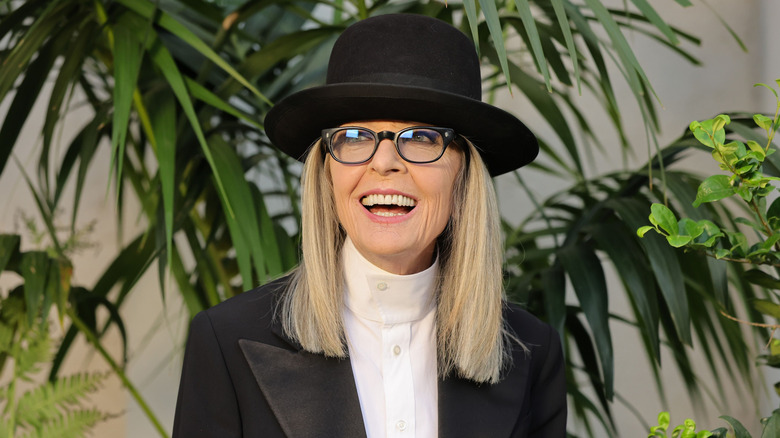
In 2025, actor Diane Keaton passed away at age 79. Her reported cause of death was a form of pneumonia. Keaton's good friend, Carole Bayer Sager, mourned the loss of Keaton to People, acknowledging that the last time she saw her, she was surprisingly thin. Keaton didn't make her dementia diagnosis public, despite NewsNation revealing that her issues were common knowledge on the set of her final film, which was shot in 2022.
Sources reportedly told NewsNation that Keaton had been diagnosed with dementia years before, and that she needed to be given lines through an earpiece. One source who had worked on the film said Keaton's inability to remember her lines was a challenge on set for everyone working on the project. "If there was any stopping — a bathroom break, a meal, anything — it was back to square one," alleged the individual. "It was heartbreaking to watch."
Keaton was no stranger to the disease or its side effects, as her mother also had dementia. Since dementia can be hereditary, Keaton was at some risk for getting diagnosed for the cognitive condition. But as neuropsychologist Dr. Aaron Bonner-Jackson said in a Cleveland Clinic interview, "Having that gene or family history may increase your likelihood of getting it — but it's not definitive."
Gene Wilder kept his disease a secret to protect the smiles of young fans
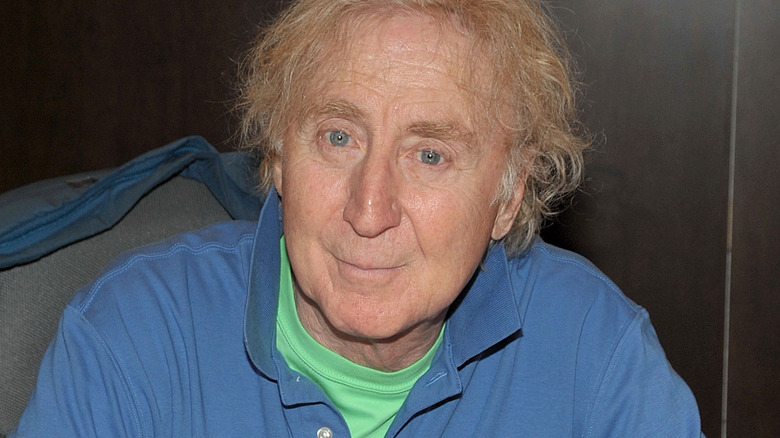
When actor Gene Wilder realized after going to a doctor that he had some of the symptoms of dementia, he was determined to keep it private. However, Wilder insisted on secrecy to protect others, not to protect himself or his reputation. Specifically, Wilder wanted to make sure that his young fans didn't associate his Willy Wonka character with any emotion other than pure joy.
Wilder died of Alzheimer's disease at age 83 in 2016. During an interview with NPR, Wilder's nephew, Jordan Walker-Pearlman, said that he'd received his diagnosis three years before his death. Walker-Pearlman further explained during a People interview that Wilder "always recognized the people he loved and never changed his core personality" until the end. Although many individuals who have dementia lose the ability to recognize and recall their closest relatives and friends, many others retain a sense of connection with their loved ones as they progress through the stages of dementia.
A family statement that was shared on X after Wilder died substantiated the three-year timeframe reported by Walker-Pearlman. However, Wilder's wife, Karen Wilder, told the Alzheimer's Association that Wilder actually lived with the disease for six years. Experts estimate that the average lifespan of someone who has been diagnosed with Alzheimer's is between four and eight years.
Margaret Thatcher's dementia diagnosis was revealed by her daughter via a book
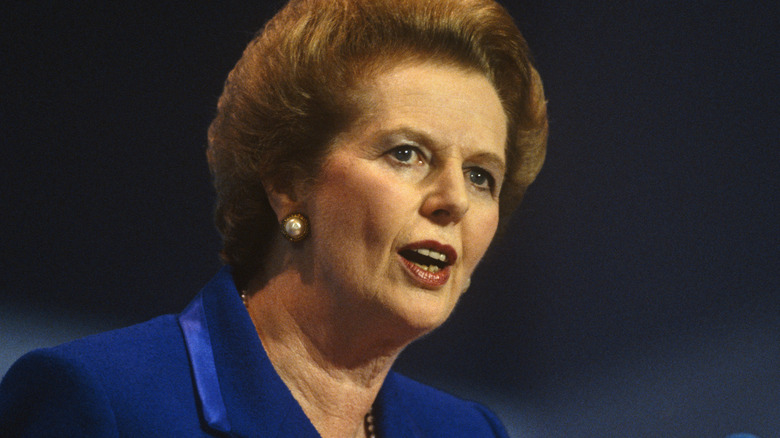
Former British Prime Minister Margaret Thatcher died in 2013 at age 87. At that point, the political figure had been out of the public eye for years. But until 2008, few people knew that she had been clinically diagnosed with dementia, although an article in The New York Times called her dementia an "open secret" within her personal and political circles.
Nonetheless, it wasn't until her daughter Carol wrote a tell-all book in 2008 about her mother's cognitive issues that the general public was made aware of her condition. The memoir noted that Thatcher's memory issues became noticeable beginning in about 2000. The book was met with disdain from many people who felt that it was wrong for Thatcher's daughter to reveal her mother's disease without permission. Said Ronald Reagan, Jr., the son of former United States President Ronald Reagan, at the time, "The idea of going into details of [Thatcher's] dementia are in monumentally bad taste and unnecessary" (via ABC News).
Thatcher's child wasn't the only person who talked about how dementia affected the Iron Lady. Sir Bernard Ingham, who was once Thatcher's press secretary, told The Sun in 2019 about his visits with Thatcher in her later years. "When she, poor lass, acquired dementia it was as though nothing had changed from Number 10 [her office building]," he said after her death.
Tony Bennett kept singing, even after his dementia diagnosis
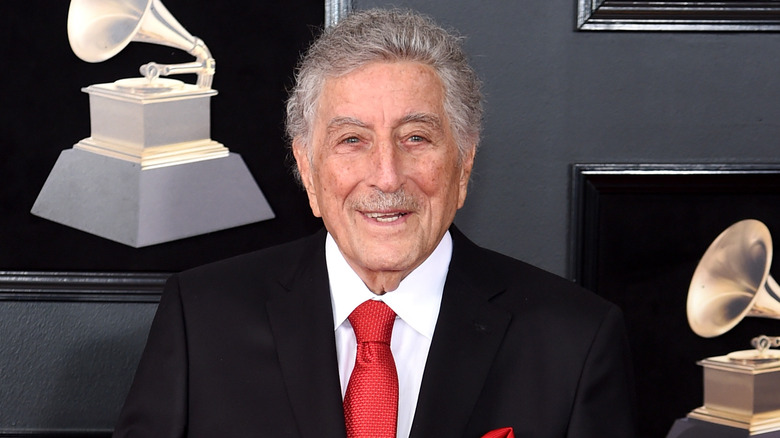
Iconic singer Tony Bennett passed away in 2023. He was 96 years old, but had continued performing almost until the end of his life, which included recording multiple duets with Lady Gaga. Although he received his dementia diagnosis in 2016, it only became public knowledge in 2021.
The decision to share Bennett's diagnosis with the world was one that his wife Susan and eldest son Danny made on his behalf. They revealed it in a 2020 interview with AARP, noting that they were encouraged by Bennett's doctor to keep the classic crooner's brain stimulated by allowing him to continue performing on stage for as long as he could. "I was a nervous frigging wreck [about his every performance]," Susan admitted, "yet he always delivered!"
As one of Bennett's neurologists, Dr. Gayatri Devi, told AARP, "[Bennett] is doing so many things, at 94, that many people without dementia cannot do. He really is the symbol of hope for someone with a cognitive disorder." A 2021 post from Bennett's official X account perhaps summed it up best: "Life is a gift – even with Alzheimer's."