

Outdated Boomer Mental Health Advice Younger Generations Can't Stand
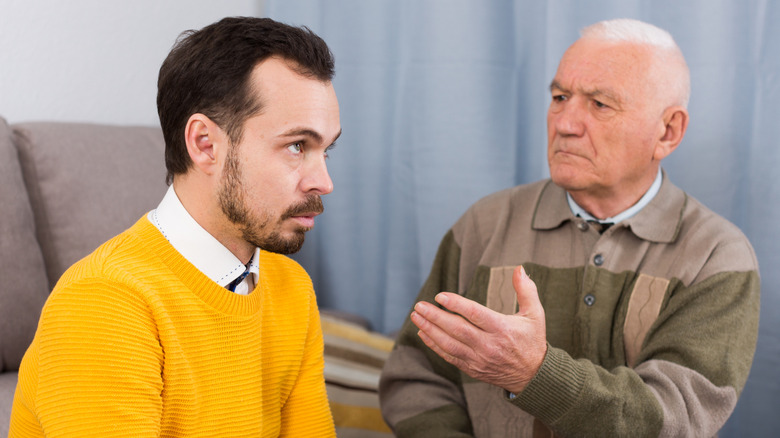
Are you a millennial? Maybe part of Gen X or Gen Z? If you want mental health advice after finding out the mental health myths you should stop believing, you probably wouldn't want to ask a baby boomer.
The reason is simple: Boomers tend to hold tight to some outdated thoughts around topics like getting treatment for mental health conditions or undergoing talk therapy after finding the right mental health therapist. Many people from younger generations just can't stand this line of thinking, as shown in Reddit comments from non-boomers making blanket statements like "boomers don't seem to empathize or understand people."
Perhaps the biggest boomer mantra that makes no sense to younger generations is their willingness to accept (rather than resist) stigma around seeking outside help for problems like depression, anxiety, or just the unpredictability of life. A 2025 Harris Poll found that 84% of people believe there's stigma attached to the phrase "mental illness," with 35% admitting they would see someone in a different light if the person had a mental illness.
Shame and misunderstanding

Boomers aren't fans of therapy any more than they're fans of seeing mental health in a positive light, either. In an interview with Newsweek, therapist Joy Berkheimer explained why. "They were raised in a time where mental health stigma was stronger, and seeking help could be seen as a sign of failure or weakness," she noted. "Boomers don't dodge therapy because they're tougher than younger generations," generational expert Bryan Driscoll shared with Newsweek. "They dodge therapy because they've been shamed out of it."
Another mental health roadblock for boomers could be the notion that feeling nervous or anxious is somehow just an expected aspect of getting older. A 2015 study in International Psychogeriatrics showed that half of the over-60 participants in a survey said they felt that mood disorders were normal aging experiences and not an impetus to seek medical advice.
Beyond stigma and the normalizing of mental health conditions, many boomers may honestly feel that they simply don't need any kind of mental health assistance. A YouGov poll indicated that 71% of boomers thought their mental health was strong. In contrast, just 44% of Gen Z said likewise of themselves. A lack of trust may also play a role in this boomer belief: A 2022 review in the Journal of Applied Gerontology discovered that mistrust of medical professionals (sometimes based on poor past encounters) was a driver of mental health treatment avoidance in seniors.
Therapy and treatments to heal and support the older generation

Ironically, boomers could be poised to benefit significantly if they released their long-held beliefs around mental health in general. According to a 2020 article in Preventing Chronic Disease, many boomers are likely to be caregivers. In turn, this added role may contribute to their worsening mental conditions in time. As mental health expert Dr. Donald A. Malone told Psych Central, "We know for certain that baby boomers have a higher prevalence rate of depression than the generation before them."
In other words, people from younger generations who are frustrated with the traditional mental-health-related views of boomers may be able to help their elders get over their antiquated beliefs, as well as other boomer health myths doctors wish they'd stop believing.
Amy Dickinson, an advice columnist for The Mercury News, may have said it best when she answered a question from an exasperated millennial dealing with boomer parents. "I think it is helpful and compassionate for your generation to give your own parents credit for raising you to be in full touch with your own feelings," wrote Dickinson. "I hope you can encourage your parents to do the same."
If you or someone you know needs help with mental health, please contact the Crisis Text Line by texting HOME to 741741, call the National Alliance on Mental Illness helpline at 1-800-950-NAMI (6264), or visit the National Institute of Mental Health website.