

Anne Hathaway's 7-Word Advice On Aging Is So Perfect It Belongs On A Bumper Sticker
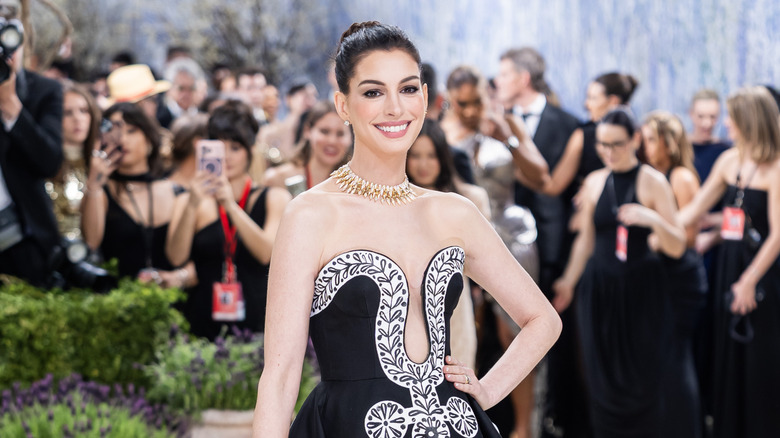
Anne Hathaway recently made headlines when she announced her third pregnancy with hubby Adam Shulman, and swiftly put the over-40 baby boom back in the spotlight. "x Baby, I'm yours x," the 43-year-old penned on Instagram along with a video of herself cradling her growing baby bump, while fresh-faced and wearing a billowy matching ivory skirt and peasant top set.
But as any true and loyal fan of Hathaway's already knows, the actor has never been one to obsess over her age, and she's certainly not going to dictate all of the things she intends to accomplish in life — like a third baby. In fact, her seven-word advice on aging is so perfect it belongs on a bumper sticker. "Aging is just another word for living," she declared during an interview with People in 2023. "And what you do with it from there is personal and up to you. I feel great — I feel better than I did in my twenties because I'm taking much better care of myself," she added.
For Hathaway, her tried-and-true method for embracing the aging process and all that comes with that is simple: she no longer drinks alcohol (you can find her before-and-after booze photos here), and she is a devout user of the Shiseido Vital Perfection skincare line. "I didn't know there was skincare specifically designed for skin in its fifth decade. I'm thrilled to have that extra bit of support," she revealed.
Attitude is everything when it comes to aging well
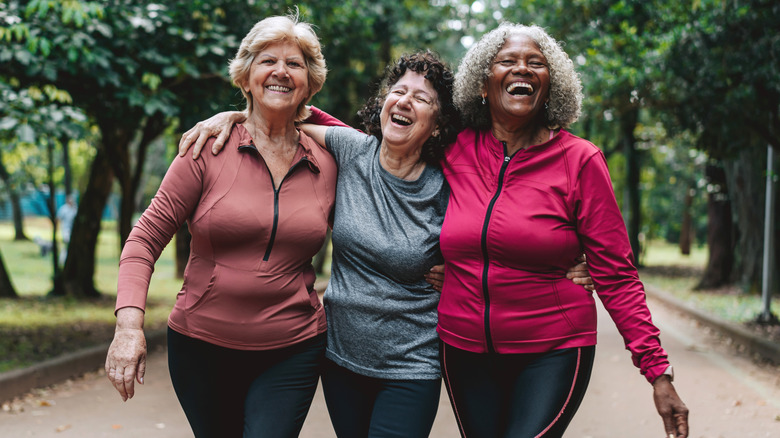
Fortunately, Anne Hathaway isn't alone on her quest to make peace with aging. Angelina Jolie, Tracee Ellis Ross, and Jamie Lee Curtis are all celebrities over the age of 50 who absolutely love the process of aging – and for good reason. As it turns out, your attitude toward aging can influence your health as you age.
According to a study published in Aging & Mental Health in September 2024, those who had negative feelings about getting older walked more slowly than their more zealous counterparts. "Aging expectations are malleable and influence an individual's perceptions of their cognitive functioning," Nikki Hill, associate professor in the Ross and Carol Nese College of Nursing at Penn State and the study's lead author, said in a press release. "'Modifying older adults' aging expectations could support healthier cognitive aging through increased awareness and accurate assumptions about the aging process." After all — to quote the wise and eloquent Hathaway, "Aging is just another word for living!"