

Hygiene Rules For Women In The '50s That Would Leave Gen Z Baffled

If you're Gen Z, you probably wouldn't want to take a time machine back to the 1950s, because you might find some of the health practices from that time period to be odd or even unacceptable by modern standards.
Of course, every decade has embraced some questionable and maybe unsafe hygiene rules. In the 1960s, women were taught to wear heels and pretty regular clothing to the gym, according to a vintage video posted on Instagram. Then, in the 1970s, they were taught to slather their whole being (including private parts) in talcum powder. Newer research, however, has revealed possible links between the personal use of talcum powder and developing certain types of cancer (although that hasn't stopped Gen Z from wanting the powder that dominated '70s beauty).
Basically, the 1950s would probably seem way more unusual to any young, modern woman. But in case you're interested in trying the lifestyle of a '50s-era teenager or housewife, these are some of the now-unusual daily bathing and grooming routines you'd likely have to adopt.
Applying deodorant with your fingers
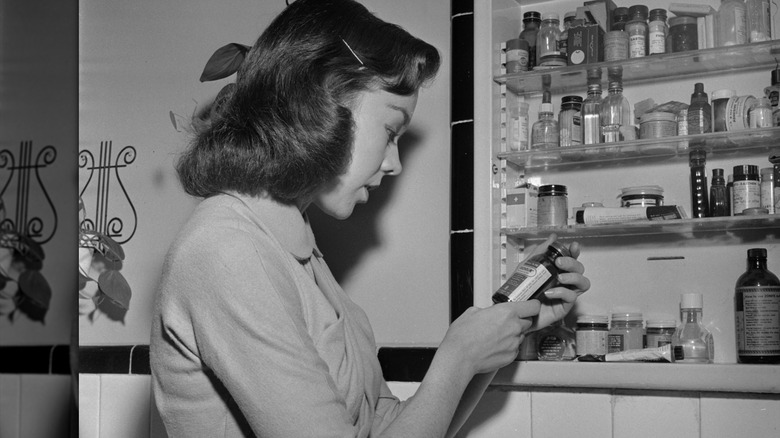
Forget all the convenience that comes with gliding deodorant across your underarms. In the 1950s, you'd dab a substance known as "Mum cream" on with your fingertips. As a vintage 1950s commercial available on YouTube shows, Mum supposedly contained "M-3" to "stop odors 24 hours a day," which is why it was in plenty of medicine cabinets.
To be sure, some all-natural deodorant brands still offer creams that you have to rub on your skin. (Does natural deodorant really work? For some people, it might.) But for the most part, deodorant that comes in stick or aerosol form makes it simpler to smell fresh for the approximately 7.9 billion people who use them, according to Market Report World.
On the bright side, applying deodorant with your fingers isn't exactly the worst ordeal. However, deodorant should be rubbed on clean skin, so if a woman wasn't washing her armpits every day, she might not have been getting the full benefit of her deodorant.
Wearing napkins during your period
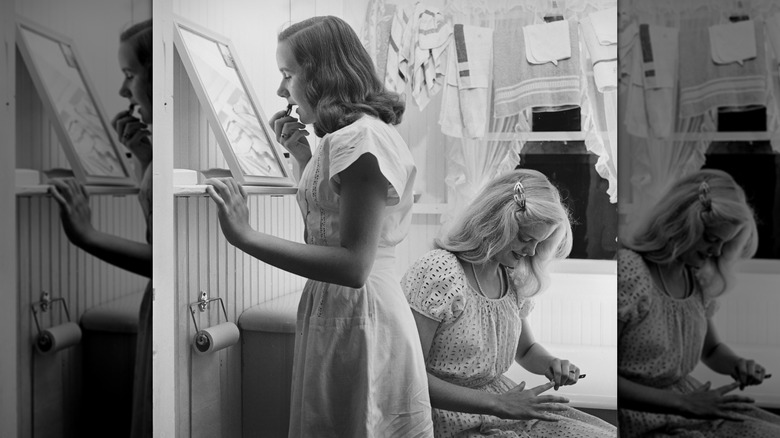
To a 1950s woman, menstruation meant putting on a special belt contraption under her underwear. The contraption held a napkin (now called a pad) in place to absorb her period. It worked to some extent, but was kind of a weird experience because women weren't supposed to talk about it. As Allure points out, one brand's tagline was particularly secretive and head-scratching: "Modess...because."
How did a teen girl figure out how to use a napkin? Her mother would give her a fairly fleeting explanation of how to wear the belt, if she was lucky. As one Facebook commenter recalled, "I came home one day to find one of these [napkin belts] and a book 'So now you're a woman.'" The good news? Tampons were on the horizon and became mass-market items by the 1960s. The bad news? Period stigma still exists and actually rose between 2023 and 2025.
Using one bar of soap for nearly every bathing purpose
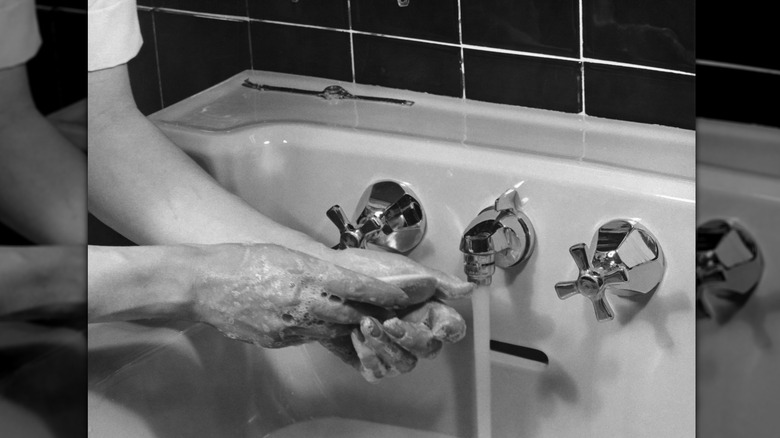
Gen Z has grown up with different soaps for different body parts as part of their comprehensive shower routines (via Vogue). A Facebook thread gushes about the variety of sudsy products, like antibacterial soaps, body washes, and scrubs. Women in the 1950s would probably be surprised. They typically used one bar of soap for all their washing. Quite honestly, women would sometimes use soap for shampoo, too, although liquid shampoo was becoming more popular.
While using a single type of soap works, it doesn't meet the needs of all people. For instance, those with sensitive or dry skin might experience topical reactions to a basic bar of soap, which is why dermatologists often recommend different brands to different consumers. This goes for Castile soap, too. Though Castile is okay to use on your body and has been said to be an all-purpose soap, The New York Times found that it didn't live up to its hype.
Taking a bath once a week
Although Gen Z might only take an "everything" shower (thank you, TikTok) weekly, they do tend to shower more often than that. In fact, 59% of Gen Z respondents told The Harris Poll in 2024 that they shower once a day.
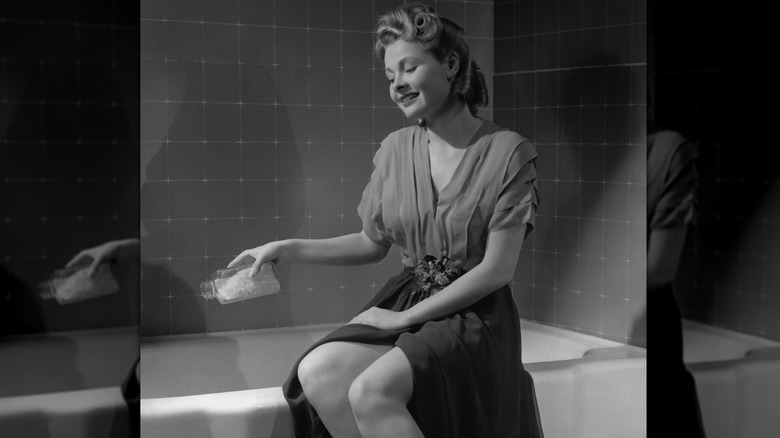
In the 1950s, women were more likely to limit their baths to around once a week, which while unusual isn't necessarily horrible. However, this may not work for every person, because it can lead to clogged pores or itchy skin. With that said, women of the 1950s conducted a quicker sponge bath in a basin daily, at least, so they ostensibly got themselves a little clean each day.