

124 Years Of The US' Worst Parasite Outbreaks

As gross and horrifying as it may seem, parasite outbreaks (like the July 2026 cyclosporiasis outbreak) pop up pretty regularly in the United States. In fact, outbreaks have dotted the country for the past 124 years. These types of outbreaks happen when conditions are favorable for the parasite to find and invade a host.
Not all parasitic invasions require the parasite to get into the body of the host, though. Science Insights explains everything you need to know about head lice, which are parasites that spread through physical contact. Fleas fall under the same category, and can cause diseases that can pass between you and your pets. Other parasites make trouble when they make their way inside humans, which can leave some vulnerable people (e.g., children, individuals with compromised immune systems, older adults) at risk of life-threatening side effects.
Fortunately, plenty of outbreaks are fairly localized, meaning they don't cause issues for tons of people across multiple cities or states. But others have triggered national panic.
1902: Hookworm outbreaks in the South

If you were living in a Southern state in the early 20th century, you were at risk of being infected by a hookworm if you walked around barefoot. Hookworms burrow into the skin and make their way to the small intestine. Drained of nourishment, their hosts typically become anemic, thin, and exhausted. An estimated 40% of white Southerners were infected with hookworms. Children were especially susceptible, many of whom experienced stunted cognitive or physical development (via Rockefeller Archive Center).
Early 1900s through 1950: Malaria outbreaks in numerous states
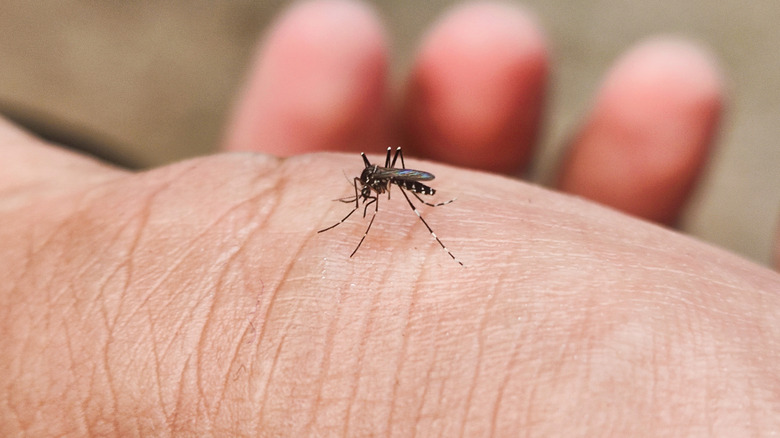
Another parasite-related disease that became prevalent in the early 20th century was malaria. Spread through mosquitos, it was common in many states, including Texas, Nebraska, and Ohio. People infected with malaria usually present with high fevers and other flu-like symptoms (via the CDC). If not treated with medications, malaria can turn deadly. The disease was eliminated from the U.S. in the 1950s, though there have been isolated cases and smaller outbreaks. In 2021, a malaria vaccine was approved by the World Health Organization.
Early 1990s: Cryptosporidiosis in Milwaukee, Wisconsin

In the 1990s, over 400,000 residents of Milwaukee, Wisconsin, were affected by cryptosporidiosis, an infection caused by a parasite that can lead to decreased appetite, vomiting, and upset stomach. According to a 1994 article in The New England Journal of Medicine, the incident stemmed from a parasite passing undetected through a municipal water filtering system. In addition to costing more than $96 million, the outbreak led to the deaths of an estimated 69 people, most of whom were already immunocompromised (via the CDC).
Mid-1990s: Cyclospora found in popular berries and, later, other foods

Cyclosporiasis comes from eating food or drinking water contaminated with the Cyclospora parasite, which infects the small intestine. In the mid-1990s, a cyclosporiasis outbreak was traced to raspberries that were sold across multiple states. All the berries were removed from the market, but not before at least 1,465 people experienced symptoms of the condition (per Newsweek). This outbreak caused the CDC to recognize and track cyclosporiasis as a foodborne disease.
2026: Summer of cyclosporiasis causes national trouble

In July 2026, a cyclosporiasis outbreak linked to a type of imported iceberg lettuce affected 15 states, with over 6,300 cases and at least 2 fatalities as of this publication (per the CDC). Between the mid-1990s and 2026, there were multiple, smaller cyclosporiasis outbreaks, all traced back to fresh produce contaminated with Cyclospora. Since Cyclospora contamination only happens through the spread of feces, people with cyclosporiasis have unintentionally ingested fecal matter.