

The Deadly Frontier Hygiene Mistake Of Laura Ingalls Wilder's Era That Bred Disease
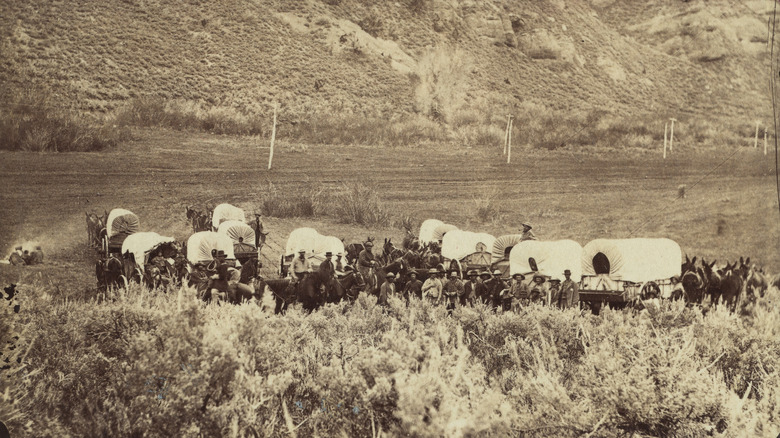
As the old saying goes, hindsight is always 20/20. Simply put, you don't know what you don't know. Take the settlers from the same era as children's author (and actual pioneer) Laura Ingalls Wilder, for example. While many deadly diseases were circulating during that time, it was not smallpox, not scurvy, but cholera that was the leading cause of death and decimated life expectancy on the 19th-century prairie. Tragically, it's possible that the deaths could have been avoided, had the settlers known about a critical hygiene mistake they were making. According to a 2008 article in Transactions of the American Clinical and Climatological Association, settlers unknowingly contracted cholera by collecting their drinking water straight from wells that were in close proximity to pools of human waste and sewage.
Unfortunately, the settlers seemed completely oblivious to just how fatal the mistake was. "[Cholera] was a disease with which people were . . . familiar, yet it was little understood. It would strike suddenly, with no warning, often killing the victim within hours of the first symptoms. It was so uncontrollable that often entire families, even whole emigrating companies, would be wiped out," historian Robert Carter wrote in 1995. Per a 2024 article in Cureus, it wasn't until the mid-1800s when, after mapping and studying an 1854 outbreak, physician John Snow proposed that cholera, the so-called "unseen destroyer," spread not through the air as many believed, but through contaminated drinking water.
Cholera is still a problem today
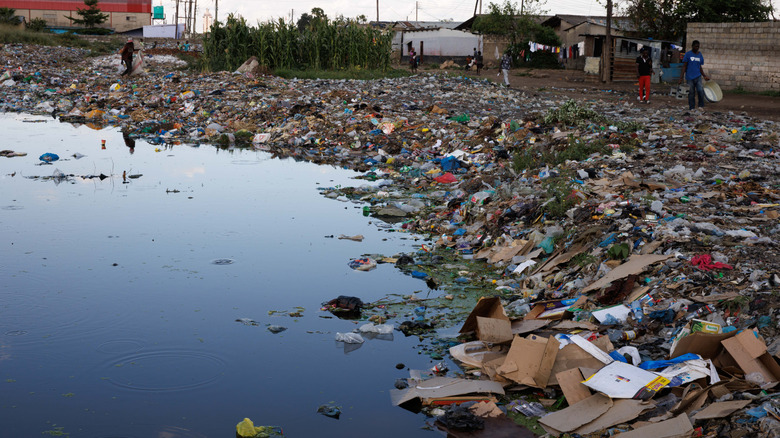
So what is cholera? Simply put, it's a bacterial infection of the intestines that can quickly become life-threatening if not treated promptly. "A perfectly healthy young adult can be working in the field in the morning and be dead by evening," Dr. David Sack, a professor in the international health department at Johns Hopkins Bloomberg School of Public Health, told USA Today in 2025 about the fatal disease.
Even after the medical community figured out how cholera was being contracted, researchers still had to figure out how to treat it. Per a 2004 article in The Journal of Clinical Investigation, it wasn't until the 1960s that scientists discovered how to treat cholera with oral rehydration therapy, a potent liquid mixture comprised of water, sugar, and salt.
Sadly, while we do know what causes cholera and how to treat it, it continues to be a problem in many places across the planet. According to the World Health Organization (WHO), one in four people in the world still do not have access to safe drinking water. WHO estimates that cholera is responsible for the deaths of anywhere between 21,000 and 143,000 individuals globally each year.