

Outdated Boomer Hygiene Advice Millennials Absolutely Can't Stand

Millennials and baby boomers can't even seem to agree on something as basic as hygiene. Over the years, we have seen numerous surveys highlight just how differently the two generations view the concept. According to Newsweek, a Talker Research survey from 2024 found that baby boomers and the silent generation were the least likely to consistently take daily showers and brush their teeth. Michael Genovese, MD, offered an explanation for the hygiene disparity, saying, "Many baby boomers grew up in an era when frequent washing wasn't as culturally emphasized as it is now." Additionally, Genovese believed that the older generation might not be as compelled to maintain hygiene because they don't have many social events to attend.
The differences also show up in how the two generations tend to their homes. MarketWatch notes that Merry Maids conducted a survey in 2017, which showed that 24% of millennials thoroughly cleaned their homes daily in comparison to only 2% of boomers. Fran Walfish, PsyD, a Beverly Hills family and relationship psychotherapist, professed that millennials may be using cleaning as a means to quell their anxiety levels, which were notably much higher than those of the older generation.
Meanwhile, Christina Barber-Addis, PsyD, a clinical psychologist, stated that the more social media-savvy generation could also be trying to keep their homes as aesthetically pleasing as the content they saw online. Barber-Addis also thought that millennials might be trying to send a message that they are "doing better in life than our parents" by keeping their home tidier than theirs. Unsurprisingly, the stark differences between the two generations don't just come out in actions but also in thoughts.
Millennials have thoughts on how boomers organize their kitchens
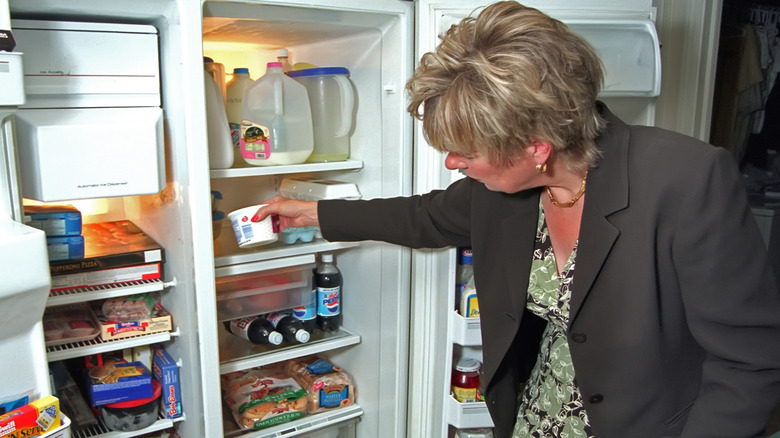
On Reddit, many millennials have complained that their boomer relatives store raw meat right next to cooked foods in the fridge without a care in the world. Needless to say, this nonchalant practice isn't the most hygienic. As the Queensland Government website notes, the practice can give rise to cross-contamination, allowing bacteria in raw meat to travel onto cooked food and eventually into a person's digestive tract. Once the bacteria enter a person's system, they could end up with food poisoning. The article recommends storing meat on the bottom shelf of the fridge to ensure that the meat's juices and bacteria don't enter into cooked food. Additionally, it's a good idea to keep meat in tightly sealed bags to further reduce the risk of cross-contamination.
Many Redditors also don't understand why boomers refuse to throw out food that's clearly past its expiration date. Now, there are plenty of foods that you should never eat past the expiration date. Somewhat surprisingly, it is generally safe to eat expired frozen foods, which the boomer generation does seem to be fond of. Of course, the younger generation's complaints go beyond their fridge organization skills.
Some millennials have found that their boomer relatives don't seem to care where they place the utensils that they use for their everyday cooking. According to one Redditor, their boomer grandmother would regularly clean her chopping board and place it next to trash and cleaning chemicals. A minor leak from cleaning agents and the germs from trash both pose the risk of cross-contamination, as the chopping board would inevitably come in contact with raw food.
Millennials think that boomers ought to be washing their hands more often
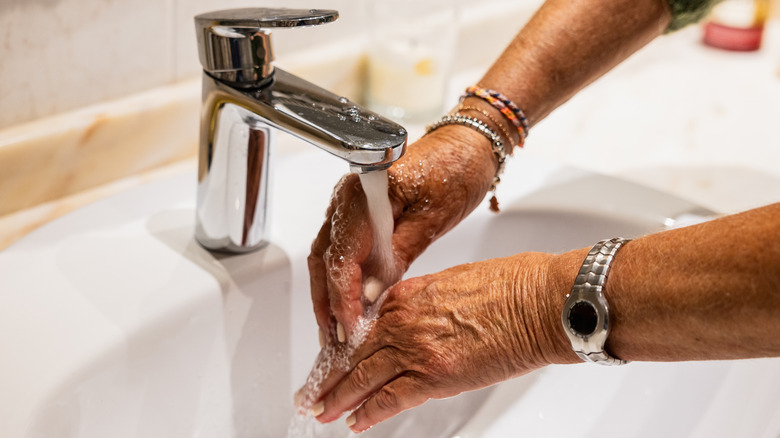
In one Reddit thread, many millennials shared that their boomer relatives weren't all that concerned about washing their hands regularly. Many agreed that the older generation seemed to be under the impression that hand washing, especially before cooking, wasn't necessary if they hadn't been outside. However, that belief obviously isn't true since germs are all around us at all times.
Throughout the course of the day, a person regularly comes in contact with numerous surfaces in the house, like doorknobs, railings, and light switches, that have been touched by loads of other people and could be carrying germs that are transmitted through touch. Without proper hand washing, these germs could not only make the carrier sick but also be transmitted to others. Considering what really happens when you don't wash your hands, it's probably best to just take the easy step to be on the safe side. Additionally, it's important to wash your hands in a proper way to keep germs at bay. On a similar note, many Redditors have found that boomers are quite nonchalant about licking their fingers and touching a communal plate of food.
According to a 2021 study in the Journal of Community, when a person licked their fingers and touched a surface, they could be transferring pathogens onto the surface. When somebody else touched that surface and then touched their nose or their mouth, those viral pathogens could enter their body and potentially make them sick.
The younger generation thinks that boomers need to re-evaluate their love for bar soaps
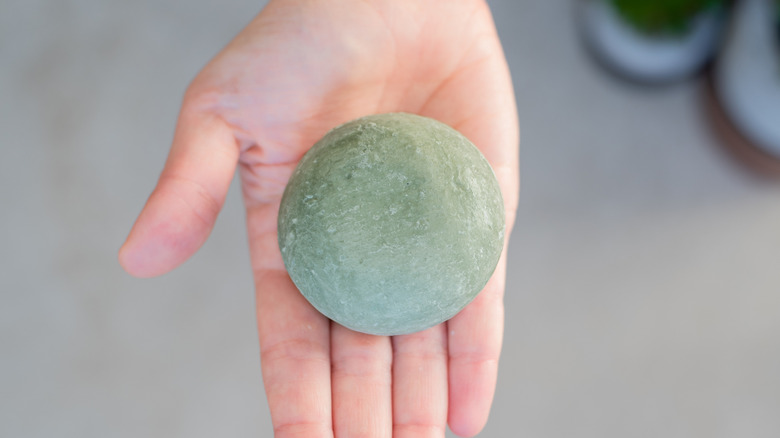
For many millennials, a shower is a multi-step routine consisting of a variety of products that leave them smelling good and their skin uber soft. In contrast, baby boomers preferred to keep things super simple, often opting to use a bar soap to cleanse everything from head to toe. Thus, millennials found that quite outdated. According to a 2016 survey by Mintel, 48% of consumers in the U.S. believed bar soaps carried loads of germs.
Unsurprisingly, about 60% of these were people aged between 18 and 24, and only 31% were aged 65 and over. Now, studies on whether bar soaps are actually full of germs have given mixed results. A 2006 study in the Indian Journal of Dental Research found that bar soap had around two to five types of germs. Chatting with Everyday Health, Kelly Reynolds, PhD, a professor in public health and environmental science at the University of Arizona, shared that bar soaps might have germs like E. coli, Salmonella, and Shigella bacteria and possibly even viruses like norovirus, rotavirus, and staph.
The website also noted that previous studies on bar soaps only showed the presence of germs and viruses and didn't look into whether people actually caught the diseases. However, a 1988 study in Epidemiology and Infection found that contaminants from bar soap didn't transfer to the skin during hand washing. Even with hygiene aside, though, the bigger question remains: Is bar soap or body wash better for getting clean?
Millennials think boomers need to stop washing their hair as often
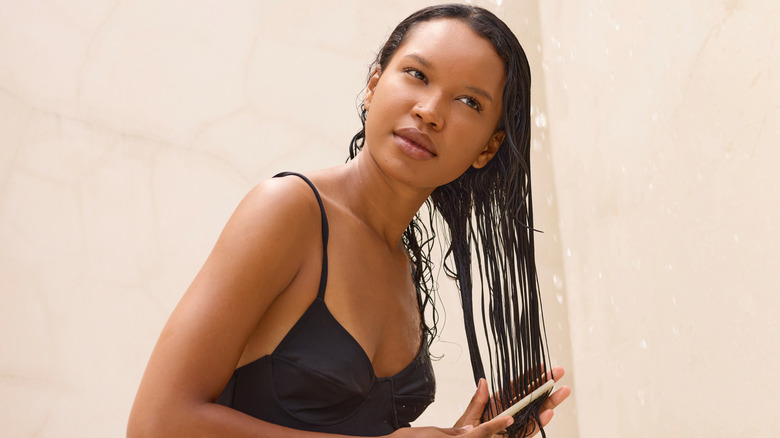
Over the years, many millennials and boomers have butted heads over how often hair should be washed. While a portion of the younger generation argues that once every few days is fine, a part of the older generation thinks it's best to wash your hair every single day. Unsurprisingly, an exclusive survey conducted by Health Digest in 2022 found that more people wash their hair every day than you would think. Out of the 583 readers surveyed, 27.96% said they gave their tresses a wash every day.
Talking to Vogue, Rosi Fernandez, director of Ananda Ferdi, said there was no one-size-fits-all approach to hair washing because factors like a person's geographical location, hair type, scalp condition, and lifestyle could influence the personal choice. She described how someone living in a polluted city who works out more frequently would likely have to wash their tresses more often than someone living in the countryside who isn't as active.
Meanwhile, Murad Alam, MD, vice chair of the department of dermatology at Northwestern University Feinberg School of Medicine, told The New York Times that washing hair daily could benefit those with oily scalps since shampoo helps cleanse sebum, which makes it oily in the first place. Even those with fine hair and those who use hair products every day could do with washing their hair daily. However, she did not recommend daily washes for those with curly or brittle hair since that could lead to breakage. In contrast, dermatologist Shereene Idriss, MD, did not recommend daily washes for anybody, cautioning that they could lead "to irritation, inflammation and other scalp problems."
Millennials aren't all that interested in loofahs and washcloths
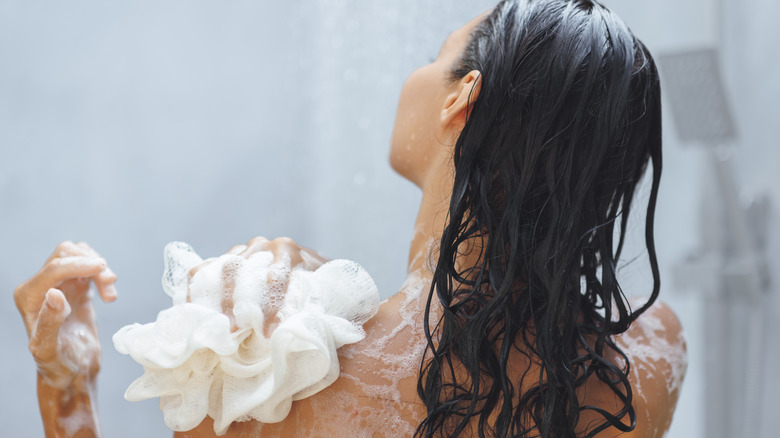
Many boomers grew up using a washcloth or a loofah in the shower, believing it was a great means to thoroughly scrub the body off dirt. While many members of the older generation tried to get their millennial relatives to incorporate the two products into their daily routine, they politely declined because it felt unhygienic to them.
Dermatologist Hadley King, MD, told Marie Claire that washcloths could be pretty unhygienic since they caught germs from the skin during the process of washing and then transferred them back onto the surface during subsequent uses. This reintroduction of germs posed the risk of infection and irritation. The risk of bacterial and mold growth could be reduced by leaving the damp washcloth out to dry. While King advised cleaning the washcloth in a washing machine cycle every three to four days to keep it hygienic, dermatologist Rachel Nazarian, MD, recommended it should be washed after every use.
Using a loofah isn't much better either. Speaking to Real Simple, Gretchen W. Frieling, MD, board-certified dermatopathologist, professed that loofahs could also be full of germs and other unsanitary things like grime and oil that we scrub off our bodies during a shower. She went on to explain how using a loofah could be unhygienic, saying, "This can cause infection if washing an open cut, trap bacteria inside your pores, and prevent you from really cleansing yourself from germs." Frieling recommended that a loofah should be thoroughly washed once a week and then hung to air dry completely to reduce the risk of bacteria.