

Shirley Maclaine, 92, Quit Smoking A Decade Ago — But She Won't Give Up This Vice
We may receive a commission on purchases made from links.
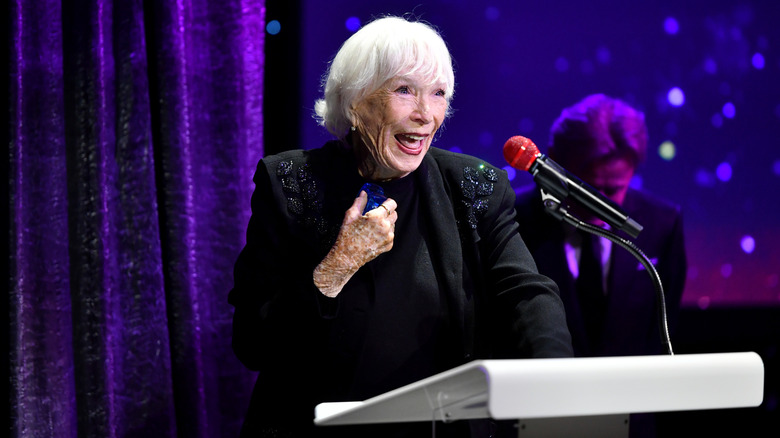
Award-winning actor Shirley MacLaine is perhaps best known for her starring breakout role in Alfred Hitchcock's 1955 film "The Trouble with Harry," as well as roles in "The Apartment," "Terms of Endearment," and "Steel Magnolias." But as it turns out, she's something of a lifestyle connoisseur and longevity expert, as well. "I have what I consider just a perfect life... I eat what I want, I sleep when I want," the "Sage-ing While Age-ing" author told People in 2019, ahead of her 85th birthday. Fast forward to her 90th birthday on April 24, 2024, and she was still singing the same tune. "I have my friends and I am really healthy," she declared during an interview with People.
In March 2017, MacLaine revealed to The Florida Times-Union that she had given up smoking the previous year. (In case you're wondering, here's what happens to your lungs when you give up smoking.) Ironically, however, it appears the longevity aficionado draws the line at her beloved cocktail. As reported by the New York Post, in December 2025, she was spotted enjoying a casual lunch with her male assistant, noshing on a sandwich and sipping an ice-cold martini. Cheers?
It's rumored that Shirley MacLaine has ignored her doctors' warnings about her drinking

It's rumored, however, that Shirley MacLaine's boozy lunch ritual is anything but harmless or merely recreational. "Shirley can't seem to get through a lunch without wine or her favorite cocktail, and people around her are shaking their heads," a source told Globe Magazine in April 2025. "She's ignoring warnings from doctors about drinking too much, and it has friends worried about her health. She's about to turn 91 and can barely walk on her own, and the fear is that she's going to fall and hurt herself while tipsy," the anonymous insider added.
MacLaine, however, was adamant during an interview with The Florida Times-Union in 2017 that she's never had an issue with alcohol or drugs. "I've smoked two joints. I'm a dumb-dumb when it comes to how you can enjoy yourself," she told the daily newspaper. Instead, MacLaine claims her only addiction is to sugar. "I don't eat a lot of it, but I have to have it every day," she said during an interview with The Guardian before helping herself to a Twix and a Snickers from the hotel mini-bar for the reporter and her to share.
Experts say alcohol risks increase as people age
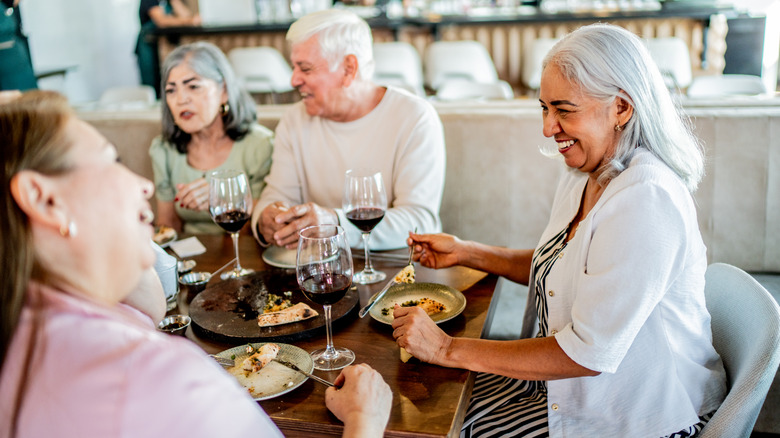
Everything in moderation? Contrary to the anonymous insider's concerns, according to registered nutritionist Charlotte Faure Green, Shirley MacLaine's love of martinis isn't necessarily detrimental to her health. "A daytime drink can be absolutely fine for some people, especially when it is just the one, and with food," she told Hello!. "Eating slows the absorption of alcohol, so the impact on the body and mind is gentler." And as it turns out, Green said that MacLaine's age isn't so much of a factor, either, as long as she's drinking responsibly. "At 91 it really is all about balance. The research on longevity and staying youthful keeps coming back to the same things — staying connected, eating well, moving your body, and finding moments of pleasure in the day," Green explained. She added that even a "well made martini with lunch" can be beneficial and supportive of "a very happy and long life." It should also be noted that martinis are among the list of alcoholic drinks with fewer calories than most.
That being said, we all know that drinking alcohol has real effects on your body — and, unfortunately, those effects increase as you age. Sara Jo Nixon, the director of the Center for Addiction Research & Education at the University of Florida, told The New York Times in 2025 that alcohol affects "virtually every organ system in the body." She added, "It particularly impacts older adults, because there's already some decline or impact in those areas." The National Institute on Alcohol Abuse and Alcoholism recommends that those 65 years or older and not currently on any medications consume no more than one alcoholic drink per day on average, and no more than seven per week (via Johns Hopkins Medicine).