

Boomer Celebrities Who Were Diagnosed With Rare Diseases
Countless people suffer from rare diseases, and that includes more celebrities than you might realize. A 2024 study in The Lancet Global Health estimated that 300 million people were living with a rare disease. Additionally, Ann Nordgren, professor of clinical genetics at the Karolinska Institutet and senior consultant at Karolinska University Hospital, said that approximately 5% to 7% of the world's population had been diagnosed with a rare disease. According to Raredisease.org, half of the one in 10 Americans who live with rare diseases are children.
Shockingly, only 5% of 100,000 rare conditions have an approved treatment. Per the 2024 study, the reason for this disparity could be partially chalked up to the idea that it is less economically feasible for pharmaceutical companies to put their resources toward developing cures for conditions that affect fewer people. As a result, even the treatments that do exist could be out of reach for many. Even with all the scientific advancements that have been made, it can still take five years or more for a person to be accurately diagnosed with a rare disease.
Nordgren told the Karolinska Institutet that the reason for long gaps in diagnosis is that there aren't many diagnostic tools available to identify genetic conditions, which rare diseases often are. Indeed, the aforementioned study found that genetics can account for around 80% of rare diseases. While some celebrities have openly spoken about their experiences with rare diseases to increase awareness, others have embarked on charitable endeavors to help others who might be in their shoes.
Robin Roberts was diagnosed with myelodysplastic syndrome 5 years after becoming cancer-free
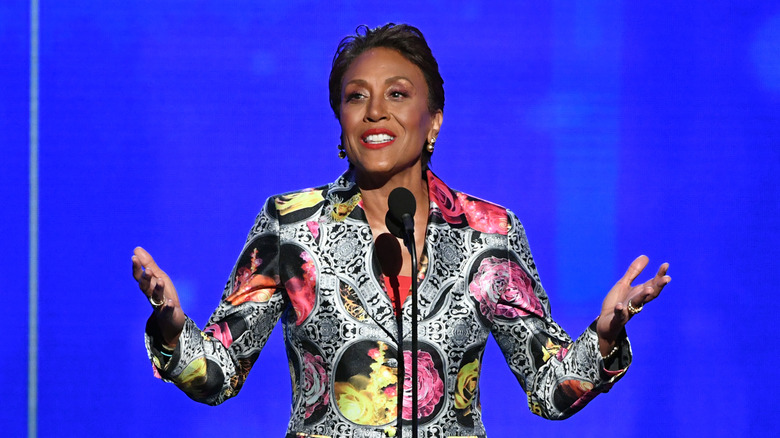
Robin Roberts' history with cancer possibly led her to develop a rare blood disease. During a 2013 episode of "Good Morning America," the beloved news anchor recalled how she had found it hard to focus and dealt with "bone-weary exhaustion" while covering the 2012 Oscars. At the time, she was five years out of her breast cancer treatment. Her doctors immediately suspected that she had myelodysplastic syndrome (MDS), a group of blood cancers that lead to the production of abnormal blood cells in the body.
MDS affects four in 100,000 people in the U.S. each year and is more commonly found in males over the age of 60. People who have had cancer treatments also have a higher chance of developing the disease. Roberts shared that she had been told that her life expectancy didn't look promising without swift treatment. Speaking to WebMD Magazine in 2015, Roberts revealed that she had to undergo chemotherapy and a bone marrow transplant as part of her treatment.
Initially, she was under the impression that a person's siblings were a given match for a bone marrow transplant. However, after she learned that the odds of having a sibling be a donor match were only 30%, she was naturally even more grateful that her sister could be her donor. After completing her treatment process, Roberts used her platform to encourage people to become bone marrow donors. Discussing her motivations for her support of the cause, she said, "My mama always said, 'Make your mess your message" (via WebMD Magazine).
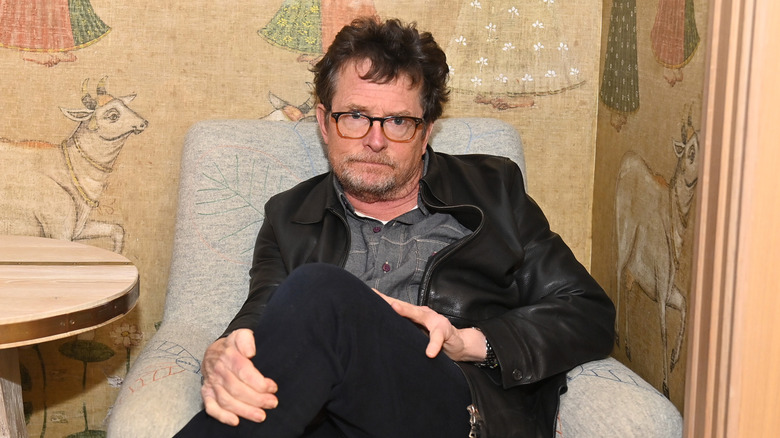
Michael J. Fox received a Parkinson's disease diagnosis at 29
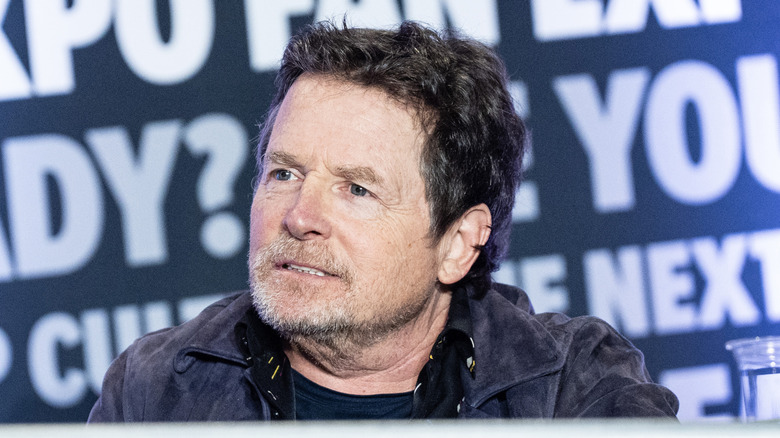
While Michael J. Fox was filming "Doc Hollywood" in 1991, he noticed a tremor in his pinky finger. After visiting a neurologist, the "Back to the Future" star was diagnosed with early-onset Parkinson's disease. In "Still: A Michael J. Fox Movie," the beloved actor recalled his reaction to receiving the diagnosis at the age of 29, saying, "I remember standing on the street looking for an answer. My world blew up. I should've seen it coming, the cosmic price I had to pay for all my success."
Per Johns Hopkins Medicine, only 2% out of 1 million people diagnosed with Parkinson's disease are under the age of 40. In a 2026 Time Magazine interview, Fox admitted that he also initially saw his condition as an "old person's disease." Over the years, the comedian has remained honest about what his life has been like as a celebrity who has been diagnosed with a life-threatening disease. In "Still: A Michael J. Fox Movie," the activist opened up about living with chronic pain, saying, "I'm in intense pain. Each tremor is like a seismic jolt."
Additionally, during a 2023 interview with The Sunday Times, Fox said that his pain was only further amplified by all the broken bones he had dealt with over the years. In a 2024 Entertainment Tonight interview, Fox shared that he was more focused on finding a cure for Parkinson's disease through his foundation rather than his own experiences. Despite Michael J. Fox's history with Parkinson's disease, he has continued to make guest appearances in movies and television shows and has received numerous Emmy nominations.
Linda Ronstadt was unable to perform after being diagnosed with progressive supranuclear palsy
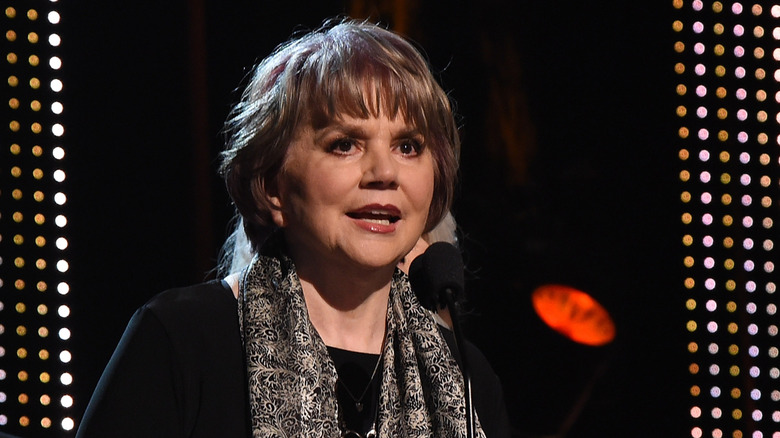
During a 2025 chat with AXS TV, Linda Ronstadt shared that she had realized that something was amiss with her health when she found herself unable to sing during rehearsals. Despite the rock icon's best efforts, she was "shouting and barking" instead of singing. In 2013, she was diagnosed with Parkinson's disease. During a 2022 appearance on "Today," Ronstadt shared that doctors eventually discovered that she had progressive supranuclear palsy (PSP), which is a disorder that causes similar symptoms to Parkinson's. PSP only affects approximately 10 people out of 100,000, per a 2023 paper published in Parkinsonism & Related Disorders.
Although PSP and Parkinson's disease are similar diseases, the former has a much faster rate of regression. During Ronstadt's appearance on "Today," she shared that although she was unable to sing due to the neurodegenerative disease, she still listened to music in her head. However, the "Don't Know Much" singer admitted she couldn't control which tunes played in her head, and she would sometimes have to sit through awful Christmas carols.
When the New Yorker asked Ronstadt how she came to terms with not being able to continue her passion for singing due to her health issues during a 2019 interview, she replied, "I've just accepted it. There's absolutely nothing I can do." The Grammy winner also revealed that there was no real cure for PSP, and the disease didn't respond to medication for Parkinson's. While she spends most of her time at home resting, reading, and listening to music, she does try her best to go outside a few times a year.
Karen Duffy used philosophy to cope with neurosarcoidosis
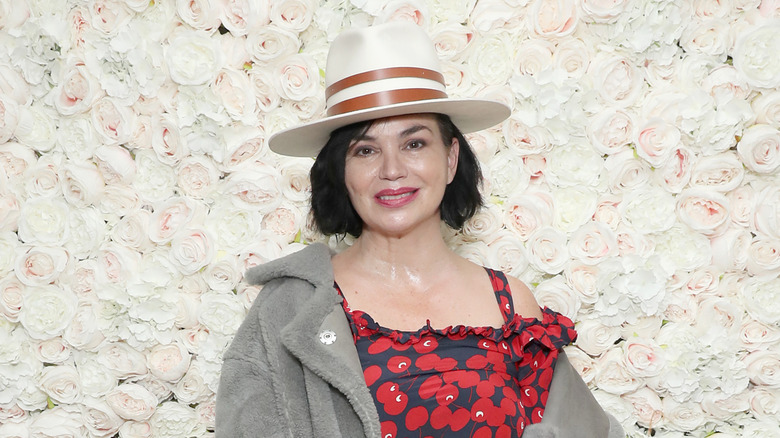
During a 2021 chat with Sarcoidosis UK, Karen Duffy recalled how she had been dealing with a headache that extended from below her ear to her neck when she was in her late 20s. About a year and a half to two years after she started looking into the root of the problem, she was diagnosed with sarcoidosis of the central nervous system.
Neurosarcoidosis is a chronic disease that can cause inflammation in one or more parts of the nervous system, including the brain, spinal cord, and optic nerve. The inflammation eventually interrupts communication in the central nervous system, which in turn causes a decrease or loss of numerous body functions. About 60 out of 100,000 people in the United States have been diagnosed with sarcoidosis (via a 2022 study in JAAD International), and only 5% to 15% of those patients develop neurosarcoidosis (per a 2016 study in BMC Neurology).
In a 2023 appearance on the "Tamron Hall Show," Duffy described the chronic pain she experienced. "When I wake up in the morning, it feels like a donkey with ice skates is kicking me in the neck. But then when I take the medicine, it feels like the donkey is kicking but he's wearing skate guards." The former MTV video jockey shared that she had adopted stoicism to deal with her pain. As a result, Duffy strongly believed that while she didn't have much control over what happened to her, she could choose how she would react to it. With that in mind, she practices gratitude and tries her best not to let her pain make her suffer.
Huey Lewis faced sudden hearing loss due to Meniere's disease
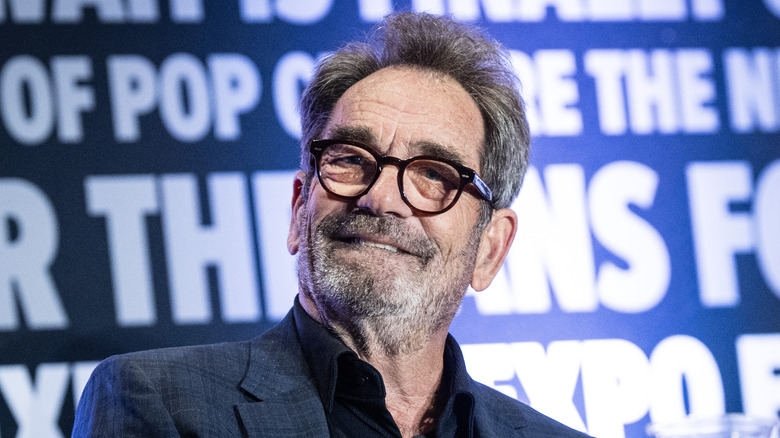
In a 2025 interview with AXS TV, Huey Lewis shared that his health troubles began decades prior, when he had to cancel a show due to a debilitating vertigo episode. Five years after that, he faced yet another bout of intense vertigo. Another five years after that, he randomly lost between 70% and 80% of his hearing in the right ear. Over the next two decades, the "Power of Love" hitmaker solely relied on the compromised hearing in his left ear to get by.
However, he lost the hearing in his left ear before a performance in Dallas in 2018. Two months after that, Lewis took to X, formerly known as Twitter, to announce that he had to cancel the remainder of his tour because doctors believed that he had Meniere's disease and he couldn't perform until his condition improved. According to Stanford Medicine, Meniere's disease only affects one in 2,000 people. The inner ear disorder can bring on numerous symptoms in varying intensity, including tinnitus, ear pressure, vertigo, and hearing loss.
During Lewis' chat with AXS TV, he confirmed that he experienced the syndrome in episodes where he would go from being able to listen to speech through his hearing aids for a few weeks to being completely deaf during other weeks. In a 2025 People interview, Lewis shared that while getting cochlear implants had greatly improved his hearing of speech, he wasn't able to hear music. After deeming recording music "the best feeling in the world," he said, "But I'm never going to get there. I mean, I might get to where I can try to, and I'm not going to give up."