

4 Hygiene No-Nos Restaurant Customers Are Guilty Of In The First 10 Minutes
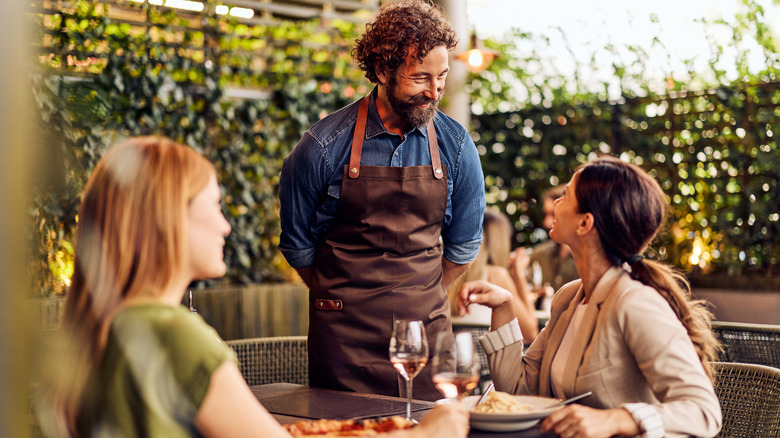
When most of us think about restaurant hygiene, we often think about the responsibilities of the establishment, the owner, and their staff. What's their sanitation score? When was the last time their kitchen was inspected? Is everyone washing their hands? All fair questions.
Rarely, however, do patrons think about the ways in which they are also held to a certain set of hygiene standards. Truthfully, though, ensuring a clean and safe dining experience at a restaurant is a two-way street. While customers are usually quick to abide by the obvious shoes-and-shirt-required rule, unfortunately, many are also guilty of committing five restaurant hygiene no-nos — and in the first 10 minutes, no less. Whether they're using the restaurant's pre-cut lemons, setting their handbag on the table, committing the grave offense of double-dipping, or even abstaining from washing their hands before they sit down to eat, dine-in customers are often unknowingly putting their own health, as well as the health of others, at serious risk. Let's discuss, shall we?
Washing your hands before sitting down is a must
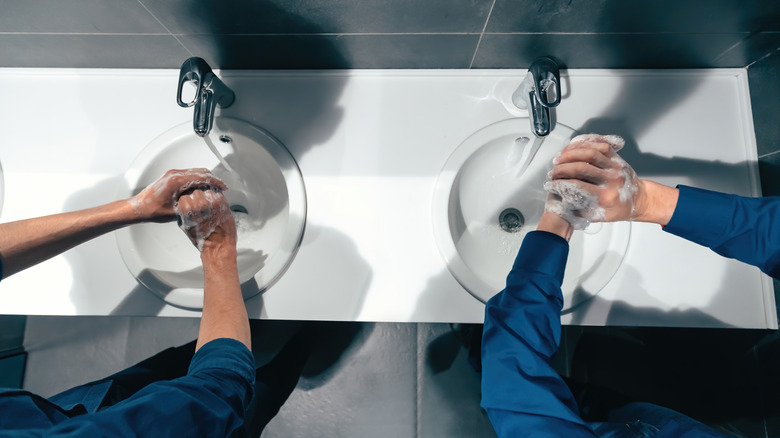
This one should probably go without saying, but you are committing a serious hygiene offense if you don't actually take the time to wash your hands before you sit down at a restaurant. Simply put, no one wants your grimy, unwashed mitts foraging through the communal bread basket.
According to the Centers for Disease Control and Prevention (CDC), washing your hands can help stop the spread of respiratory and diarrheal infections. Unfortunately, if you are one of the select few who wash your hands before sitting down for a meal at a restaurant, you're probably doing it wrong – in other words, not long enough. While the water temperature doesn't actually matter when it comes to handwashing, it is imperative that you get a good lather going and scrub for at least 20 seconds. Next time, consider singing the entire "Happy Birthday" song not once, but twice!
Steer clear of the pre-cut lemons
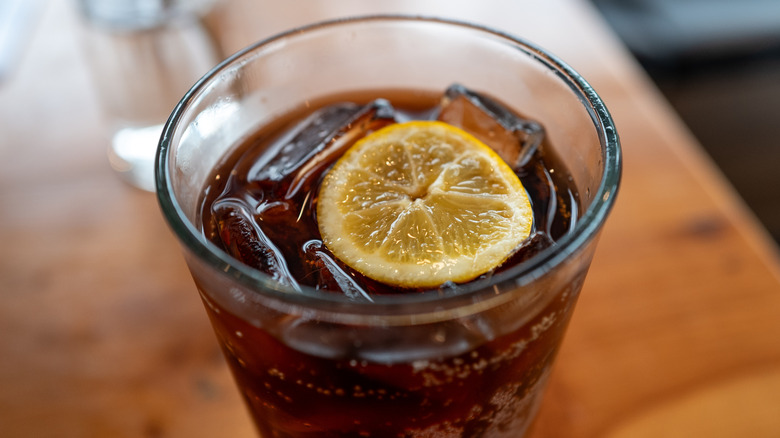
Eighty-six the pre-cut lemons! No, really. While many sit down at a restaurant and immediately begin flavoring their water, tea, or other beverage of choice with a nice slice of pre-cut lemon that the server has left on the table or perched on top of the bar, it's actually best to forego the sliced lemons altogether. But why exactly? As it turns out, pre-cut lemons are one of the most surprisingly dirty things you'll find in a restaurant.
"People are touching the lemon in your glass, handling it, cutting it, placing it in a container or a cup, or a glass; and then picking up those slices at a later point in time and dropping them into a drink and putting them on the rim of a glass," Philip Tierno, Ph.D., a clinical professor of microbiology and pathology at New York University School of Medicine and author of "The Secret Life of Germs" told Elle in 2016. "You can easily see how those lemon slices and lemon wedges can be contaminated." But don't just take his word for it. According to a 2007 study published in the Journal of Environmental Health, 53 out of 76 restaurant lemons swabbed harbored growing microbial species. So yeah, keep calm but DO NOT squeeze on!
Keep your handbag off the table
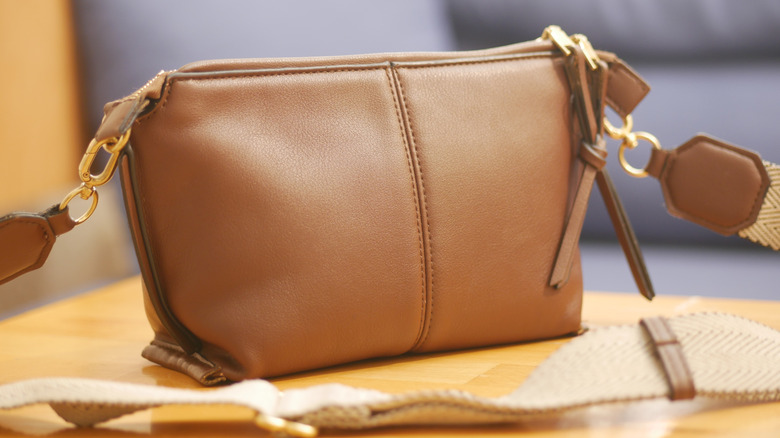
Handbags do not belong on the table! Not only is it bad manners, but it's gross! Don't get us wrong, we love and appreciate a good bag as much as anyone else. But that doesn't mean the purse you've carried around all over town should be sitting on the table next to the food you're about to consume.
According to a study conducted by Initial Washroom Hygiene, 20% of the handbags they swabbed harbored harmful bacteria. "Handbags come into regular contact with our hands and a variety of surfaces, so the risk of transferring different germs onto them is very high, especially as bags are rarely cleaned," Peter Barratt, a technical Manager at Initial Hygiene, said in a press release (via CBS News). The worst part? Some handbags even rival a toilet seat when it comes to cleanliness, or lack thereof in this case. "About a third of them have fecal bacteria on them," Charles Gerba, a University of Arizona microbiologist, told Today.
Double dipping is a no-go
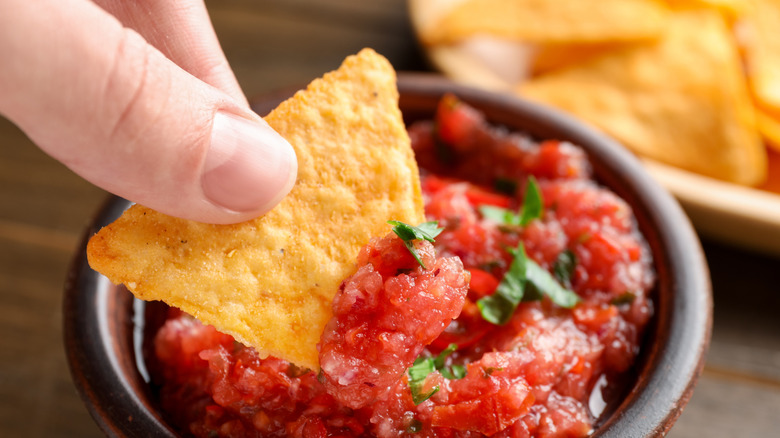
Everyone loves a good appetizer! However, they do not love eating salsa or dip from the same platter you just dipped your chip into, took a bite, then dipped again. Sadly, however, this restaurant diner-on-diner crime goes down way more often than one might think — and usually during the first 10 minutes of the meal, as appetizers are always brought out first.
According to a 2009 study in the Journal of Food Safety, the amount of bacteria in a dip exponentially increased after a person double-dipped. "We went to the lab and found out again that each time you double dip, you're leaving about 150 to 1,000 oral bacteria in the dip," Professor Paul Dawson, a food scientist at Clemson University and the lead author of the study, later recalled during his TEDx Talk in 2020. "You can imagine at a party, Super Bowl party, where you've got multiple people going to the dip, if they're all double dipping, that dip may soon become like a bacterial soup." And as it turns out, salsa proved to have more bacteria than a cheese- or chocolate-based dip. "That's because the sauce is a little thinner, so more of the contaminated dip goes back into the common bowl," Dawson explained. Double dippers, beware!