

Medicine Cabinet Must-Haves Every Boomer Should Already Own
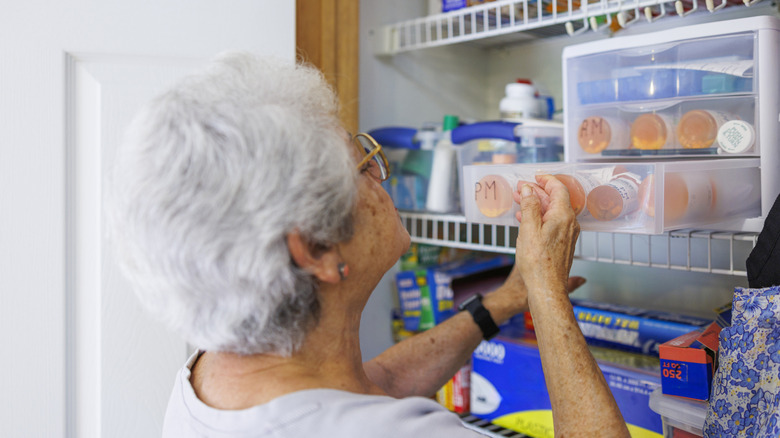
Aging comes for us all; that's a fact. Alas, not everyone prepares enough for that inevitable process. While keeping a positive attitude about aging has proved to have many health benefits (take 96-year-old June Squibb's advice on aging, for instance), it's important to be prepared, too. Moreover, life's full of aches and pains — and unfortunately, the aging process almost always ups the ante, simply due to the sheer wear and tear on our bodies and what happens to our joints as we age.
Enter: the medicine cabinet must-haves every boomer should already own. "Keeping your medicine cabinet prepared is one of the easiest things you can do for your family," shared Dr. Andrew Wong, a primary care physician with Hartford HealthCare Medical Group. "It saves you from a lot of unnecessary stress and gives you a solid first step before you need professional care."
From pain relievers to over-the-counter heartburn medications and even special bandages for wound care, there's a laundry list of things boomers should stock up on.
Pain relievers

Acetaminophen (e.g., Tylenol) is "an effective and useful medication for fever and mild pain syndromes in older adults," Dr. R. Sean Morrison, professor and chair of the Brookdale Department of Geriatrics and Palliative Medicine at Mount Sinai's Icahn School of Medicine, told AARP.
Nonsteroidal anti-inflammatory drugs (NSAIDs) like ibuprofen (Advil) and naproxen (Aleve) are also okay, but carry an increased bleeding risk. "[NSAIDs] can be safe, but only if you have talked to your doctor or pharmacist about whether there are reasons that one might not be safe for you," advised Dr. Katherine Bennett, assistant professor of medicine in the Division of Gerontology and Geriatric Medicine at the University of Washington (via AARP).
Topical pain relievers
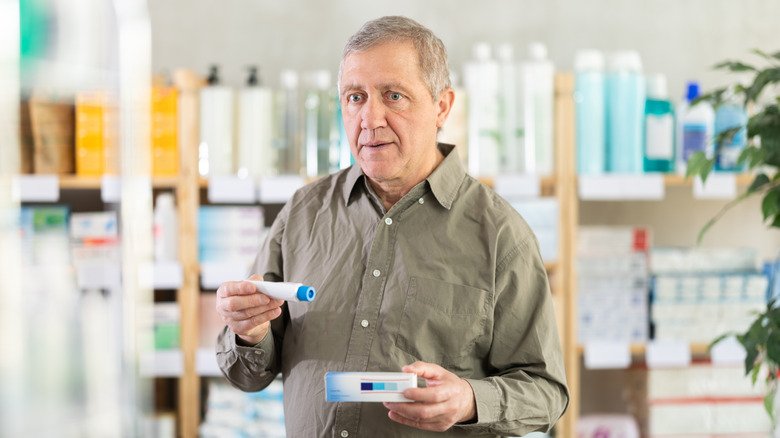
Pain relievers of the topical variety (like Bengay and Icy Hot, which contain methyl salicylate or menthol) are great to have, too. They can especially come in handy when dealing with pesky arthritic pain. "Many times in my older adult patients, I will go with those first," Stefanie Ferreri, a pharmacist and chair of the Division of Practice Advancement and Clinical Education at the UNC Eshelman School of Pharmacy, told AARP.
Heartburn medication
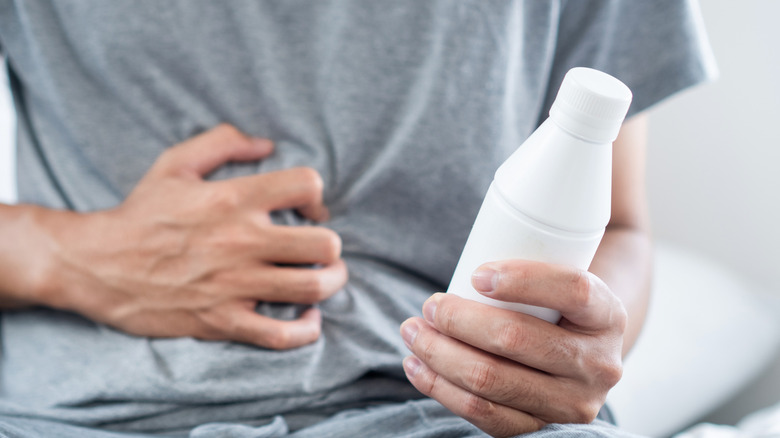
Boomers tend to be more susceptible to heartburn, and should consider stocking up on over-the-counter (OTC) antacids, H2 blockers like Pepcid, and even proton pump inhibitors like Prilosec OTC and Nexium.
According to Dr. Katherine Bennett of the University of Washington's Division of Gerontology and Geriatric Medicine, the lower esophageal sphincter (LES) tends to weaken with age (via AARP). "And it can just make you more prone to having the acid end up in your esophagus instead of staying where it's supposed to, in your stomach."
Allergy meds
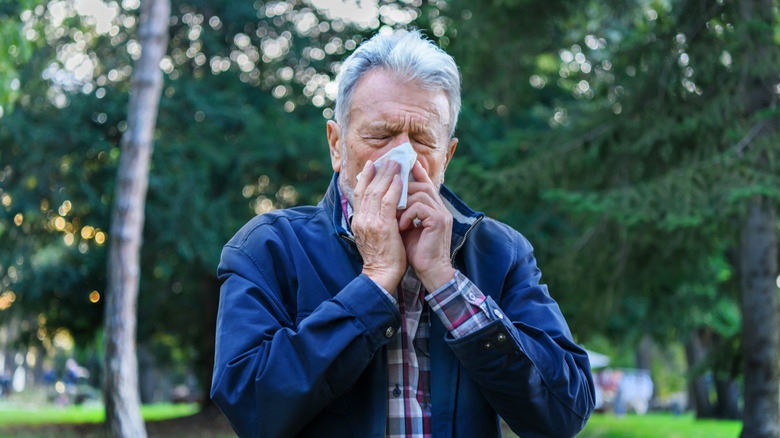
"As we age, our immune systems get weaker, putting older Americans at higher risk for disease, including allergic reactions," Dr. Tiffany Owens, an allergist at the Ohio State University Wexner Medical Center, shared with AARP.
With that said, not all over-the-counter allergy (OTC) relievers are created equal. "Older adults should keep in mind that [OTC] allergy medications can increase the risk of falls or over-sedation, particularly medications like diphenhydramine and other allergy medications that are not specified as non-drowsy," warned Lee Sommerfeld, DO, a family medicine specialist with Banner Health.
Bandages for sensitive skin
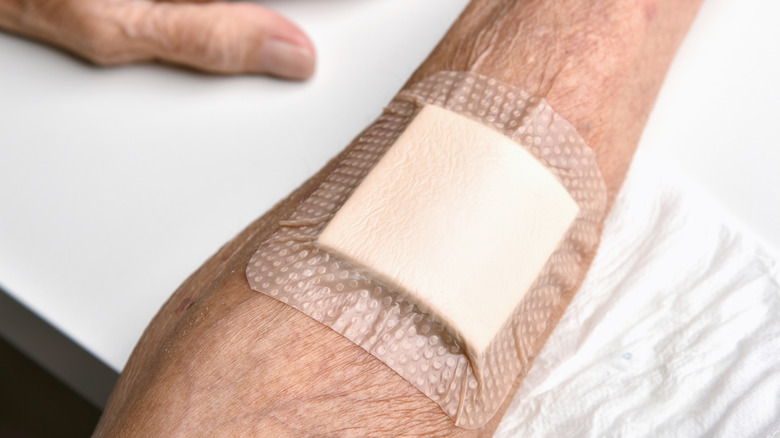
As we age, our skin tends to thin — yet another surprising way your body changes as it gets older. Thus, older people need to make sure that the type of bandages they're using won't also tear their skin in the process. (Their wounds generally take longer to heal, too.)
Stock your medicine cabinet with silicone bandages made for sensitive skin, as well as a high-quality emollient (e.g., petroleum jelly). "In older adults, I opt for [a wound covering] that has a little more pressure to it than just a loose-fitting Band-Aid [...] just put a little extra piece of tissue, clean napkin or medical gauze underneath the Band-Aid," shared dermatologist Danilo del Campo of the Chicago Skin Clinic (via AARP).