

What Is Dave Coulier's New Cancer Diagnosis? His Experience Acts As A Serious Reminder

If you were around during the late '80s to mid-'90s, you likely remember funnyman Dave Coulier's turn as Uncle Joey, the lovable live-in uncle in ABC's popular sitcom "Full House." However, these days the comic is going through something deadly serious: a second bout of cancer.
In October 2025, the 66-year-old actor revealed to Today that he has tongue cancer. "A couple of months ago, I had a PET scan, and something flared on the scan," Coulier told the show via a phone interview. "The doctor said, 'We don't know what it is, but there's something at the base of your tongue.'" And, while the initial biopsy didn't show any signs of cancer, a second, larger biopsy was positive, leading doctors to diagnose him with early-stage, P16-positive oropharyngeal squamous cell carcinoma.
However, this is not his first brush with the disease. In March of 2025, Today reported that Coulier was cancer-free after being treated for Stage 3 non-Hodgkin lymphoma, a type of blood cancer. "They said [the tongue cancer is] totally unrelated to my non-Hodgkin's lymphoma," Coulier told the interviewer. "... I said, 'Are you kidding me?'"
What is P16-positive oropharyngeal squamous cell carcinoma?
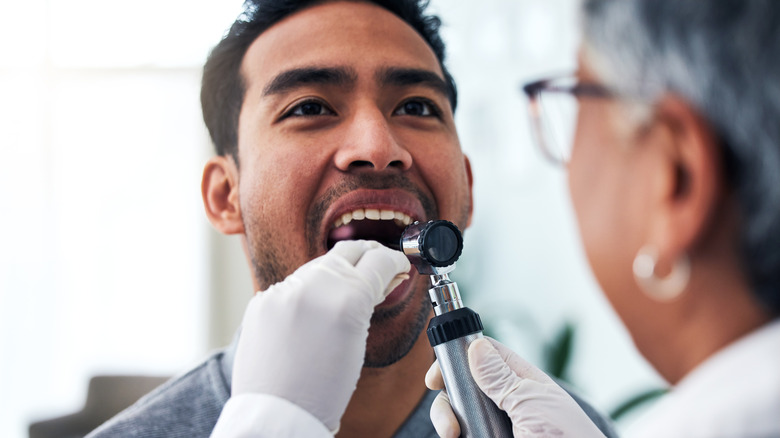
The American Cancer Society explains that P16 is a protein that is a marker for human papillomavirus (HPV), a virus that is known to be sexually transmitted (per the National Cancer Institute). When a cancer is P16-positive, this means it is caused by an infection with a high-risk type of HPV known as HPV-16. "They said it could stem from having an HPV virus up to 30 years ago," Coulier told Today. "A lot of people carry the HPV virus, but they said mine activated and turned into a carcinoma."
According to the American Cancer Society, early-stage oropharyngeal cancer, which affects the back of the tongue, soft palate, and tonsils, is primarily treated with radiation therapy directed at the cancer as well as the lymph nodes in the neck or surgical removal of the tumor and lymph nodes. Following surgery, chemoradiation may be performed to help prevent a recurrence. Additionally, if imaging or biopsy indicates cancer in the lymph nodes, chemoradiation might be done first. Coulier told Today that he is currently undergoing radiation. "We found it early enough where it's very treatable. ... It's got a 90% curability rate," said Coulier.
Prevention and early detection are important when it comes to oropharyngeal cancer, says UCLA Health. Tobacco and alcohol use are risk factors, so quitting smoking and limiting alcohol use reduces your risk. Also, regularly check your mouth for signs of oral cancer such as unusual sores, discoloration, or lumps. Routine dental visits that include oral cancer screenings can also help you spot problems early.