

Jelly Roll Lifts The Lid On Losing His Color Vision (& The Common Culprit He Blames)

In an episode of "The Joe Rogan Experience" shared to X by Chief Nerd, country music star Jelly Roll revealed that he had regained his ability to see colors after 20 years of what he referred to as "color blindness," all thanks to healthier eating.
Jelly Roll told Rogan that been able to see "general concepts" of colors; however, he was unable to distinguish shade variations. "I never realized there were nuances and prettiness and some were brighter in tone," he said. However, nine months after he stopped eating sugar, he realized that something had changed. "How long have we had that pretty purple tulip there?" he recalled asking his wife in disbelief at the difference that he was seeing.
Detailing his previous eating habits, Jelly Roll said he had eaten "all sugar" as well as processed food. "It had to have been the sugar," said Rogan. "It must have been just rampant inflammation."
How a high sugar diet could have caused Jelly Roll's problems with color vision
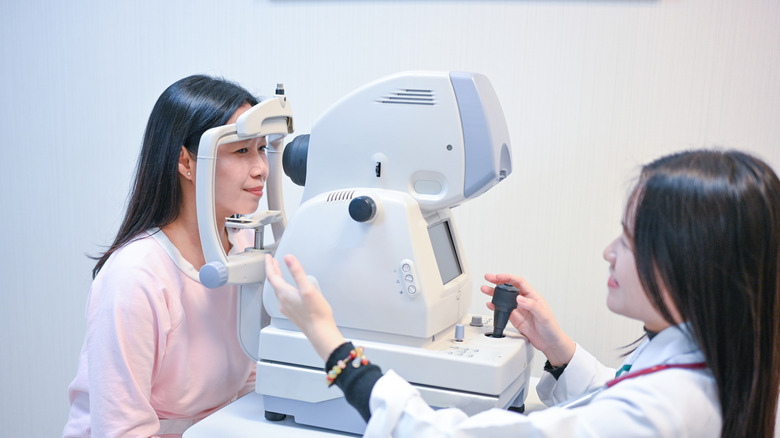
ReFocus Eye Health says that washed-out colors are an early sign of diabetic retinopathy (here are some other signs of diabetes that men shouldn't ignore). They explain that we are able to see colors when light enters the eye and hits the retina. The retina contains cells called "cones" that send messages to the optic nerve about what colors we are seeing. However, high blood sugar can damage the small blood vessels of the eye, depriving the retina of oxygen and nutrients. It can also increase the risk of cataracts or glaucoma. When these conditions occur, it can make colors appear faded.
Jelly Roll has previously spoken out about his nearly 200-pound weight loss through better nutrition and less alcohol. "I'm eating a lot of protein, vegetables, and walking. That's what I'm doing," he told Jimmy Kimmel in April 2025 (via Today). Additionally, he revealed in a June 5, 2024, episode of Bussin' With the Boys that, after a 60-pound loss, his hemoglobin A1C (HbA1C) — a measure of a person's average blood sugar over the past three months — was looking good. The star said he had previously been prediabetic.
ReFocus Eye Health says that normalizing your blood sugar is the most important thing you can do to protect your eyes against diabetic retinopathy. They advise working with your care team to come up with a plan that includes medication, diet, exercise, and regular monitoring.