

The Dangerous Disorder Meghan Markle Experienced Postpartum
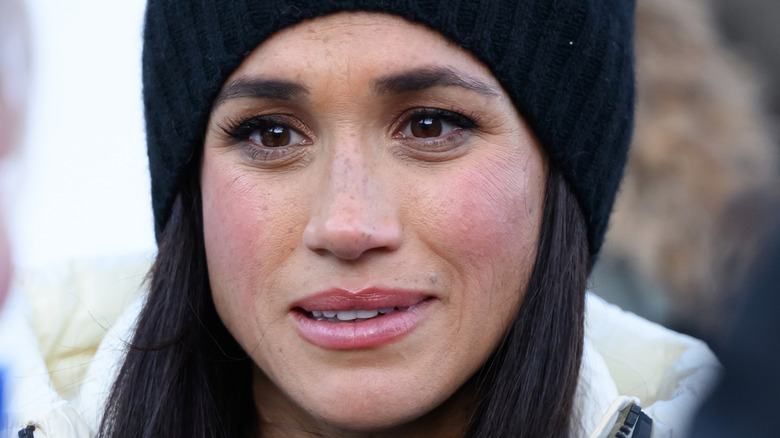
As a royal, pregnancy for Meghan Markle was not a quiet journey. Since announcing her relationship with now-husband, Prince Harry, Duke of Sussex, Markle has been under the limelight. The prying curiosity and pressure of royal life extended into her pregnancies. Markle, like the royal women before her, was not only required to travel and attend high-profile events around the globe, but also had to debut her newborn just two days after giving birth... in heels. Despite her ability to make the whole journey look effortless, postpartum was less than worry-free for the former actor.
An April 2025 episode of her podcast, "Confessions of a Female Founder," revealed that Markle dealt with a medical emergency following one of her pregnancies. Though she only touched on the topic in passing, Markle shared that after giving birth, she had preeclampsia. "It's so rare and so scary," she shared. Markle's comments on the experience suggested her desire to keep her condition out of headlines. "And you're still trying to juggle all of these things, and the world doesn't know what's happening quietly. And in the quiet, you're still trying to show up for people — mostly for your children — but those things are huge medical scares." Markle, a mother of two, was right in saying that preeclampsia is rare, as the condition affects only between 2% and 8% of women around the globe.
What is preeclampsia?
Preeclampsia is a condition diagnosed during pregnancy that is characterized by high blood pressure, kidney damage, or decreased blood platelets. Typically caught after 20 weeks of pregnancy, the diagnosis brings with it abdominal pain, headaches, nausea, anxiety, and, occasionally, oversensitivity to light. If the condition is left untreated, sometimes fatal side effects may occur. The good news is that preeclampsia is treatable; most of the treatment of preeclampsia focuses on managing the side effects. (Read how preeclampsia is treated).
Consulting with a doctor and continued monitoring of the pregnancy are frequently the best course of action to find a solution that best provides support for the mother. However, the primary aid in subsiding the effects of preeclampsia is giving birth and passing the placenta. Yet, sometimes, giving birth is not enough.
Preeclampsia can continue into postpartum, the condition Meghan Markle disclosed in her podcast. In cases such as Markle's, the effects of high blood pressure and severe headaches may continue even after passing the placenta. Postpartum preeclampsia can occur up to 6 weeks following childbirth and should be monitored by a doctor.
Markle's recovery in the public eye
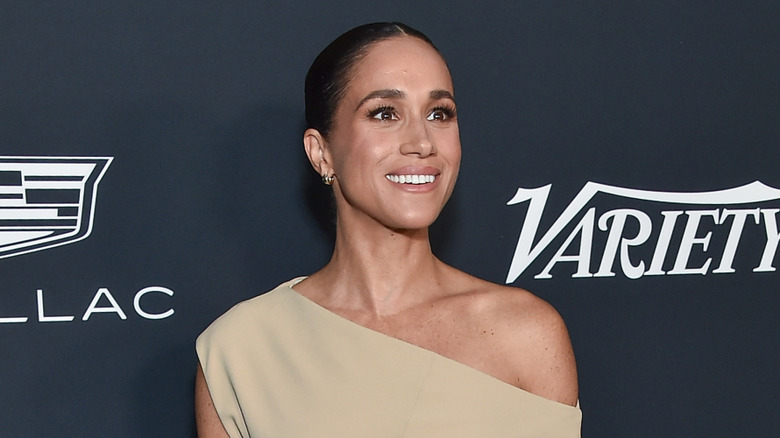
It took the royal until 2025 to reveal her diagnosis. Given that Meghan Markle has admitted that the criticism of the public eye, which skyrocketed when she joined the royal family, has been stressful on her, it's not surprising that she withheld this information. Though, at the time, there were hints of Markle's difficulties. In an interview from her documentary, "Harry & Meghan: An African Journey," the duchess confessed that pregnancy was a very vulnerable time for her, and that after giving birth to her son, she was struggling. Though she would not go into detail about the true problems she was facing behind the scenes, with her recent revelation of her preeclampsia diagnosis, it's possible she was alluding to her recovery.
Markle has not shied away from admitting that motherhood as a royal is not totally what she had planned. As she reminisced on her podcast, "I was like, 'Oh gosh, I'm going to give a speech with a baby on my hip.' I had a whole vision." But the vision the former actor had was not, as she admitted, what became reality. With that said, the royal has gone on to express great love for her role as a mother, telling Town & Country, "Being a mom is the most important thing in my entire life — outside, of course, being a wife to [Prince Harry]."