

The Health Scare You Didn't Know Shailene Woodley Had

During an appearance on the "She MD" podcast, "Divergent" actress Shailene Woodley opened up about a health scare that she had previously experienced. "I was in a position in my early 20s, it got to the point where I was losing my hearing, I couldn't walk for long periods of time without having to lay down for hours and hours and sleep. Everything I ate hurt my stomach," she told the hosts.
It's not clear what diagnosis or diagnoses Woodley finally received, but she said she ended up going from one doctor to another looking for help because of all the conflicting information she was receiving. "It was this conflation of issues and diagnoses and different doctors telling me different things," Woodley said. The star also hinted that there was a mental health aspect to her illness, saying it was a process of "looking at real traumas and real PTSD that I had experienced."
Discussing why her health condition was so frustrating, Woodley said she had always eaten well and been athletic. "Why am I passing out every month when I get my period? Why am I hypothyroid? All of these things," she said.
What thyroid condition Woodley might have had

Woodley didn't say whether she was affected by any medical conditions beyond hypothyroidism. However, this condition occurs when the thyroid, a butterfly-shaped gland at the front of the neck, doesn't make enough thyroid hormones. When this occurs, the gland can't do its job of regulating how your body uses energy. The hormones produced by this gland affect many body systems, including heart rate, breathing, digestion, body temperature, brain development, mental activity, skin and bone maintenance, and fertility, according to the Cleveland Clinic.
The Mayo Clinic notes there is a range of symptoms that a person may experience with hypothyroidism, including fatigue, sensitivity to cold, constipation, dry skin, weight gain, puffy face, hoarse voice, coarse hair and skin, muscle weakness, irregular menstrual cycles, thinning hair, slowed heart rate, depression, and problems with memory.
How hypothyroidism is treated
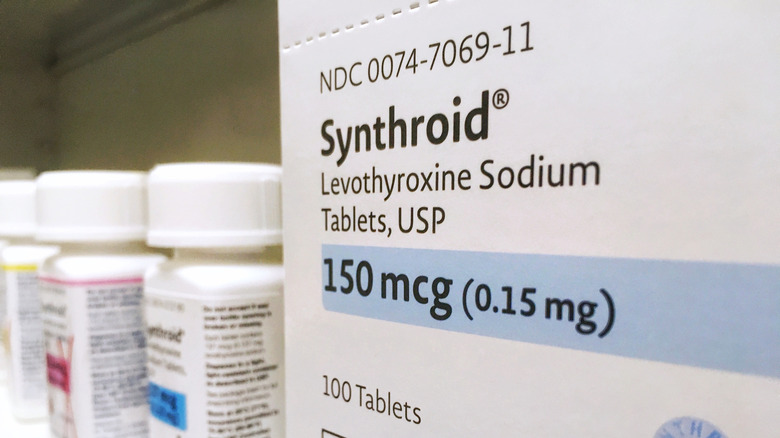
The Cleveland Clinic adds that hypothyroidism is primarily treated with hormone replacement therapy to provide the hormones that your thyroid gland isn't able to make itself (here's what happens if hypothyroidism goes untreated). Levothyroxine (Synthroid, Levo-T) is commonly used. When taken regularly, it stabilizes your hormone levels, alleviating your symptoms. They write that it takes trial and error to find the correct dosage, and your doctor will use blood testing to confirm when your thyroid-stimulating hormone (TSH) is in the correct range. They additionally explain that it will be necessary to take medication for the rest of your life in order to remain healthy.
Woodley said on the She MD podcast that she is now doing well. "Everything is pumping the way that it should. I am very healthy. I'm so happy to be able to say that," she said.