

Celebrity-Loved Matcha Is The Trendy Green Tea That Also Packs A Healthy Punch
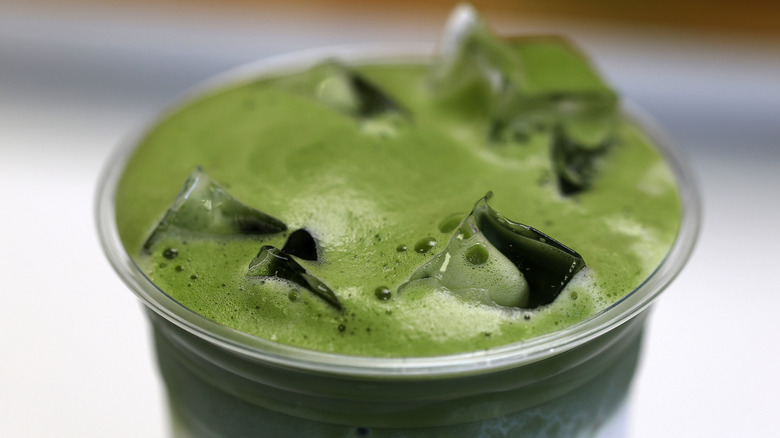
In recent times, matcha has experienced a surge in popularity, going from being an occasional order for some to a billion-dollar industry in 2025. The boom came with a widespread appearance on menus from local cafes to franchise coffee shops, but before, the green tea mixture had cemented itself within celebrity culture.
Matcha became a symbol of healthy drinking thanks in part to its proximity to the likes of wellness influencer Gwyneth Paltrow, models Bella Hadid and Kylie Jenner, and fitness queen Jessica Alba. When TikTok came out and influencer culture jumped to a new level, the green drink took charge, mostly due to its unique hue and totally social media-friendly appearance. But what is this pretty green drink, exactly?
Matcha is a vibrant green powder that, when combined with water or milk, creates a colorfully delicious, nutrient-packed drink. Though commonly mistaken for a powdered version of a more traditional green tea, the taste of matcha is actually much sweeter and considered much smoother in comparison. This specific type of green tea, unlike its conventional counterparts, grows in the shade, which aids in the plant's production of health benefits like antioxidants and anti-inflammatories.
The potential health benefits of matcha

But is matcha tea really as healthy as you think? Studies have shown that with matcha's caffeine levels, drinkers saw an increase in upper body muscles as well as a morning boost that didn't leave them feeling as wired as coffee. (Is coffee or match better for you? Read on.)
Additionally, the antioxidants in matcha aid in reducing cell damage and work to prevent disease. The tea can also lower cholesterol, lower blood pressure, encourage brain function and cognitive function, and possibly even protect your liver. Though the most impressive benefit from matcha tea comes from its unique strand of catechin, EGCG. Some studies have indicated that the catechin found in green tea, like matcha, could work as a preventative measure for cancer development – specifically colon cancer – and could improve cancer treatment methods.
But how can this powerful little powder pack such a punch? Senior dietitian at UCLA Health Santa Monica, Yasi Ansari, explains it simply. "Unlike steeped tea, where the leaves are discarded, matcha involves consuming the whole leaf in powdered form, which concentrates its nutrients and antioxidants."
Matcha can even boost your mental health
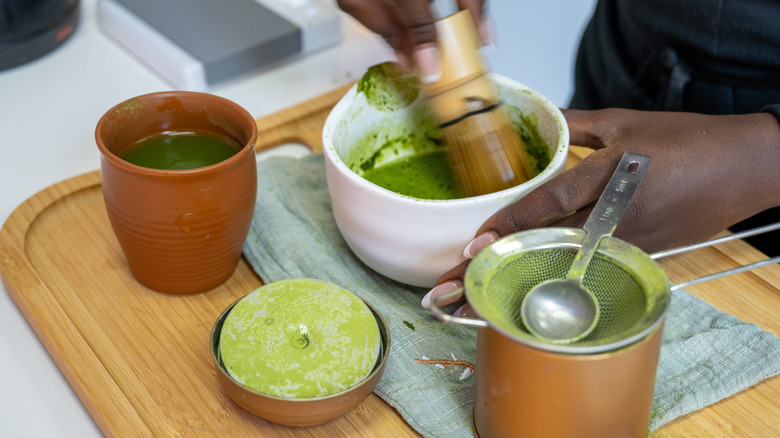
As it turns out, matcha green tea can do a lot for mental health, too. Dr. Leigh Anne Frame, Executive Director of the Office of Integrative Medicine and Health at George Washington University, told Verywell Health that matcha "has been shown to promote relaxation without sedation by increasing alpha brain wave activity and modulating neurotransmitters like GABA, dopamine, and serotonin."
Serotonin and dopamine are neurotransmitters that have earned the nickname "happy hormones." The two chemicals work to encourage and regulate sleep, mood, and blood flow. With high levels of either, individuals tend to feel motivated and concentrated while also feeling a sense of internal health, given serotonin's regulation of gut health.
So, drinking a cup of matcha in the morning may just help in boosting your mindset and mood. However, it's important to remember that the drink is not the end-all, be-all for mental health support. As Dr. Frame clarified, "Matcha isn't a cure-all, but it can be a gentle, supportive addition to a comprehensive self-care routine" (via GW School of Medicine and Health Sciences).