

Billy Bob Thornton's Health Struggles Throughout The Years, Explained
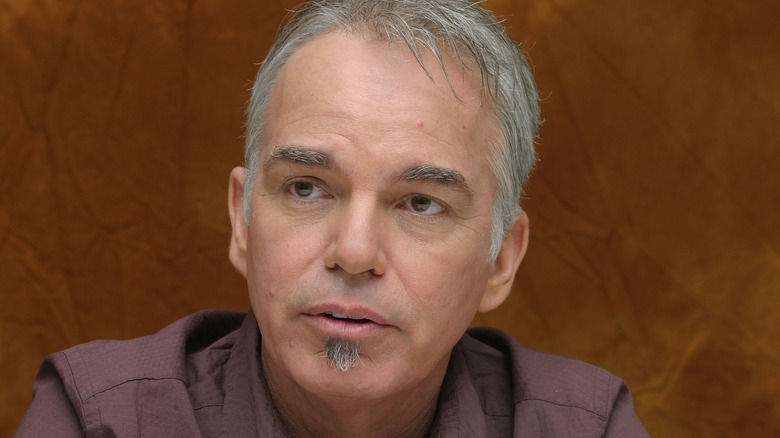
Actor, songwriter, and filmmaker Billy Bob Thornton has had a long history of health complications since the start of his career. And as his physical health once again made headlines in 2025, Thornton reflected on his previous experience with substance abuse. Appearing on an episode of "After Dinner Thinks with Ann Wilson," the actor admitted to looking in the mirror in the throes of his addiction and realizing, "You're gonna die. You have to stop." This experience would have multiple impacts on Thornton's health, including weight loss, which Thornton would tackle later in life.
Prior to this admission, Thornton's medical history included a series of emergencies and illnesses that had long plagued the Academy Award winner's life. It was in the early 2000s, around the start of his true rise to fame, that the actor was hospitalized. A spokesperson for the actor said that he had experienced symptoms of a viral infection.
But neither of these was the start of Thornton's health problems. As a child, the "Sling Blade" writer experienced repeated injuries at the hands of his abusive father. This foundation of harm would, as he told Playboy, result in a collection of mental health conditions that have affected the actor's day-to-day since leaving his childhood home.
If you or anyone you know needs help with addiction issues, help is available. Visit the Substance Abuse and Mental Health Services Administration website or contact SAMHSA's National Helpline at 1-800-662-HELP (4357).
Thornton has shared mental health diagnoses over the years
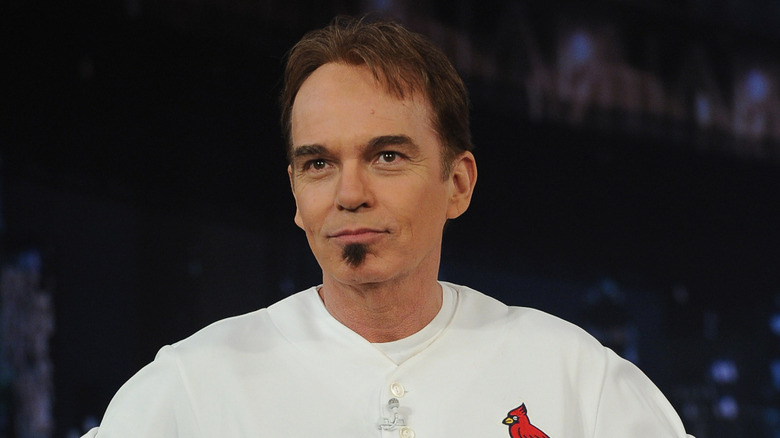
In a 2004 interview with NBC News, the "Armageddon" actor revealed his obsessive-compulsive disorder diagnosis. In his case, the mental health condition centered on an obsession with numbers, forcing him into an uncontrollable cycle of compulsion about the usages of specific numbers at specific times. "Well, it exhausts you," he confessed. "You're constantly doing mathematics in your head." And this exhaustion was compounded by his dangerous sleep schedule of only three hours a night.
"It comes from being nervous all the time," Billy Bob Thornton explained about the development of his OCD as a child (via New York Post). "You start to develop these little tricks in your head," he said. "Like, if I just break this toothpick into three even pieces, my father will come home in a good mood and he won't beat me."
Trying to handle the condition alone, the actor's OCD soon snowballed. As he told it to ABC News, it led to a fixation on eating, contributing to the star's development of an eating disorder in the early 2000s. Thornton admitted that during this time, he was surviving on only one can of tuna and a pack of Twizzlers a day.
When the actor sat down with The Hollywood Reporter nearly two decades later, the conversation on his mental health detailed new and compounding conditions that the actor had been diagnosed with. Not only was Thornton still living with severe OCD, but he shared, "I have an anxiety disorder. I grew up dyslexic."
If you need help with an eating disorder or know someone who does, help is available. Visit the National Eating Disorders Association website or contact NEDA's Live Helpline at 1-800-931-2237. You can also receive 24/7 Crisis Support via text (send NEDA to 741-741).
How mental health and physical health feed into each other

The connection between mental health and physical health is a strong one that runs in both directions, with each impacting the other. Explaining how mental health can influence physical health, Dr. Monika Jidal told the University of Iowa Health Care, "Chronic stress doesn't just wear you down emotionally. It can make it harder for your body to recover after illness or injury. Mental health challenges can also make it harder to follow treatment plans, maintain routines, and engage in self-care," she added, "all of which are essential for managing chronic conditions."
However, the doctor also noted a solution to improve health as a whole: exercise. Exercise can boost your mental health while also supporting a strong approach to physical health.
If you or someone you know may be the victim of child abuse, please contact the Childhelp National Child Abuse Hotline at 1-800-4-A-Child (1-800-422-4453) or contact their live chat services.