

Jennifer Aniston's Infertility Issues Highlight The Reality Of IVF For Many
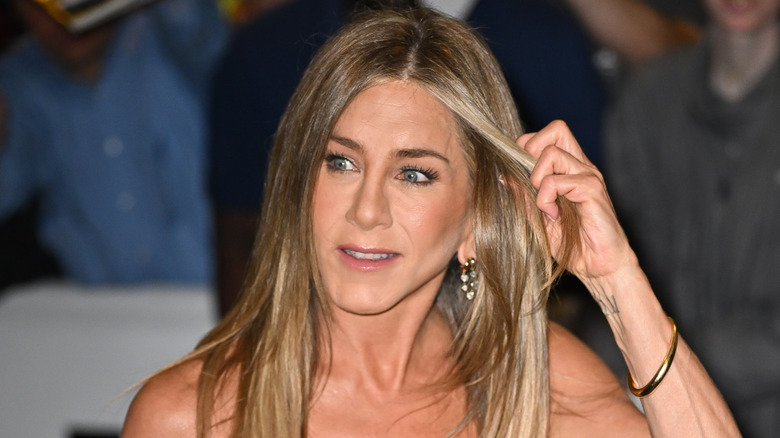
"I was going through IVF, drinking Chinese teas, you name it," Jennifer Aniston shared with Allure in December 2022. For decades, while in front of the camera lens and shuffled among the headlines of tabloids, Jennifer Aniston was striving toward motherhood, but fertility did not come as easily, leading her to opt for IVF (in vitro fertilization) to assist in her pregnancy journey.
IVF is a fertility treatment that encourages egg viability through ovulation-inducing injections that make for a higher likelihood of pregnancy with sperm implantation before the egg is then replanted in a uterus. The set of procedures is considered the most effective way to aid in fertility, and while it has worked for many, the treatment is not without fault.
The topic of pregnancy and unsuccessful fertility treatment can be difficult, especially when additional treatments are enacted to heighten the prospect of a pregnancy. The reality is that IVF does not work for everyone, and in these cases, there are other options for parenthood that are open to individuals wanting to start a family. Not to mention that these efforts to welcome a child aren't cheap and are certainly not opening accessibility for the many couples who seek to have children. IVF can cost couples upwards of $10,000 per cycle of treatment.
IVF success rates: The reality

According to The IVF Center, the first round of IVF showed a 55% success rate in the most viable candidates for the treatment. The number of successes in first-round treatments for women above the age of 35 sees a large dip. Though she was in the most successful age group for IVF, Aniston still saw complications with the fertility treatment.
Years later, the "Friends" actor would open up about her IVF experience as a public figure to Harper's Bazaar. She told the publication that while she handled pregnancy complications in private, the public criticized her, accusing her of being selfish and not wanting to be a mother. The backlash pushed the "We're the Millers" actor to speak out, not just for herself, "but for any women who were struggling with the same issue."
Following her candid story, CNN sat down with 5 women to share their own personal stories of failed IVF. Katy Seppi, an IVF user who did not see success with the treatment, echoed Aniston's experience. "There's a common belief that anyone can have a baby if they want it enough, hope enough, and never give up," she shared. "It just isn't true and leads to a lot of misunderstanding and dismissal of the grief you're left with when you realize you have to let go of your dream of parenthood."
Exploring fertility treatment alternatives

IVF isn't an easy process, as doctors have admitted. "Basically it takes about six weeks from the start of the menstrual cycle to know how many genetically normal embryos a patient has," Dr. Shahin Ghadir told CCRM Fertility. "The following month, it takes approximately four to six weeks to prepare the lining of the uterus before the embryo can be put into the uterus and 10 days later we know if the patient is pregnant or not."
Without the 100% guarantee of effective outcomes, IVF can be intimidating to take on. There are alternatives, though. IUI (intrauterine insemination) takes out the complication of injections by focusing primarily on the implantation of sperm directly into the uterus. ZIFT (zygote intrafallopian transfer) and GIFT (gamete intrafallopian transfer) offer additional support to individuals looking to improve their chances at pregnancy. Ultimately, you can determine which fertility treatment would work best for you through conversations with your doctor.