

The Worst Medical Advice From Dr. Oz That You Definitely Shouldn't Follow
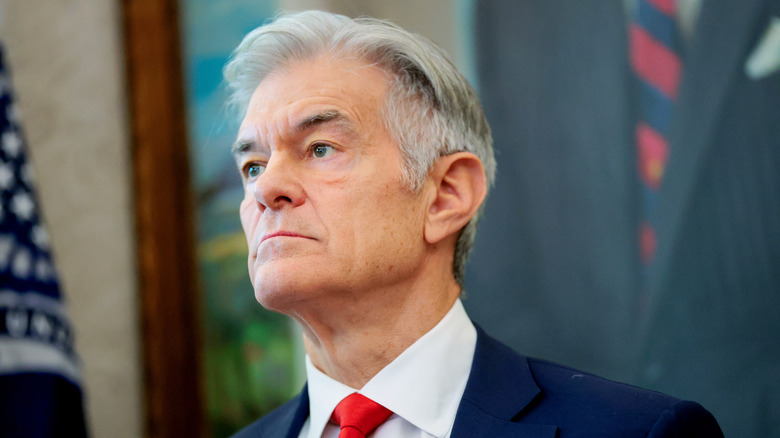
Dr. Mehmet Oz, who made his start as a cardiothoracic surgeon, first came to fame when he began appearing on "The Oprah Winfrey Show" in 2004. Following the popularity of those segments, Oprah's production company, Harpo Productions, helped him launch "The Dr. Oz Show," a program focusing on health and alternative medicine. However, after 13 years of his show being on the air, the celebrity physician made a segue into politics, first making a failed Senate run in 2022, and then being appointed to head the Centers for Medicare and Medicaid Services under the second Trump administration.
Along the way, Oz has been no stranger to controversy. His interest in alternative medicine has drawn criticism from mainstream practitioners. He has also engaged in some questionable business practices. He even seems to have fallen out of favor with Oprah Winfrey, his original patron in the entertainment industry, with her declining to endorse him in the Pennsylvania Senate race. Looking back on his career, here's some of the worst advice from Dr. Oz you probably shouldn't be following.
Doctors have criticized his promotion of alternative medicine
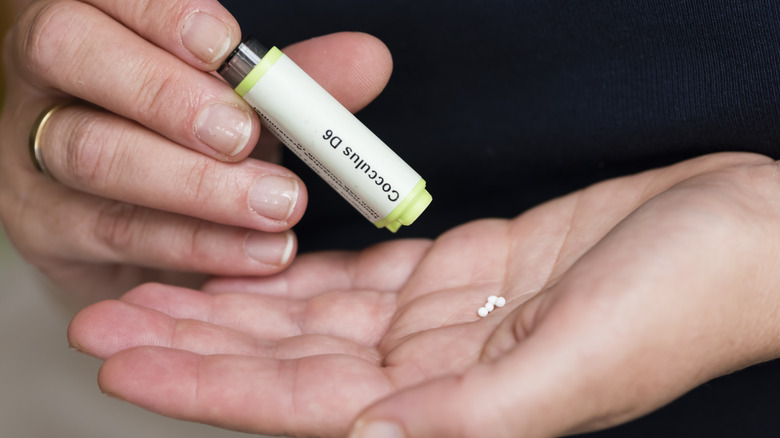
In a scathing editorial for the September-October 2015 issue of Missouri Medicine, Stephen J. Dell took Oz to task for his promotion of alternative medicine, despite the fact that he "clearly understands the scientific method and the importance of basic science and clinical research." Noting that Oz's guests on his former talk show had spoken about topics such as homeopathy, mediumship, and iridology, Dell said, "He is someone who can filter out the noise of the placebo effect or discern the simple carnival tricks of a charlatan. The problem is that most people in his audience cannot."
Dell further stated that a group of 10 doctors had protested Oz's faculty position at Columbia University due to what they saw as his lack of integrity. "Many believe he is doing great harm by preventing or delaying proper diagnosis, providing false hope, and encouraging people to waste money on useless treatments," wrote Dell. "As far as I am concerned, the wackier he gets, the easier it is to logically debunk his claims."
Oz was accused of trying to profit off of hydroxychloroquine sales
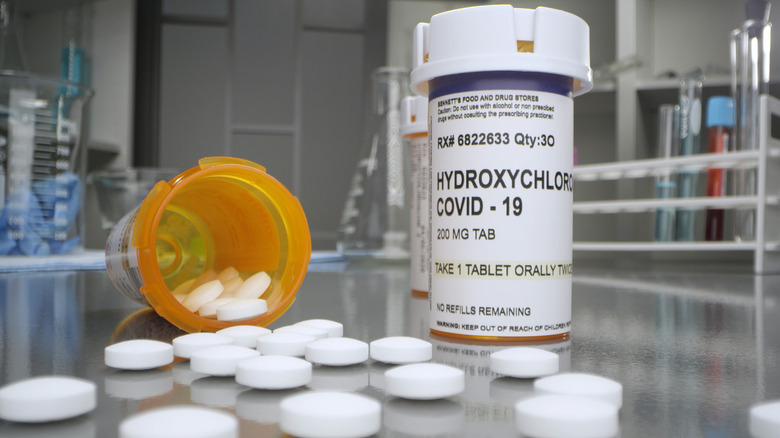
During his 2022 Senate run, Oz came under fire for possible conflicts of interest when it was reported that he had stock in two pharmaceutical companies that manufacture the drug hydroxychloroquine. It was further reported that Oz had encouraged the Trump administration to back a 2020 study he was funding into the effects of the drug on COVID-19 patients. Given its unproven efficacy against COVID-19, there were concerns about whether Oz was endorsing the drug in order to benefit himself financially (via CNBC).
According to the World Health Organization, as of April 23, 2025, they do not recommend using hydroxychloroquine for the prevention or treatment of COVID-19. Based on available evidence, it has very little effect on preventing illness, hospitalization, or death. In people who already have COVID-19, it was not found to reduce the risk of death or the need for mechanical ventilation. It also doesn't reduce the time on a ventilator if one is required.
When taken as a preventative measure, the drug may increase the risk of side effects such as diarrhea, nausea, abdominal pain, drowsiness, and headache. When given as a treatment, it was found that it may increase the risk of heart rhythm abnormalities, blood and lymph disorders, kidney injury, and liver problems, including failure.
His investment in iHerb after leucovorin's approval raised questions
Oz once again found himself facing accusations of having a conflict of interest in the fall of 2025 when the U.S. Food and Drug Administration gave its blessing to leucovorin (folinic acid) for the treatment of autism. According to Newsweek, these concerns arose because Oz had invested in the supplement brand iHerb, which sells folinic acid. However, Oz said he would divest himself of his shares in the company. Additionally, the Health and Human Services Department explained that it was the prescription version of the substance, leucovorin, that was being approved, not the over-the-counter supplement sold by iHerb.
Despite leucovorin's approval, Children's Mercy says there is "significant misinformation and oversimplified political rhetoric" surrounding this supplement. They note that while it is promising, it's only appropriate for patients who have cerebral folate deficiency. That means it won't work for all people with autism. They further explain that the evidence is limited and often based on parent reports, so it's important to go into treatment with realistic expectations. Improvement may be limited or not occur at all.
Oz's comments about safe alcohol consumption missed the mark

In January 2026, Oz received further scrutiny as he helped unveil the Trump administration's new food pyramid, including its more lax guidelines for alcohol consumption. Rather than providing clear limitations on intake, the confusing new alcohol guidelines simply say to drink in moderation. "The general move away from two glasses for men, one glass for women — there was never really good data to support that quantity of alcohol consumption," Oz told reporters at a White House Press Conference. The doctor further characterized alcohol as a "social lubricant," saying that it gives people "an excuse to bond and socialize, and there's probably nothing healthier than having a good time with friends in a safe way" (via UPI).
However, guidance from the World Health Organization seems to contradict Oz's advice. They state that there is no safe level of alcohol consumption. Current research does not indicate that there is a threshold below which there is no risk for cancer or other detrimental effects. Additionally, there are no studies showing that any potential benefits of light to moderate drinking outweigh the risks. The only thing known for sure is that the risks go up the more you drink.