

What Are Bone Spurs? All About The Health Condition Donald Trump Was Diagnosed With

Back in 1968, President Donald Trump received a deferment from serving in the Vietnam War due to bones spurs. While Trump himself claims he doesn't remember the details of who gave him this diagnosis, it has been suggested that Dr. Larry Braunstein, a Queens podiatrist who was a tenant in a building owned by Donald's father, Fred Trump, did it as a favor to the elder Trump. It's unclear, however, whether he actually examined Donald (per The New York Times).
According to Family Podiatry Center, having bone spurs would have been a sufficient reason to exempt someone from military service at that time due to the symptoms that they cause. First of all, the condition would be painful. Secondly, it's often linked with "flat feet," which they explain can quickly become tired. They add, however, that bones spurs can now be treated so having them doesn't necessarily mean that you can't serve in the military.
What are bone spurs?
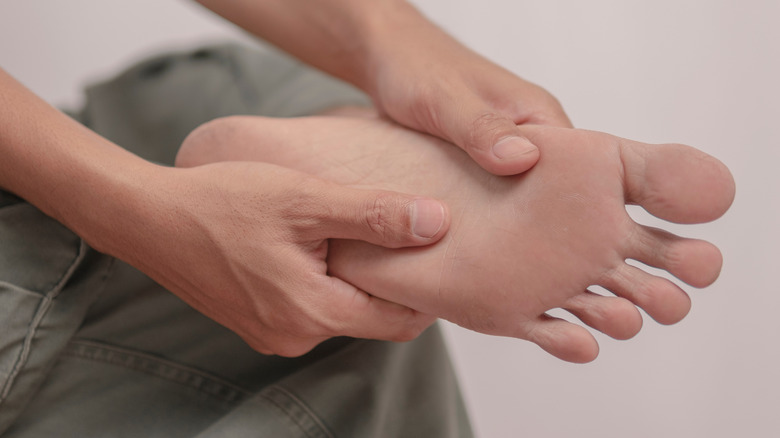
The Cleveland Clinic explains that bone spurs, also known as "osteophytes," are growths on the outside of bones. They tend to appear in areas that undergo a lot of stress, such as your heels or spine. They also may grow at the joints or where ligaments and tendons attach to the bone. The Cleveland Clinic additionally notes that they can occur when your body is attempting to repair tissue, and they may be related to wear and tear or an injury.
Bone spurs don't generally cause any problems unless they create irritation, inhibit joint movement, or put pressure on a nerve. Symptoms of bone spurs may include unexplained pain or stiffness, or, if a bone spur is pressing on a nerve, you might feel pain, tingling, numbness, or weakness. If the bone spur is near the skin, you might even see a bump. You might feel it when you bend or extend a joint or when you walk. It might also cause pain when you move or restrict motion. There could also be some swelling in the area of the bone spur.
How are bone spurs treated?

If you do experierence symptoms with your bone spurs, there are several ways they can be treated, per the The Mayo Clinic. Over-the-counter pain relievers like acetominophen (Tylenol), ibuprofen (Motrin, Advil), and naproxen sodium (Aleve) can help with pain. Physicial therapy to improve strength and mobility can also help. When bone spurs are related to osteoarthritis, surgery to remove the bone spur or replace an affected joint might also be an option. If you are overweight and have osteoarthristis of the hips or knees, weight loss may help reduce the pain of bone spurs. They also suggest exercises like walking, biking, and swimming to strengthen the muscles surrounding joints.
Family Podiatry Center adds that if you are experiencing bone spurs in your feet, you can use custom orthotics to help manage heel pain and flat feet.