

Selena Gomez's Melasma 'Mustache' Is Super Common - Here's How To Treat It

"Only Murders in the Building" star Selena Gomez spoke to her followers via her Instagram account on December 16, 2025, to address a comment from a fan asking, "How do you shave your mustache?" Laughing, the actress said, "I was like, 'I totally get it," adding, "It's actually not! It's my melasma. I take care of it and I treat it, but yeah no, it's there." Showcasing her confident approach to beauty, Gomez went on to say, "I actually have melasma and a pimple" before zooming in with her camera to give her followers a closer view. "It's actually from the sun, so you'll have to obviously wear sunscreen and be careful," she advised (via E!News).
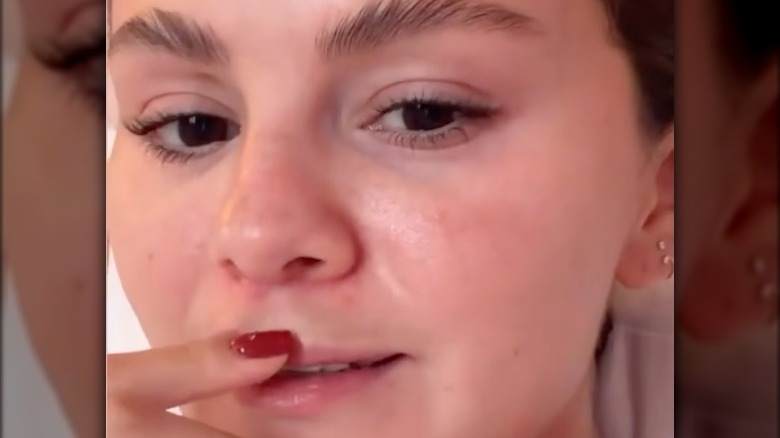
According to the Cleveland Clinic, melasma, sometimes known as "mask of pregnancy," is caused by the overproduction of the skin pigment melanin. It can lead to brown or bluish-gray patches or freckles. They additionally note that this common condition is not harmful and usually fades away within a matter of months.
How to treat melasma
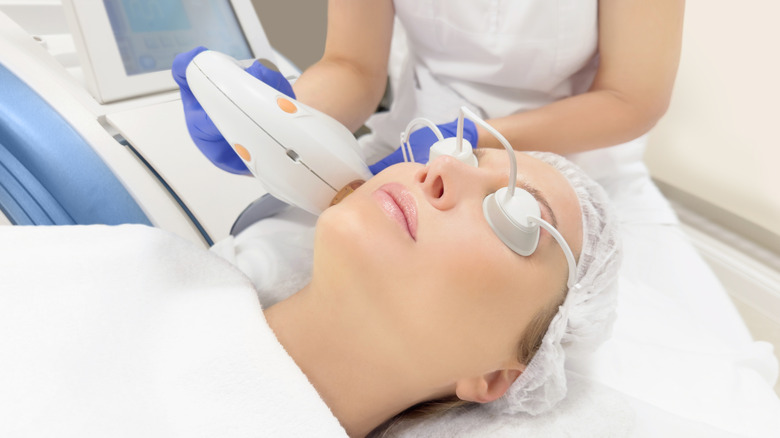
The first step in treating melasma is to see a dermatologist to obtain a diagnosis. The American Academy of Dermatology Association explains that they might use a device called a Wood's lamp or a dermatoscope to get a good look at your skin. It's also important to rule out any other skin conditions that might be causing your symptoms, so your doctor might perform a skin biopsy to help in making the diagnosis.
Harvard Medical School says that skin-lightening medication, such as hydroquinone, azelaic acid, kojic acid, niacinamide, cysteamine, rucinol, and tranexamic acid, are the most common treatments for melasma. However, pregnant women are advised to avoid these, with the exception of azelaic acid.
If these medications don't work, your doctor may add chemical peels to remove the outer layer of the skin where the excess pigment resides. This can be done with substances like glycolic acid, alpha-hydroxy acids, and salicylic acid. Another option is laser therapy, which can destroy the pigment cells. Taking a steroid medication can be helpful to reduce inflammation.
How to avoid getting melasma
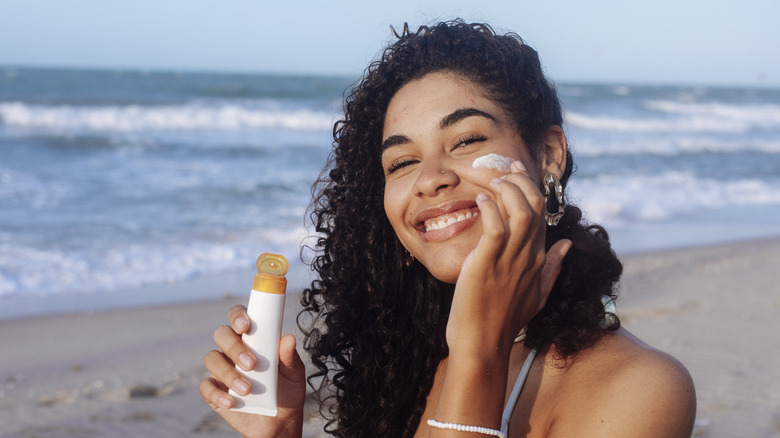
The American Academy of Dermatology Association echoes Gomez's recommendation to protect your skin by using sunscreen. They explain that exposure to sunlight triggers the skin to produce pigment, so to prevent darkening from occurring — or worsening, if you already have melasma — it's essential to protect your skin with a broad-spectrum SPF 30 or higher sunscreen containing compounds such as zinc oxide, titanium dioxide, or iron oxide. If you're worried that these ingredients will leave your skin looking white, try using a tinted sunscreen.
Other ways to protect your skin include wearing a wide-brimmed hat whenever you venture outside and remaining in the shade whenever possible. The Cleveland Clinic adds that you should wear hats that are rated with a UPF (ultraviolet protection factor) of 50 plus.
They also explain that a diet including adequate vitamin D may help. They further suggest reducing your use of LED-screen TVs, tablets, smartphones, and computers since blue light may contribute to the condition. Additionally, you may want to consider using a non-hormonal form of birth control.