

The Shocking Racial Slur At 2026 BAFTAs Proves Tourette's Is More Complex Than Everyone Thinks
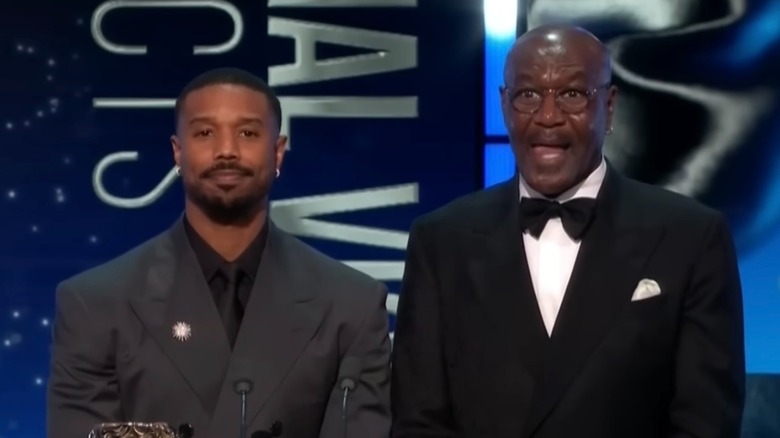
In a rare and shocking moment of life imitating art, viewers in the audience and at home at the 2026 BAFTAs were left stunned after they heard someone shout a racial slur from the audience while actors Michael B. Jordan and Delroy Lindo presented the award for best visual effects. Immediately afterward, however, it was revealed that Tourette's syndrome advocate John Davidson was unintentionally responsible for the racial slur. "Tourette syndrome is a disability and the tics you have heard tonight are involuntary, which means the person who has Tourette syndrome has no control over their language," the host of the awards event, Alan Cumming, told the audience. "We apologize if you were offended." Later, the British Academy of Film and Television Arts also publicly issued an apology. At an after party, however, Lindo told Vanity Fair that he wished "someone from BAFTA" had spoken to them after.
Davidson served as the inspiration for the film "I Swear," a biographical drama that chronicles him growing up in the 1980s with Tourette's syndrome. He was there in the audience that evening to celebrate the film's success, including the two BAFTAs that the film took home for best actor and best casting. Sadly, the incident ultimately proved just how complex this type of tic disorder really is and the capacity it has to hurt both those diagnosed with the condition as well as the people around them.
John Davidson said he was 'deeply mortified'
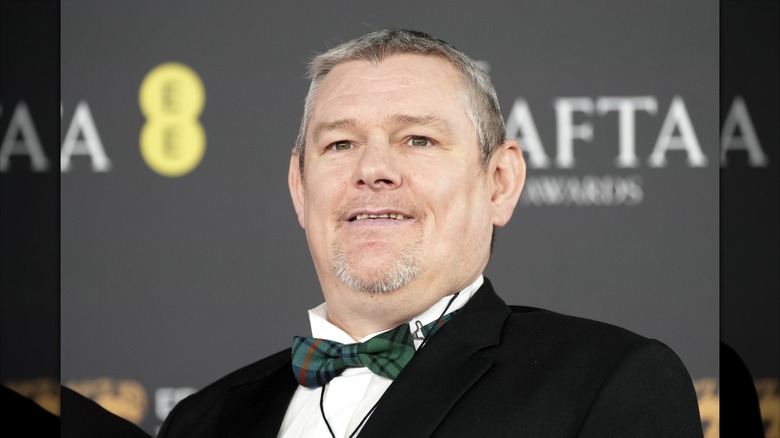
The morning after the BAFTAs, John Davidson promptly issued a public apology. "In addition to the announcement by Alan Cumming, the BBC and BAFTA, I can only add that I am, and always have been deeply mortified if anyone considers my involuntary tics to be intentional or to carry any meaning," he wrote (via Vanity Fair). "I have spent my life trying to support and empower the Tourette's community and to teach empathy, kindness and understanding from others and I will continue to do so," Davidson added before revealing that he opted to leave the ceremony early due to the "distress" his tics were causing.
Meanwhile, others from the Tourette's syndrome community also offered their support for Davidson during the very real, teachable moment. "We deeply understand that these words can cause hurt and we are deeply sorry to the Black community for the harm caused but at the same time, it is vital that the public understands a fundamental truth about Tourette syndrome: tics are involuntary. They are not a reflection of a person's beliefs, intentions, or character," Tourettes Action, a support and research organization, said in a statement regarding the incident, while also noting they were "incredibly proud" of Davidson (via Instagram).
Advocate Jumaane Williams believes the BAFTAs dropped the ball
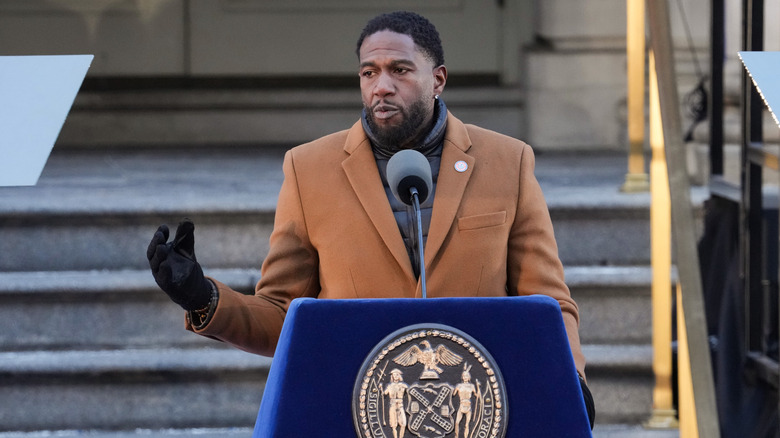
In the aftermath of the BAFTAs ceremony, New York City public advocate Jumaane Williams also opened up about his own struggles with Tourette's syndrome, specifically coprolalia. According to the Tourette Association of America, coprolalia is a term that describes "the involuntary outburst of obscene words or socially inappropriate and derogatory remarks." In a YouTube video, Williams confessed, "I have Tourette's syndrome, was diagnosed over 30 years ago. As you might be able to tell, I'm also a very proud black man. I also have coprolalia, which means I sometimes tick socially unacceptable words, including the N-word."
While Williams was careful to call on viewers to exercise "grace" and "consideration" for those affected by Tourette's syndrome, he also emphasized the importance of properly acknowledging those who are inadvertently offended by the outburst. "Regardless of the reason, a word like the N-word can cause a lot of harm," he declared. "I believe that's where the ball was dropped. I don't think there was enough care that was provided," he added, referencing the BAFTAs not personally reaching out to their presenters, Michael B. Jordan and Delroy Lindo, after the incident. "Keep the anger, keep the empathy. Let's put it in the right places," he concluded.