

5 Times Oprah Winfrey Was Shamed Amid Her Weight Loss Struggles — And Did Not Deserve It

We may receive a commission on purchases made from links.
After spending over two decades tolerating relentless criticisms about her weight, Oprah Winfrey finally decided she had had enough. Speaking to People in December 2023, the media mogul reflected on the negative chatter surrounding her body. "It was a public sport to make fun of me for 25 years," she said. "The things that were said about me, said to me, around me, the jokes that were made. You could not get away with it in the slightest sense today."
It's true that weight-shaming is far less socially acceptable than it was in the '90s. However, the fact that Winfrey continues to deal with weight-shaming in today's day and age is a testament to the idea that people don't quite understand the impact of their harsh words. Per an article in the Canadian Medical Association Journal, Angela Alberga, assistant professor in the department of health, kinesiology and applied physiology at Concordia University, once explained that being weight-shamed could cause a person to develop low self-esteem, anxiety, depression, and eating disorders and instill exercise avoidance.
Additionally, a person dealing with weight-shaming could be compelled to overeat to cope with the stress. In Winfrey's case, the weight-shaming also represented a bigger problem in society. Chatting with McGill University, Jennifer Bartz, a professor of psychology at the institute, professed that watching celebrities getting shamed for their weight could "augment women's gut-level feeling that 'thin' is good and 'fat' is bad." Considering the sheer amount of weight-shaming Winfrey dealt with over the years, it's sad but also unsurprising that she internalized some of these harmful beliefs.
Joan Rivers urged her to lose weight on national television
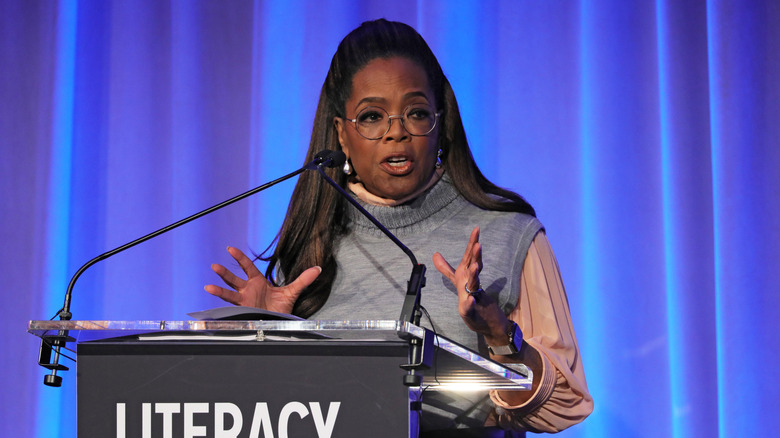
When Oprah Winfrey appeared on "The Tonight Show with Johnny Carson" in 1985, guest host Joan Rivers brought up how she had clinched the win in a beauty contest. When Winfrey replied that the moment occurred when she was 50 pounds lighter, Rivers intrusively asked her the reason for her weight gain. After a visibly uncomfortable Winfrey attributed her weight gain to overeating, Rivers said, "You shouldn't let that happen to you. [...] You're a pretty girl, and you're single. You must lose the weight" (via YouTube).
During a January 2026 appearance on "The View," the media mogul recalled how she had felt over the moon about being invited to the popular talk show in 1985 and had even gone out and splurged a paycheck on a pair of shoes to wear on air. However, all her happiness swiftly dissolved when her weight became their point of discussion. "I remember leaving feeling embarrassed, but she said I could come back if I lost 15 pounds," Winfrey recalled. "I wasn't even upset with her. I thought, 'I've got to get on it, I've got to lose those 15 pounds.'"
In her 2017 book "Food, Health, and Happiness," Winfrey shared that she was determined to shed 15 pounds after the interview because it served as a means for her to send a clear message that she "deserved" her success and had earned people's approval. In the aftermath, Winfrey tried crash diet after crash diet, and ended up dealing with numerous fluctuations. (Suffice to say, you shouldn't even think about going on a crash diet.)
Anna Wintour told her to shed a few pounds for her Vogue cover
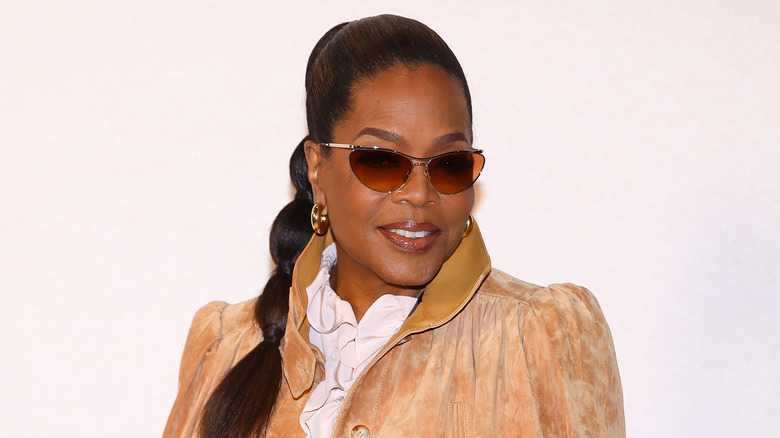
In an unaired segment from Anna Wintour's May 2009 appearance on "60 Minutes," she revealed that she made "a very gentle suggestion" to Oprah Winfrey to shed a few pounds for her 1998 Vogue cover (via Us Weekly). Wintour added, "I said simply that you might feel more comfortable. She was a trooper!" The former Vogue editor-in-chief then shared that Winfrey had managed to lose 20 pounds through a strict regimen.
Winfrey opened up about her weight loss from the time in a December 2025 People interview, saying, "I was just doing what the rest of the world was doing," she continued. "I thought I had proven that I had willpower." So, when Winfrey experienced weight fluctuations in the following years, she once again blamed herself for her lack of willpower.
However, experts have argued that discipline and willpower aren't the end-all, be-all for weight loss. In a chat with TecScience, Carolina Solis-Herrera, endocrinology Division Chief at the University of Texas, professed that willpower wasn't a magic cure for obesity. She explained that some people may be more prone to overeating because their bodies are overproducing a hormone called ghrelin, which is responsible for hunger pangs. For them, no amount of willpower could make up for the lack of hormonal satiety signals.
In 2024, Dr. Donald Hensrud, a Mayo Clinic physician, similarly told Mayo Clinic News Network that there are several driving factors behind overeating and a sedentary lifestyle that couldn't be simply changed with willpower. He believed that the trick to weight loss lay in creating effective and sustainable strategies.
People seem to forget that Oprah Winfrey is a victim of diet culture, too

In a 1988 episode of her talk show, Oprah Winfrey wheeled out a red wagon containing 67 pounds of animal fat, which represented the weight she had lost in the three years since her infamous chat with Joan Rivers. However, the media mogul had achieved that transformation through the Optifast diet, which restricted her to 400 calories a day (via New York Times) and required her to only consume liquid protein for four months.
In an October 2005 issue of O Magazine, she revealed she regained weight when she switched to her regular diet. During a May 2024 WeightWatchers livestream event, Winfrey acknowledged that she had been a proponent of diet culture and specifically apologized for promoting a liquid fasting diet that was completely unsustainable. Unfortunately, that candid admission hasn't stopped people from continuing to shame Winfrey for partaking in a major moment in diet culture.
However, many of these critics arguably fail to see the sheer amount of pressure that Winfrey was under in the 90s, a time when fat-shaming was heavily normalized. One magazine from the time had labeled her "Dumpy, Frumpy and Downright Lumpy" (via People). In a December 2023 People interview, Winfrey shared her reaction to the headline, saying, "I didn't feel angry. I felt sad. I felt hurt. I swallowed the shame. I accepted that it was my fault." Winfrey may have undeniably perpetuated an unrealistic standard at the time, but it's important to remember that she was a victim to that standard herself.
She was shamed for taking GLP-1 medication

Ever since Oprah Winfrey joined the ranks of media personalities who have confirmed GLP-1 use, people have criticized her for taking a "shortcut" or "the easy way out" to achieve her weight loss goals. However, those critics fail to understand that what people do to achieve their health goals or feel more confident in their own skin is completely their own business. Additionally, the criticism surrounding Winfrey's weight loss journey represented a bigger problem: the stigmatization of GLP-1 medication.
A 2026 study in the International Journal of Obesity compared how people viewed three groups: the first had lost weight through GLP-1 medication, the second had achieved their weight loss goals through diet and exercise, and the third hadn't achieved their goals. The study found that people viewed GLP-1 medication users with the most negative traits (such as "lazy, undisciplined, self-indulgent, unclean, weak-willed, sloppy, insecure, and sluggish") in comparison to the other groups. Additionally, people were less likely to want to be associated with GLP-1 medication users as compared to the two other groups.
During a January 2025 appearance on "The Oprah Podcast," endocrinologist Dr. Ania Jastreboff dispelled "the easy way out" narrative by pointing out that obesity was a disease and the medication was a means to cure it on a biological level. In December 2023, the celebrity, who underwent a major weight loss transformation after entering her 60s, told People that she would not tolerate any criticism about her decision, saying, "I'm absolutely done with the shaming from other people and particularly myself."
People rolled their eyes at her 'obesity gene' claim
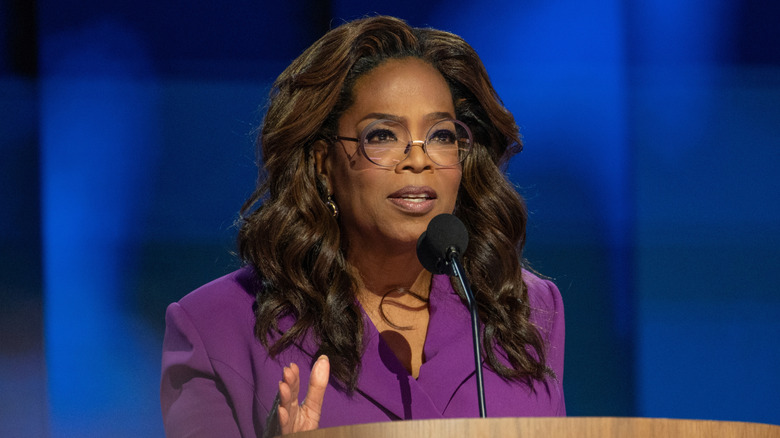
During a December 2025 People interview, Oprah Winfrey shared a belief that had been an eye-opener for her on her weight loss journey, saying, "If you have obesity in your gene pool, I want people to know it's not your fault [...] stop blaming yourself for genes and an environment you can't control." During a January 2026 appearance on "The View," Winfrey similarly proclaimed that some people were more likely to overeat due to the "obesity gene" rather than a lack of willpower. According to her theory, the food noise was further amplified in people with the gene. Many social media commentators rolled their eyes at her comment, believing that it perpetuated an age-old "excuse."
However, there actually is a link between obesity and genetics. The Obesity Medicine Association notes that the genetic causes of obesity can be divided into three categories: polygenic, monogenic, and syndromic. The polygenic category included multiple genes, the monogenic category included a singular gene, and the syndromic category tied obesity to syndromes developed at birth.
Under the polygenic category came the FTO (fat mass and obesity-associated gene), which was present in 43% of humans. People carrying this gene and other similar ones could have a harder time losing weight due to hormonal factors, including heightened hunger levels and low satiety. They could also be more likely to live a sedentary lifestyle and experience lower levels of control over food, and their bodies might be predisposed to storing more fat.