

Outdated Boomer Skincare Advice Millennials Absolutely Can't Stand

Millennials and baby boomers surprisingly seem to have similar things on their minds as they take a stroll down the beauty and skincare aisle. According to a 2025 Vogue piece, GWI data showed that both generations were likely to look for skincare products that targeted dry skin and helped reduce signs of aging.
"This generation is pushing for innovation specifically in the skincare and wellness sectors with an age-agnostic approach to their mature skin routines," Hannah Mauser, senior beauty strategist at WGSN, said of the baby boomer generation's skincare routine. "Cell renewal, hydration and protection are top of mind for baby boomers as they seek formulas that enhance and work with their skin, not against it." However, the way that the two generations tried to actually accomplish their skincare goals differed. While the younger generations were open to trying out new skincare products, baby boomers preferred sticking to tried-and-true brands and products.
Meanwhile, a 2025 study in Ethics, Medicine and Public Health found that the two generations tried to tackle aging in different ways, too. While the younger generation made an active effort to stay informed about anti-aging trends, the older generation preferred sticking to the information they already knew. Millennials were focused on rejuvenating their skin to reduce the signs of aging, whereas baby boomers simply wanted to care for their skin the best they could. The dissimilarities between the two generations don't end there, though, as they also frequently butt heads over the fundamentals of skincare.
Millennials don't think that cold creams are worth all the hype
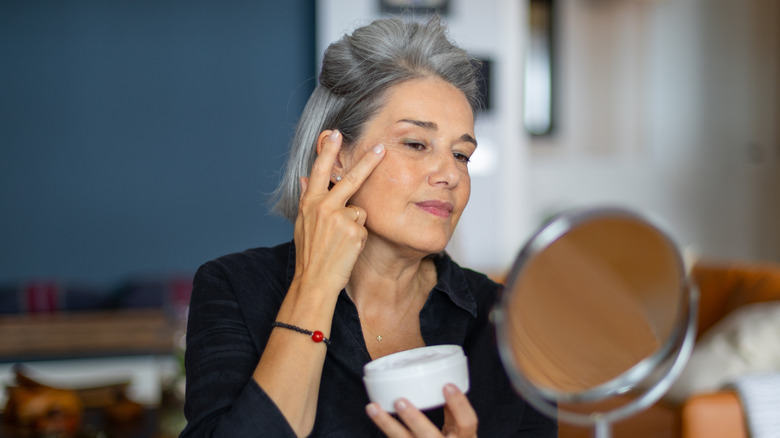
After years of watching Hollywood icons use cold creams, many baby boomers started considering them the glamorous secret to their beauty. The generation not only religiously used the product themselves but also recommended it to millennials, often labeling it the sole beauty product they would ever need. However, the beloved product hasn't exactly aged well.
During a 2016 chat with HuffPost, dermatological surgeon Patricia Wexler explained that "cold cream is an emulsion of water in oil" mixed with beeswax and scents. The product is aptly named on account of the cooling feeling it leaves the skin with. While cold creams can help replenish dry skin, they come with plenty of downsides that millennials feel the older generation has largely ignored. Speaking to Allure in 2015, cosmetic chemist Joseph Cincotta stated that cold creams should be used as makeup removers and not for hydration. He went on to explain that the formulation of most cold creams worked best for removing makeup and tending to inflamed skin.
Cincotta stated that the level of mineral oil and soap could dry out the skin with extended use, despite initially providing moisture. Moreover, Cincotta pointed out that cold creams were devoid of ingredients like ceramides and hyaluronic acid, which could actually help nourish the skin. Additionally, in a 2023 chat with Town & Country, dermatologist Ava Shamban pointed out that the baby boomer favorite was initially packed with ingredients that replenished the skin. However, they were replaced with ingredients like petroleum jelly and mineral oil due to mass-production needs.
Millennials don't want to feel 'squeaky clean' after their skincare routine
According to Face the Future clinical manager Kimberley Medd, keeping the skin "squeaky clean" was considered important during the baby boomer era (via Hello!). For many, a skincare routine felt incomplete unless the skin felt completely tight afterward. However, to achieve this feeling, many skincare products on the market had to be formulated with ingredients that didn't nourish the skin in the long run. Chatting with Byrdie in 2023, Maryam Zamani, a facial aesthetic medicine doctor and oculoplastic surgeon, professed that this clean feeling that came after using a cleanser or toner was often the result of simple alcohols like ethanol, which could potentially rob the skin of its natural oils and affect the skin barrier.
Dr. Zamani cautioned that ethanol-based toners could be particularly drying for sensitive skin, and general skincare products with alcohol weren't a good fit for those with acne-prone or oily skin. On paper, using products that draw oil out of the skin sounds like a good idea. However, during a 2020 chat with Essence, Marla Rene, founder and owner of Marla Reńe Skincare, explained why alcohol-based toners weren't a good idea, saying, "It causes our skin to respond by producing more oils. So it's very counterproductive."
For some boomers, the idea of "squeaky clean" skin didn't manifest through overusing alcohol-based skincare products but through over-washing their face. Washing your face more than necessary can deplete its natural oils and make it dry.
Millennials believe that moisturizer is a must for oily skin
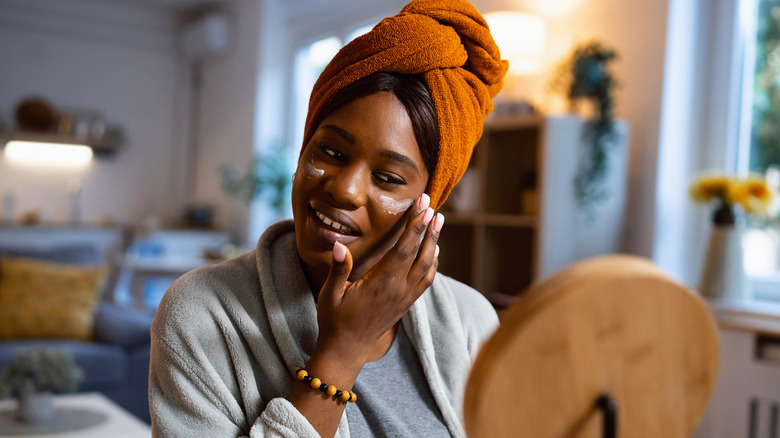
Many baby boomers have believed that moisturizing is only necessary for those with dry skin, and some have even thought that hydrating oily and acne-prone skin makes it greasier and leads to more problems in the long run. However, millennials firmly believe that moisturizing should be a basic part of everyone's skincare routine.
According to Dr. David Orentreich, guiding dermatologist at Clinique, oily skin doesn't equate to well-hydrated skin. As he put it: "Though sebum — the oil produced from oil glands — may be plentiful, the surrounding skin may be dry." Dr. Orentreich also pointed out that water and oil play different roles for the skin, and you need a combination of both to have healthy, hydrated skin. Moreover, keeping the skin moisturized could inform the body that it doesn't need to create extra sebum to make up for the dryness. While it's clear that you should still moisturize if you have oily skin, finding the right fit can take some trial and error.
During Dr. Orentreich's chat with Clinique, he explained that the skin could indeed become greasier and more acne-prone if someone with oily skin opted for an oil-based moisturizer. Going for a moisturizer with minimal water content didn't serve the purpose either. Instead, you could opt for a moisturizer that is lightweight, noncomedogenic, water-based, and, of course, oil-free. Chatting with People with oily skin could also reach for moisturizers with hyaluronic acid, niacinamide, ceramides, and salicylic acid, as well as those that come with mattifying properties. Lastly, Dr. Sandra Oska cautioned to Today that it's best to avoid products with "heavy silicones and occlusive oils, like coconut or mineral oil."
The younger generation cannot understand the older generation's obsession with tanning

These days, everybody knows what happens to your skin when you don't use sunscreen. Since that knowledge wasn't as readily available to baby boomers, they wound up thinking of tanning as a good thing and often spent hours outside without sunscreen to achieve that "healthy" sun-kissed glow. Some even took things a step further and started applying baby oil with the hopes that it would make their tan come on faster. Indeed, baby oil can help people tan faster since it increases the draw and absorption of UV rays.
However, exposing your skin to UV rays without any sort of sun protection can increase the risk of skin cancer, bring on premature aging, and make one more prone to getting a sunburn. As the awareness around the perils of tanning started growing, tanning beds became increasingly popular as people began to see them as a safer means of achieving the same results.
Speaking to Cleveland Clinic, dermatologist Jennifer Lucas professed that indoor tanning beds are not safer for the skin than the sun. "Tanning beds are just as harmful as the sun, if not more harmful," she said, before explaining that the invention emitted 10 to 15 times more UVA rays than its natural counterpart. Unfortunately, even a single trip to the tanning salon before the age of 35 can bump one's risk of getting skin cancer by 75%. Dr. Lucas ultimately stressed that the only way to get that sun-kissed glow without the risks was to use at-home tanners or get a spray tan.
Millennials don't find themselves reaching for the walnut scrub anymore
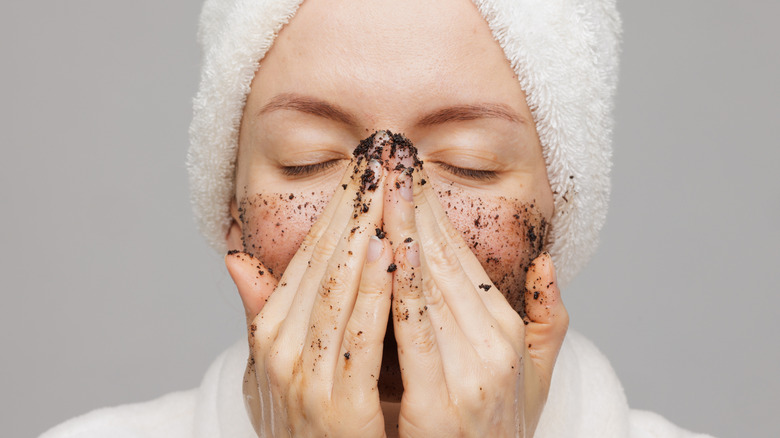
Many millennials have vivid memories of using their baby boomer parents' walnut, apricot, or peach scrub for their first-ever skincare routine in their younger years. On some levels, the obsession with the scrubs makes sense. After all, they left the skin feeling smooth and tingling, the two hallmark signs of a good skincare routine in those days. However, the scrubs didn't age well. Speaking to Byrdie, Dr. Dendy Engelman professed that scrubs that used physical exfoliants like crushed walnut shells were "too abrasive for skin and [could] actually cause small injuries, or micro-tears, as well as inflammation and infection."
Additionally, board-certified dermatologist Dr. Orit Markowitz stated that the belief that physical exfoliators helped get rid of flaky skin was mostly a myth because it only brought temporary results. In the long run, over-exfoliating skin with harsh scrubs can do more harm than good. During a chat with Self, dermatologist Evan Rieder said that over-exfoliating could temporarily harm the stratum corneum, the outermost layer of the epidermis. Subsequently, the skin could be more susceptible to mild triggers, bacterial infections, and other issues.
Dermatologist Suzan Obagi stated that the ill effects could potentially be avoided by using the scrub for shorter intervals. Dr. Engelman similarly told Byrdie that it was best to only use a scrub with a physical exfoliant once a week, at most, and to be gentle with it. Overall, the dermatologists seemed to agree that chemical exfoliants get the job done better.