

Reactions To Patricia Heaton's Gray Hair At 68 Prove The Public Could Use A Reset On Aging
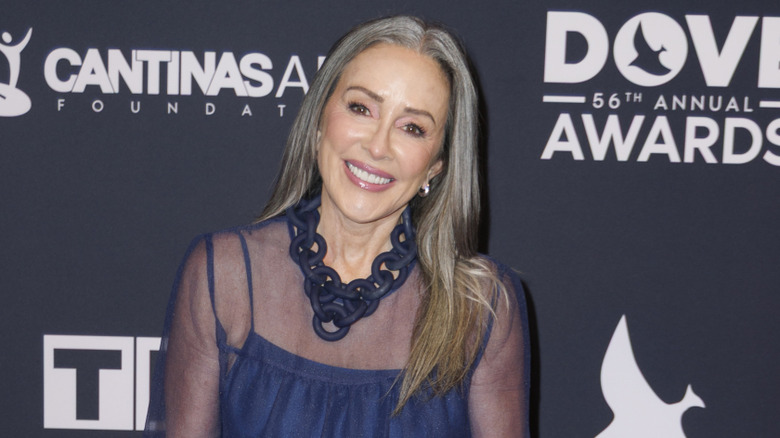
When it comes to her silvery locks, Patricia Heaton doesn't care if you like them or not. She's not going to hide them for anyone, according to a recent Instagram reel — and she's going to give the public a reset on grays and aging.
In the video, Heaton smiles but minces no words about the appearance of her hair after a commenter wrote, "You're too young for grey old lady hair." Said Heaton, "The people in my life love me no matter what color my hair is, and maybe we could all use a little more of just accepting what is and being grateful."
Heaton is 68 years old, so it's perhaps a backhanded compliment to say that she hasn't had enough birthdays to warrant her silver locks. Yet gray hair can start appearing much earlier than the so-called senior years. In fact, there are plenty of celebs who went gray in their 20s, including comedian Steve Martin, actress Tia Mowry, and fashion icon Stacy London.
Why is Heaton getting heat for her silver streaks, then? Perhaps it's because society has become so accustomed to the practice of "covering the grays" that they've forgotten the science behind normal hair changes.
What really causes hair to gray
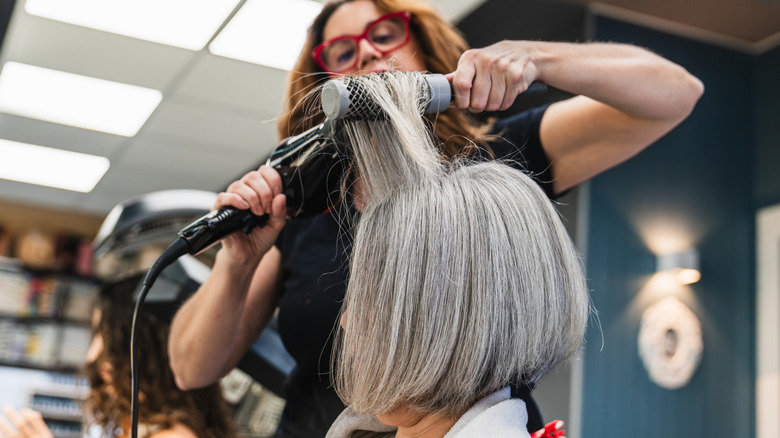
First, let's look at the average age at which people start to experience loss of pigmentation in their hair. The American Academy of Dermatology Association explains that it's common for gray hairs to make their presence known between age 30 and 50. Why? The reason is pretty simple: Some hair follicles simply stop producing melanin (the substance that causes pigmentation throughout your body).
Is gray hair reversible? Maybe, but only under very specific conditions. For instance, if your gray hair appears during stress, those grays may vanish when the stress goes away. A 2019 review in Skin Appendage Disorders indicated that a few medications and possibly specific vitamins might reverse hair graying. However, the review stated that the evidence was low and repigmentation was rare. Additionally, studies have suggested we may someday be able to make gray hairs colorful again by changing them at the cellular level, though this remains mostly theoretical.
Finally, you can sometimes delay graying by getting good sleep, eating foods that may prevent gray hair, and nixing nicotine — but you can't necessarily stop grays forever. Everyone has gray in their future; the only question is when. Ultimately, you can blame your genes. As noted by skin disease expert Dr. Leslie Castelo-Soccio in an AARP piece, "Family history is the biggest predictor [of gray hair]."
Why it's time to remove the silver stigma
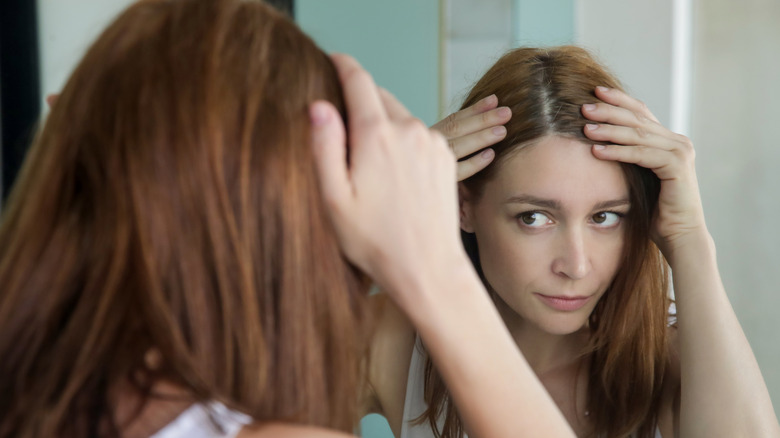
Here's the final scoop on graying and aging: Getting gray hair is normal and can happen at any time in life. Unfortunately, like wrinkles and sagging facial skin, gray hair seems to be one of those normal, predictable experiences that people work hard to hide.
Why can't we all just rock our graying hair like Heaton? Though every woman has a different reason for being uncomfortable with her silver tresses, findings from a Gransnet survey may illustrate why some women feel uneasy when they see gray hairs in the mirror.
Specifically, the Gransnet research showed that 70% of participants felt that women turn socially "invisible" as they age, with 52.7 years being the agreed-upon midpoint of when the phenomenon of social invisibility occurs. With that in mind, women may feel that it's best to hide all signs of aging as long as they can to avoid being overlooked. Reporting from Pew Research supports this hypothesis. When asked, 27% of people surveyed said they'd used hair dye to cover graying in an effort to appear more youthful.
In a perfect world, Heaton wouldn't have felt the need to explain her desire to showcase her shining silver hair. Unfortunately, it's not a perfect world, but at least Heaton's message helps spread the truth about (and beauty of) gray hair.