

Everyone Wore Them In The '80s — But Your Feet Are Waving Red Flags At Their Comeback

In case you missed it, jellies are back! In March 2026, the luxury French fashion house Chloé took the internet by storm when it debuted its brand-new hot shoe for summer: a $670 jelly mule complete with a peep-toe and a kitten heel in shades of blush pink, spearmint, amber brown, and ash grey. As reported by Bustle, Google searches for both "jelly ballet flats" and "jelly mules" exploded after this one's debut.
However, a couple of months after the new jelly mule arrived on the scene, one X user issued a warning regarding the footwear. "As a child of the late 1900s (1983), please listen when I tell you these shoes will destroy your feet," they cautioned. "They will tear them into smelly, unrecognizable shreds and will cut into your skin like razor blades. You will think you are the exception. You are not. May my side part never cooperate again if I am lying," they added.
But don't just take the Twitterverse's word for it. There's plenty of supporting evidence that proves your feet are furiously waving red flags at the infamous jelly shoes' comeback.
Most jelly shoes are made of PVC plastic, a painful material at best
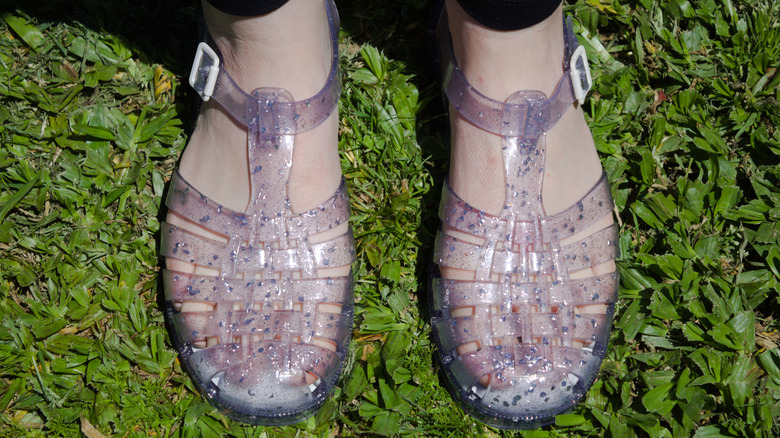
Sadly, not all jellies are made the same. While the high-end Chloé pair is engineered from transparent TPU (thermoplastic polyurethane), a material that tends to be more flexible and breathable, most of the more affordable versions of jellies are comprised of PVC (polyvinyl chloride), that same terrible material from the '80s that had everyone's dogs barking by lunchtime.
As the old saying goes, ignorance is bliss. Back in the 1980s, fashionistas and footwear aficionados had no way of knowing just how awful those cute little translucent jelly shoes, in various shades of glittery PVC plastic, were for their feet. Alas, all that glitter jellies is not gold. More often than not, after only a few hours in the summer heat, their sweet tootsies were crying out in agony, their ankles and heels sporting blisters the size of Texas, and underneath the surface, a nasty foot and/or nail fungus was almost sure to be a-brewing as a result of the moisture trapped inside the gummy plastic footwear, much like what happens when you stop wearing socks with shoes.
"Sometimes these jelly shoes ... become very hot, so you can have chafing, blisters and the plastic environment of a jelly shoe can lead to foot fungus," Dr. Lesly Robinson, the interim associate dean of academic affairs at the Temple University School of Podiatric Medicine in Philadelphia, explained to HuffPost about jellies in 2025. So, uh, yeah, go ahead and add PVC plastic jelly shoes to the ever-growing list of shoes that could be doing serious damage to your feet. Your feet will thank you.