

Avoid These Health Red Flags At Summer Cookouts

Every year, around 48 million Americans contract a foodborne illness, according to the CDC's estimates. Given how common this is, it can be easy to think that it is no big deal. However, it's important to remember that each year, around 128,000 Americans are hospitalized due to food poisoning, while 3,000 die from it.
Salmonella, Campylobacter, and Norovirus are the top three causes of foodborne illnesses-related deaths in America. Two out of these three, Salmonella and Campylobacter, are contracted through consuming undercooked meat. Due to high temperatures, the risk of developing both of these infections increases in the summer. So, it's unsurprising that a summer cookout can be a place where these two bacteria thrive. On paper, it seems the risk of catching those infections becomes negligible if the meat is cooked at high temperatures. And there are plenty of little things that many people overlook, which can lead to the spread of these bacteria.
To name one, many people use the same tongs to cook raw meat and vegetables on the grill when it's best to have separate instruments for grilling meat. In fact, even solely cooking raw meat next to any uncooked ingredient increases the risk of foodborne illnesses. Although the risks at cookouts are heightened, they are not unavoidable. By taking extra caution and small preventive steps, it's easy to reduce the odds of getting sick from a barbecue.
Eating undercooked meat is a no-no
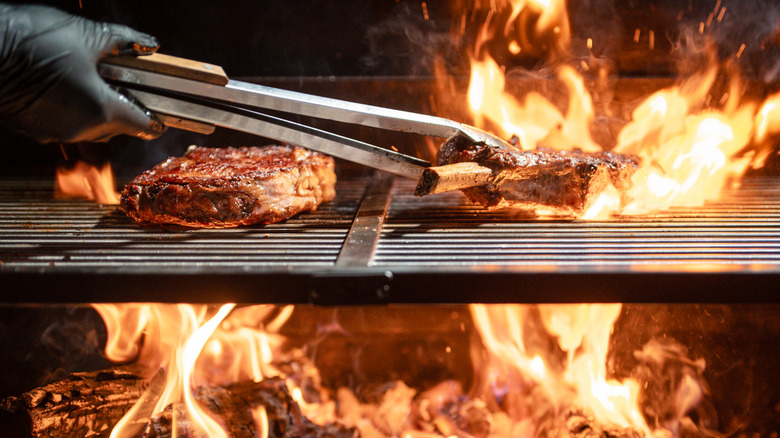
Many people subscribe to the notion that a grill is so hot that the risk of the meat remaining uncooked is negligible. However, that's not the case, and parts of meat can remain raw, despite the high temperatures. As we all know, eating raw meat can be quite dangerous if it is contaminated with bacteria and viruses like E. coli, Salmonella, Staphylococcus aureus, Yersinia enterocolitica, Listeria, and trichinosis. Developing one of these infections can lead to symptoms like nausea, vomiting, cramping, diarrhea, fever, and chills.
Dr. Kumkum Patel told Very Well Health that eating undercooked meat could cause numerous long-term problems, saying, "Improperly cooked meat not only can cause acute diarrhea but can lead to long-term effects by disrupting the gut microbiome. This can lead to irritable bowel syndrome type D symptoms, which include chronic abdominal cramping and loose stools."
While most people just eyeball the meat to see if it's cooked properly, it's not a foolproof method because meat can be pink and still be at a safe enough internal temperature to consume. The best way to tell if meat and poultry are undercooked is to use a meat thermometer. While ground beef needs to reach a temperature of 160 degrees Fahrenheit to be thoroughly cooked, poultry needs to be at 165 degrees Fahrenheit, and steaks, roasts, and pork should reach 145 degrees Fahrenheit. Additionally, it's best to leave beef, lamb, and veal out to rest for around three minutes before serving because its temperature will either remain constant or continue to cook, which makes it less likely for parasites and bacteria to survive.
Store marinated meats the correct way
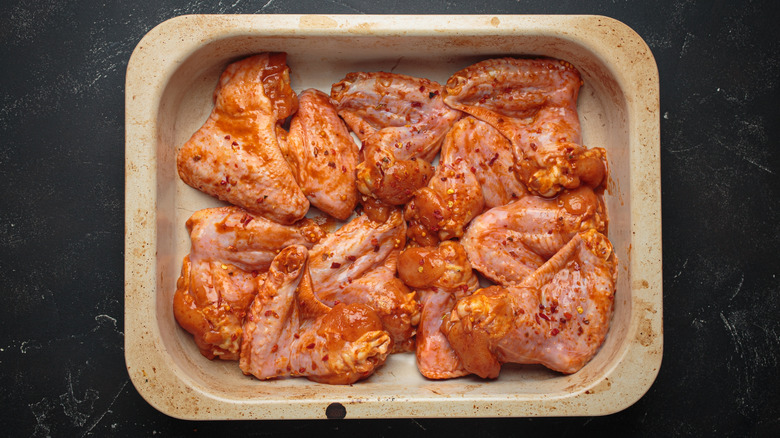
Marinating meat doesn't just help with flavor. It can also be good for your health. As the Karmanos Cancer Institute explains, marinated meat is far less likely to form carcinogenic compounds produced during high-temperature cooking. Even letting the meat marinate for 40 minutes has been reportedly shown to decrease the risk of the development of these compounds by 90%. Though the exact reason for this benefit is unknown, researchers have speculated that it may be related to the antioxidants present in marinade ingredients or the cooling effect of marinades.
However, failing to marinate meat correctly might only invite more trouble. Chatting with Mashed, food scientist Jessica Gavin advised, "If you're marinating, do it in the fridge, not [on] the counter, to prevent bacterial growth." The USDA recommends keeping marinated meat in the fridge for up to 24 hours. Anything longer than two days could cause the meat to become mushy.
It is equally important to store meat, marinated or otherwise, the correct way. It's possible for bacteria and viruses on raw meat to travel onto cooked food and cause food poisoning. Notably, raw meat doesn't just pose a risk to prepared food items but also to other surfaces it comes in contact with. So, it's best to store the meat, preferably in its original plastic packaging, at the back of the bottom shelf to ensure that the juices don't drip onto the cooked food you have got ready for the cookout.
Charring meat may be doing more harm than good
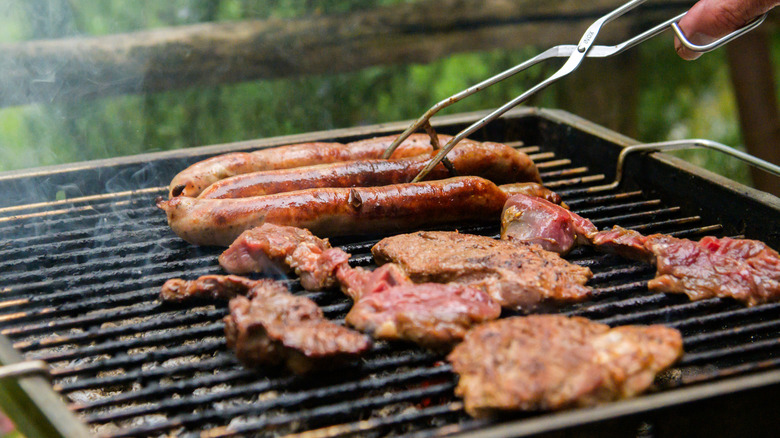
An unhealthy mistake you might be making when cooking meat is charring it. Chatting with HartfordHospital.org, Dr. Brisas Truncali, a gastroenterologist who practices at the Hartford HealthCare Digestive Health Institute, explained why cooking meat at high temperatures just to get a char was a bad idea. "When you grill meat, certain chemicals can form," he professed. "The idea is that when the meat juices drip onto the flames below, they carry these chemicals back up and coat the meat."
According to Cancer.org, cooking meats at high temperatures for longer periods was more likely to trigger the formation of HCAs and PAHs, the chemicals that Dr. Truncali mentioned. GoodRx notes that beef produces the highest number of HCAs and PAHs in comparison to fish, pork, and chicken. Animal studies have suggested that exposure to HCAs and PAHs could create cancerous tumors in the breasts, colon, liver, lung, prostate, and other organs.
Additionally, in a chat with Boston University, Monica Wang, a School of Public Health associate professor of community health sciences at the institute, explained that cooking processed meats like sausages at high temperatures posed an additional risk because the preservatives in them could turn into cancer-causing chemicals at high temperatures. To reduce the risks associated with eating charred meat, Wang recommended precooking steaks in the microwave or oven to eliminate the need to cook at high temperatures for longer periods. Even simple steps like opting for leaner meats, flipping steak regularly, and trimming off charred bits could reduce exposure to the chemicals. Dr. Wang also confirmed that marinating the meat could be beneficial.
Don't overlook food safety temperatures in the small moments
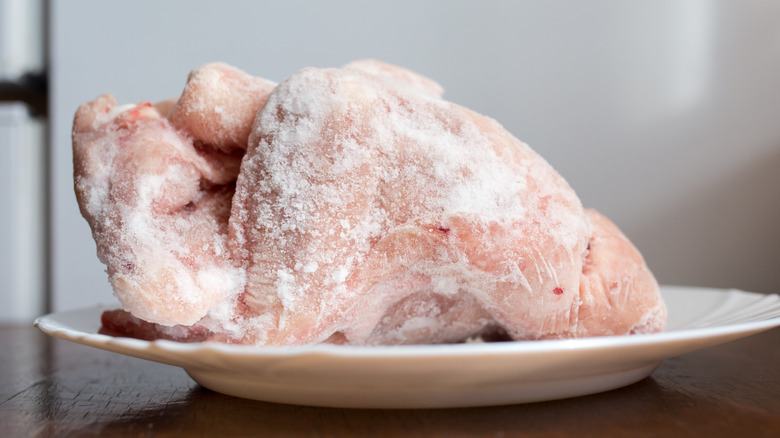
For many, thawing meat is just leaving it out on the counter until it gets to room temperature. However, you should never thaw meat on the counter because that can invite bacteria. As the USDA notes, during thawing, the packaging could remain frozen while the outer layer reaches the "danger zone" temperatures of 40 and 140 degrees Fahrenheit, where the odds of bacterial multiplication greatly increase.
Chatting with EatingWell, Tracee Yablon Brenner, RD, CLT, HHC, said, "Food should be thawed in the fridge, in cold water (changed every 30 minutes), or in the microwave, never at room temperature." This doesn't just go for frozen meat. Tarek Almouradi, M.D., a board-certified gastroenterologist, noted that many common picnic foods like coleslaw, macaroni salad, dips, cut fruit, and potato salad could also enter the "danger zone" temperatures fairly quickly. Ultimately, it was best to keep perishable foods out for two hours at maximum and reduce the limit to one hour if outside temperatures surpassed 90 degrees Fahrenheit.
It's important to remember that this time limit also includes prep time. Joy Erdile, M.Sc., RD, offered a simple way to reduce the risks associated with food storage, saying, "Whether at home or at a cookout, always keep cold foods cold and hot foods hot." It's equally important to keep food safety temperatures in mind when transporting food. Although the trunk seems like a safe place for the job since it's away from direct sunlight, the air conditioner isn't as effective in the area and can easily cause the food to reach the danger zone if not packed properly. Always makes sure you're transferring food via properly insulated containers or coolers to maintain temperature.
Remember what needs to be washed and what doesn't
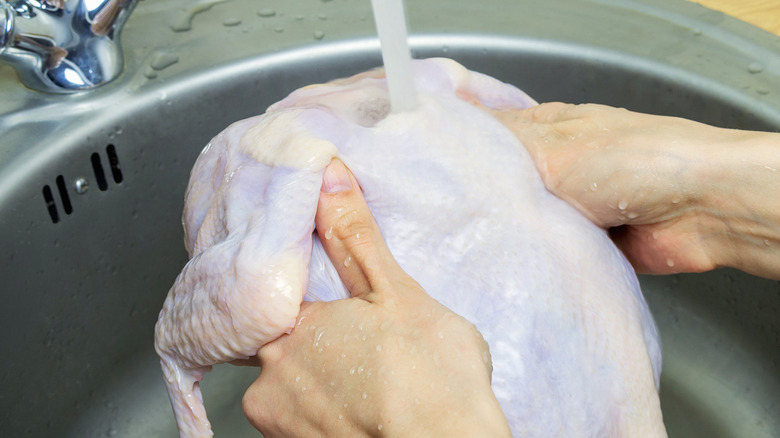
Some believe they are practicing good hygiene when they wash their chicken, since it seems like they are ridding it of impurities. However, that's not the case, as washing poultry may be doing more harm than good. Raw chicken can contain bacteria like campylobacter and salmonella. As such, running it under water potentially creates a bacteria-filled stream that goes into the sink where you wash all your dishes. It also comes with a risk of splashing onto your counters and other areas of the kitchen.
In reality, there's no need to wash any store-bought poultry. By the time it hits grocery store shelves, it has already been washed during the manufacturing process. Instead of running it under water, it's best to pat it down with a clean paper towel if necessary. After the process, it's important to wash your hands using the proper way. Generally speaking, it's good to remember to wash your hands when you're at a cookout to stay germ-free. You can be proactive by packing a small container of soap and having a water bottle on hand in case running water is not accessible. A a last resort, use hand sanitizer that contains at least 60% alcohol
Additionally, it's important to wash your produce. Tracee Yablon Brenner explained to EatingWell that it was important to give your fruits and veggies a thorough wash before use, regardless of whether they were organic, homegrown, or just store-bought. "You should wash the outside of melons, cucumbers, avocados, etc. before cutting, since bacteria on the rind can be transferred to the flesh by the knife," she said.