

Elon Musk's Autism Diagnosis Explained
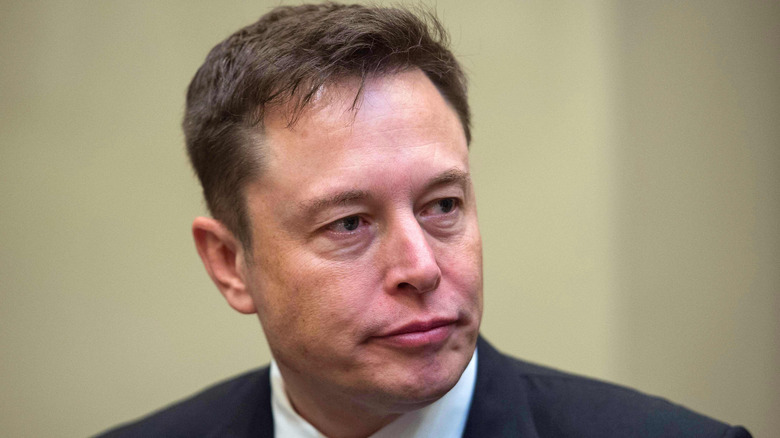
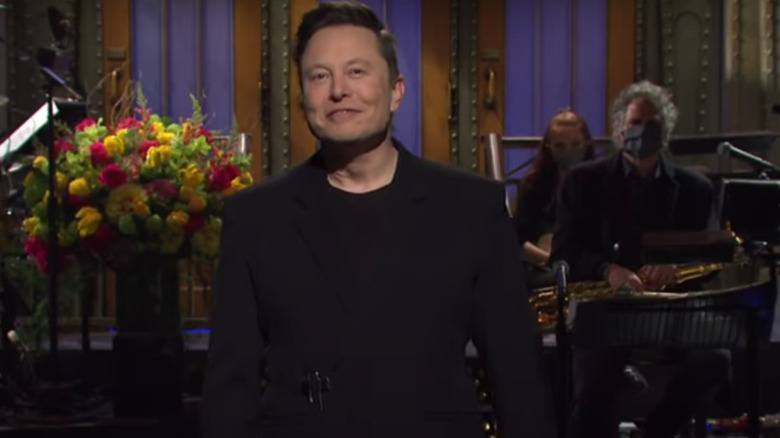
While Elon Musk has most recently made headlines for his brief stint with the Department of Government Efficiency (DOGE) under the second Trump administration, he was making headlines of a different sort on May 8, 2021, when he appeared on "Saturday Night Live." During the opening monologue, the "Technoking" of SpaceX and Tesla touched on a range of topics, including his controversial tweets, his son's name, and anecdotes from his childhood as shared by his mother (via YouTube).
The portion that garnered the most attention, however, was Musk's statement that he was "making history as the first person with Asperger's to host SNL." He followed up with he was "at least the first person to admit it" (via Variety). A round of applause then ensued, with Musk joking that he is "pretty good at running human emulation mode."
This appearance is thought to be the first time Musk spoke publicly about his diagnosis (via BBC News). However, the monologue did drum up some controversy, with viewers saying that he wasn't the first host with Asperger syndrome. Former cast member Dan Aykroyd hosted the show in 2003 and has since talked about his Asperger syndrome diagnosis in the '80s (via Today).
What is Asperger syndrome?
Asperger syndrome is described by Autism Speaks as a "previously used" diagnosis on the autism spectrum. They state that, in 2013, Asperger syndrome and other autism-related diagnoses were combined under the diagnosis of autism spectrum disorder (ASD), and it is now referred to as level 1 ASD. Autism Speaks additionally explains that, while the term Asperger syndrome is no longer used by medical professionals, some individuals who were diagnosed before the change still prefer to use it.
It differs from other types of autism with its typical to strong verbal language skills and average to above-average intellectual ability. Those with level 1 ASD can generally experience social interaction difficulties, a desire for sameness, restricted interests, and distinctive strengths. Those strengths include attention to detail, an aptitude for pattern recognition, remarkable focus, and persistence.
There are some challenges that those with level 1 ASD can experience. Difficulties with the "give and take" of conversing and the nonverbal conversation skills like distance or tone, as well as hypersensitivity to light, sound, or taste; clumsiness or uncoordinated movements; and anxiety or depression are a few challenges (via Autism Speaks). It is important to note that these strengths and challenges vary widely across those diagnosed. "Many learn to overcome their challenges by building on strengths," the organization explained.
The evolution of Asperger syndrome
According to the Autism Society, Asperger syndrome was first described by Austrian psychiatrist Hans Asperger, who in the 1940s observed boys who had typical intelligence and language development with autism-like behaviors and difficulties with social and communication skills.
British psychiatrist Lorna Wing coined the term "Asperger syndrome" in 1981 in a series of case studies, according to Autism Speaks. Some years later, Asperger syndrome was added to the American Psychiatric Association's "Diagnostic and Statistical Manual of Mental Disorders (DSM)" as a separate disorder from autism.
However, many professionals felt that it was "a milder form of autism," using the term "high-functioning autism." So, "in 2013, the DSM-5 [the manual's 5th edition] replaced Autistic Disorder, Asperger's Disorder and other pervasive developmental disorders with the umbrella diagnosis of autism spectrum disorder" (via Autism Society). There has also been an increase in diagnoses for autism in recent years, but it is not clear if it is more prevalent or if the detection rates are higher.
How autism is diagnosed and treated
Autism diagnosis occurs after an assessment, developmental history, and observation by a medical professional with experience in autism or other pervasive developmental disorders. The timing of diagnosis is also important, as there is an increased chance of academic success and independent living for children who are diagnosed early (via Autism Society).
According to the National Institute of Neurological Disorders and Stroke, there is no one-size-fits-all treatment program. But an effective program should build on the child's interests in a structured environment, have a predictable schedule with tasks taught in a simple series of steps, and provide regular behavior reinforcement.
Cognitive behavioral therapy to address anxiety and personal challenges, as well as social skills training classes for help building conversation skills and identifying social cues, may be helpful options (via Autism Speaks). Lack of coordination can be addressed with physical and occupational therapy, and voice control can be aided with speech therapy. There also may be psychoactive medications prescribed to help with anxiety, depression, and attention-deficit/hyperactivity disorder (ADHD).
Why did Elon Musk face backlash over his use of the term Asperger's?
The addition of Asperger's to the autism spectrum disorder umbrella diagnosis has led to many sharing the feeling that Asperger syndrome is an outdated term. Some in the autism community criticized Elon Musk's use of the term, saying that it may perpetuate stereotypes about the condition, as well as overshadow why Asperger's is no longer considered a widely used term (via Today).
While Musk did receive some criticism about his monologue, some people thought the heightened exposure was positive for the neurodivergent community. According to Today, one viewer wrote they identified with Musk's monologue comment that he sometimes has to state "I mean that," calling it a real aspect of being on the spectrum. Although Asperger's is no longer used as a diagnosis, many previously diagnosed have a strong and positive identification with being an "Aspie," according to Autism Speaks.
More to come from Musk?
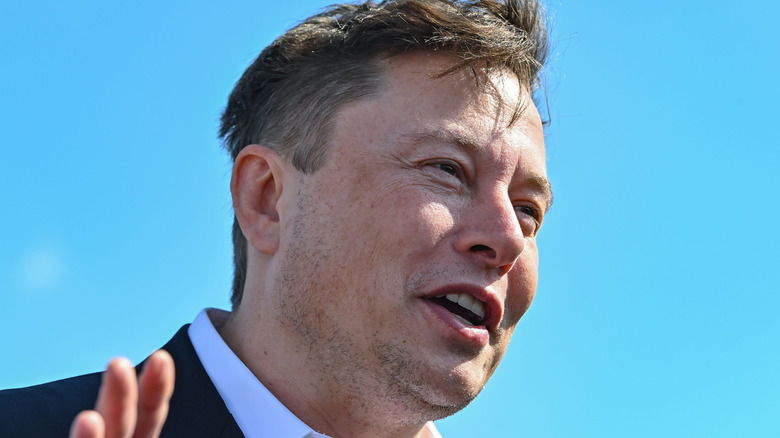
Although it doesn't appear that Elon Musk has commented specifically on his autism diagnosis or the backlash that followed the "Saturday Night Live" episode, the topic did come up a year later in May 2022, when a video was released by Project Vertitas showing a Twitter employee appearing to mock Musk's disclosure of his diagnosis. In the clip, the individual is heard referring to Musk as "special needs."
In response, Musk took to Twitter, which he was in the process of purchasing and has since renamed X, to condemn the footage, saying: "Twitter exec trashing free speech & mocking people with Asperger's ..." He then followed this post with a sad-face emoji (via Newsweek).
While it's totally up to him what he chooses to share about his diagnosis (or otherwise), you can find more information on autism spectrum disorder through Autism Speaks and the Autism Society's websites. Both provide in-depth details and resources.