

The Strange Post-Pregnancy Diet Mariah Carey Tried Had Major Drawbacks

Eating a full rainbow of functional fruits and vegetables every day can offer plenty of health benefits. But what if you decided to eat food representing just one color of the rainbow? In that case, you'd be following Mariah Carey's postpartum diet. To help lose weight after having her twins, Carey began eating only purple foods.
First, let's go over the good news: Purple fruits and vegetables get their deep hues due to an abundance of anthocyanins, which can support your health. Consuming these compounds can help reduce the negative effects of oxidative stress on your body, as well as boost your immune system. A 2022 study in Nutrients noted that anthocyanins might also help reduce obesity by reducing inflammation throughout the human system.
However, adopting the singer's diet might not be the most beneficial for boosting long-term health. Fact is, purple produce is by and large nutritious, but purple plant foods have limitations that can lead to nutritional drawbacks. (Read about some unusual celeb health habits and why they are actually harmful.)
The problem with preferring a purple-only plate
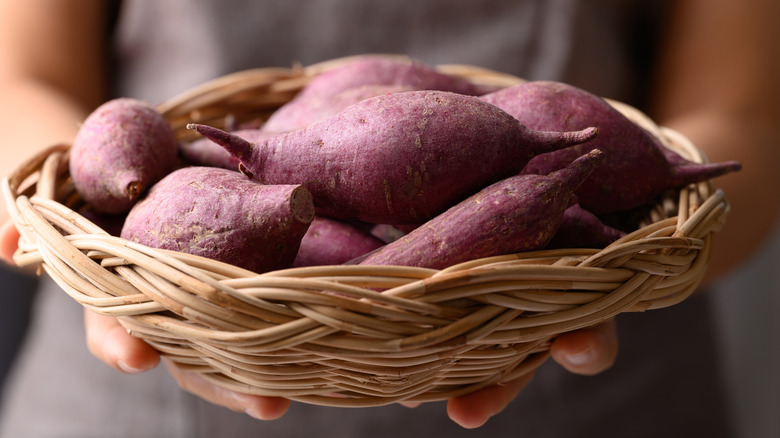
In addition to anthocyanins, purple foods like eggplant, purple cabbage, plums, and blackberries contain a bevy of vitamins, including vitamin A, vitamin C, and vitamin K. Plus, many purple foods contain notable levels of fiber, a substance that can promote fullness and encourage healthy weight management. That's why adding purple plant choices to your diet can make sense.
But limiting yourself to only those foods means you're missing out on nutrients found in other functional food choices. For instance, purple plants don't have the same nutritional composition as red, yellow, or brown plants. Red foods have been associated with having anti-cancer properties, while yellow foods are known to support the eyes and skin.
Registered dietitian Charlene Chen explained to Canadian Living why sticking to purple foods just isn't recommended. "While resveratrol, the purple pigment, is touted as the best anti-aging antioxidant, eating only purple foods is hard to do," she said. Chen added that it "would be best to emphasize dark green, dark orange and dark purple fruits and vegetables to get as many vitamins and antioxidants as possible."
Severely restricted eating can lead to an unhealthy lifestyle

Another issue with going on a purple diet is its narrowly focused nature. When people restrict their eating to a few select foods, they risk losing interest in staying with the routine, which can lead to gaining back pounds. Registered dietitian nutritionist Carly Sedlacek noted that fueling up on the same foods every day isn't good for the stomach's biome or for long-term weight loss (via Cleveland Clinic). She mentioned, too, that food ruts could lead to boredom and a return to former eating habits.
(Here are some weight loss myths you should stop believing.)
The final problem with a purple diet also relates to food restriction, but in a different way. Sometimes, food restriction can be a trigger for disordered eating. As dietitian Gabriela Cohen explained, restriction is "present in all eating disorders, either in the form of actual behavior or mentality" (via National Alliance for Eating Disorders). In the same article, anorexia nervosa survivor Morgan Cornacchini lamented that society "praises restriction." In her case, her so-called "healthy willpower" and "weight changes" were looked upon by those around her as a positive sign instead of an illness. Persons who are at risk of developing an eating disorder may want to avoid heavily restrictive diets.
If you need help with an eating disorder, or know someone who does, help is available. Visit the National Eating Disorders Association website or contact NEDA's Live Helpline at 1-800-931-2237. You can also receive 24/7 Crisis Support via text (send NEDA to 741-741).