

Here's What Could Happen To Your Body If You Copy RFK Jr.'s Diet
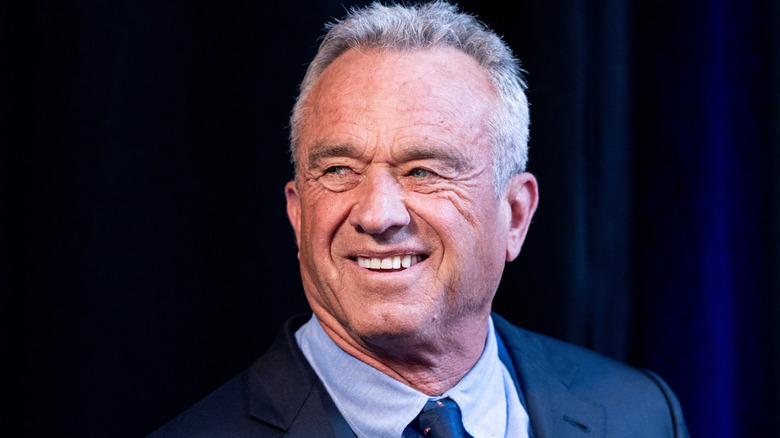
Robert F. Kennedy, Jr. has earned a reputation for posting countless videos of himself while engaging in various health-related activities. From gymnastics-style calisthenics to an airport pull-up contest with a fellow Trump administration coworker, Kennedy's activities showcase how serious he is about staying fit. And he's just as serious about what he eats. However, before you rush to adopt his preferred diet in an effort to transform your body similarly, you should know that RFK Jr.'s Make America Healthy Again (MAHA) diet isn't right for everyone.
Kennedy follows what could best be described as a high-protein diet. He's not quite a strict carnivore, since he's said that he also eats fermented products such as sugar-free yogurt and slaw (via Yahoo!). But as The Cut reported, Kennedy's wife has noted that he centers his meals mostly around meat in true protein-heavy fashion.
Getting plenty of protein isn't unhealthy, of course. Protein is vital for your muscles and bones, and it may keep you feeling full longer. And according to the American Heart Association, as much as 35% of your daily calories should be protein-based. However, it sounds like Kennedy exceeds that figure in terms of his protein intake, and more protein isn't necessarily better.
Heavy protein can lead to a lack of nutrients
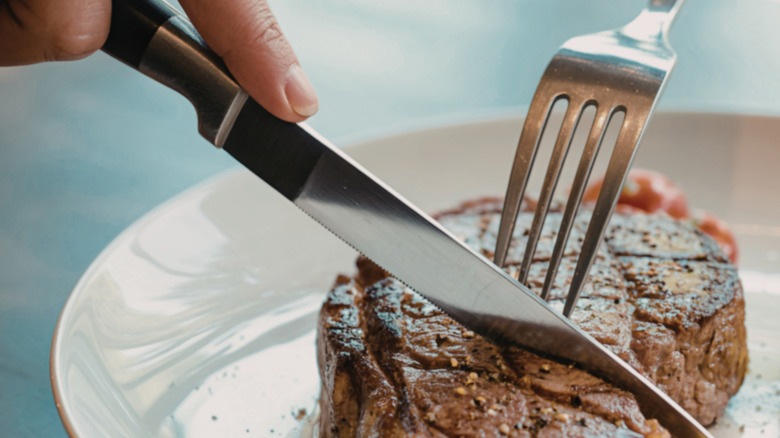
The issue with structuring a diet predominantly around one nutrient is that it can lack dietary balance. If you're primarily protein augmented with some fermented foods, you risk limiting the nutrients that you put into your body. Ideally, you should spread your calories across a variety of foods to ensure you're getting a smorgasbord of vitamins, minerals, and other healthful — and essential — compounds and substances.
For instance, Kennedy doesn't appear to eat a lot of fruits, vegetables, and nuts. That means he doesn't feed his system much fiber, and fiber has been associated with both gut and cardio health. Case in point, a 2022 review in Medicine in Microecology found a connection between higher intakes of fiber and lower incidences of inflammatory bowel disorders. And a 2025 review in Nutrients concluded that upping fiber intake could decrease a person's chances of developing cardiovascular disease.
Fiber also helps with bowel regularity. Therefore, you could wind up struggling with constipation and its side effects, like bloating and abdominal discomfort, if you concentrate on eating protein at the expense of other nutrients.
Making up for a protein-heavy diet

Animal food sources also don't offer up much vitamin C, a highly beneficial antioxidant. That said, one simple way to make up for a vitamin C shortfall (or any vitamin shortfall, for that matter) is through extra supplementation, which Kennedy said he does while on the Lex Fridman podcast (via YouTube). In fact, Kennedy said at the time that he takes so many different vitamins that he can't list them all.
This doesn't mean that protein diets are all bad for your body, though. They do work for some people who may find it difficult to otherwise stay at a healthy weight. Additionally, a 2019 study in Advances in Nutrition showed that eating a protein-based paleo diet might carry some cardioprotective advantages.
Whether or not you decide to copy Kennedy's diet, you should also be aware that your body won't look as muscular as Kennedy's unless you commit to exercisingas diligently as he does. Eating a larger amount of protein may stimulate weight loss, but you can't build muscle unless you're engaging in activities like weight lifting and hiking (two mainstays for Kennedy) as well.