

The Trump Administration Has Reintroduced The Food Pyramid Despite Previous Health Concerns

In a move that they say is aimed at "rebuilding a broken system from the ground up with gold-standard science and common sense," the Trump Administration unveiled what they are calling "The New Pyramid." This reenvisioning of the original food pyramid aims to make whole foods — those that are "whole, nutrient-dense, and naturally occurring" — the centerpiece of a healthy eating plan. The new pyramid additionally appears to flip previous nutrition advice on its head, placing the priority on protein, dairy, healthy fats, vegetables, and fruits. Whole grains appear at the smaller tip of the pyramid with a recommendation to eat only 2-4 servings per day.
Background information for the 2025-2030 Dietary Guidelines for Americans further notes that 50% of Americans have either prediabetes or diabetes, and 75% of adults have at least one chronic condition. Additionally, 90% of healthcare spending goes to treating chronic disease linked to poor diet and lifestyle choices. The new recommendations are meant to reverse this trend (via realfood.gov).
Prior to this most recent update, the USDA used MyPlate to dispense customized eating advice. This simplified format helped users visualize appropriate serving sizes of grains, vegetables, fruits, diary, and protein on a color-coded plate. However, some say the new food pyramid may not entirely be an improvement.
Is the new food pyramid really healthier?
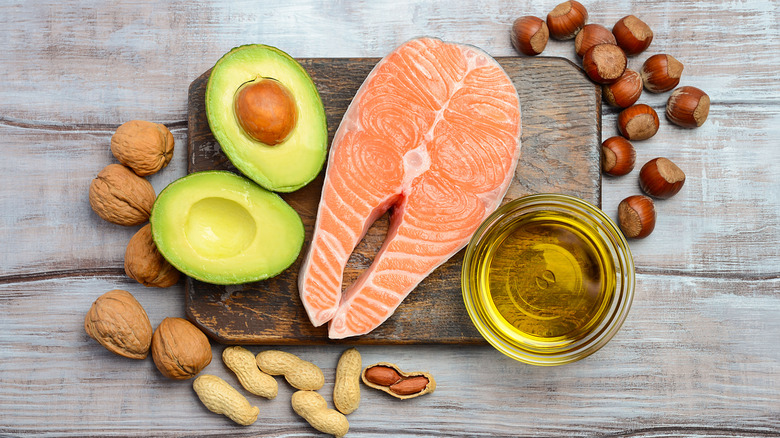
While the new food pyramid's emphasis on whole foods over processed has been lauded, some health experts point out that its heavy inclusion of red meat and animal fats contradicts previous advice to eat less saturated fat and more unsaturated fats such as olive oil. "I know of no evidence to indicate that there would be an advantage to increasing the saturated fat content of the diet," Alice Lichtenstein, senior scientist at the Jean Mayer USDA Human Nutrition Research Center on Aging at Tufts University, told Scientific American. However, the same article noted that the new guidelines advise eating no more than 10% of your calories from saturated fats.
The American Heart Association expressed additional concerns that salt seasoning might lead individuals to overconsume sodium which is also risky for heart health. They further stated that more research is needed on both the amount and type of protein that is best for health. "Pending that research, we encourage consumers to prioritize plant-based proteins, seafood and lean meats and to limit high-fat animal products including red meat, butter, lard and tallow, which are linked to increased cardiovascular risk," they wrote.