

Pete Hegseth Admitted To An All-Too-Common Hygiene Habit That Puts His Health At Risk
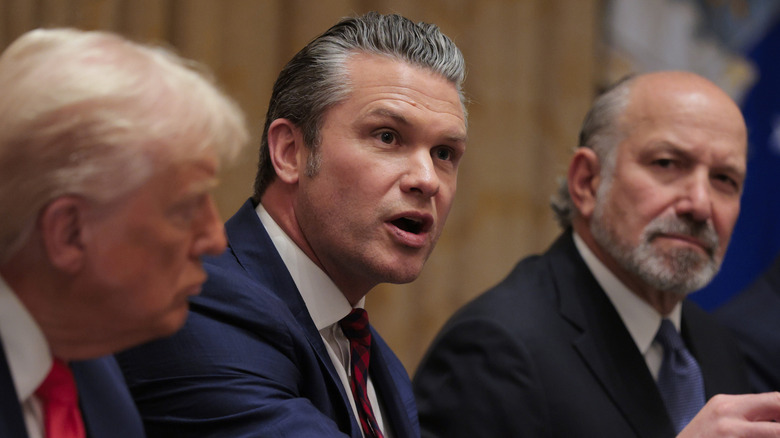
Although Pete Hegseth was made the United States secretary of war under the Trump administration, he seemed unwilling to wage much of a fight against germs in 2019. That year, he claimed that he hadn't washed his hands in a decade while on a live broadcast with his then-colleagues from Fox News. He even added that germs were not "real," an opinion that quickly stirred up social media.
Shortly after his comments aired, Hegseth confessed that his statement was a joke and not a factual admission about his hygiene habits. However, he didn't do a complete 180: He made a point to admonish people who fastidiously clean their hands. To that end, he said that "we live in a society where people walk around with bottles of Purell in their pockets, and they sanitize 19,000 times a day as if that's going to save their life."
From his reaction, Hegseth sounds as if he may not realize that handwashing genuinely may help some people avoid life-threatening diseases, especially those who are more at risk of contracting illnesses. As the World Health Organization (WHO) explains, around 70% of healthcare employees around the globe fail to wash their hands. As a result of being cared for under unsanitary conditions, more than 400,000 children and mothers die annually.
Why proper handwashing matters

The issue with failing to keep your hands clean is that you can unintentionally pass dangerous germs, diseases, bacteria, and viruses to your friends, family, and even strangers. Merely touching a shared surface like a doorknob can allow colds, viruses, and infectious diseases to transfer to someone else.
Take the seasonal flu, for instance. The flu virus can travel from one person to another, ultimately leading to potentially expensive problems. WebMD reports that the flu wreaks havoc on employees, employers, and the economy to the tune of billions of dollars every year. The U.S. Centers for Disease Control and Prevention warns that diarrheal infections and respiratory illnesses can spread through unwashed hands as well. But washing your hands can cut down on preventable diarrhea episodes by up to 40%, colds by up to 21%, and stomach illnesses in children by as much as 57%.
(These habits are spreading more germs than you realized.)
It's a good idea to follow the basic philosophy of washing your hands for 20 seconds with warm, soapy water after going to the bathroom, preparing or eating food, or touching grimy (and germy) surfaces. However, a surprising number of people just aren't willing to take the most minimal measures to protect their own (and others') health. (You might want to make sure you're not washing your hands completely wrong, just to be sure.)
A shocking number of folks don't like to wash their hands
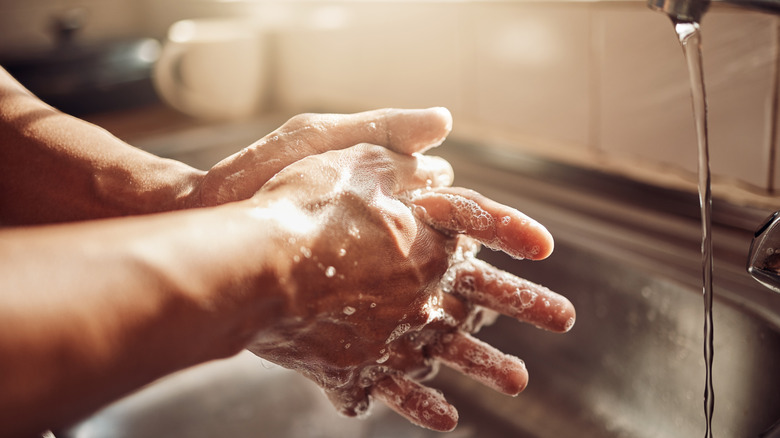
How many people simply don't wash their hands at all? More than you might think: 2025 data from the National Foundation for Infectious Diseases showed that around one in every five people simply doesn't partake in handwashing — ever. Their reasons for not reaching for soap included a feeling that it was "unnecessary" or took up too much of their time.
To be fair, Hegseth has repeatedly made it clear that his declaration in 2019 was more silliness than sincerity. (This may be good, considering Donald Trump has gone on record as a self-proclaimed germaphobe.)
Nonetheless, Hegseth's offhand joke seems to be following him, as it resurfaced on Twitter in 2024 around the time he was originally floated as a secretary of war candidate. This isn't the first time he's been questioned about his behavioral choices, either. Hegseth has been called out for having a controversial eating habit: violating the five-second rule.