

If You Really Care About Kate Middleton's Health, You'll Stop Talking About Her Weight
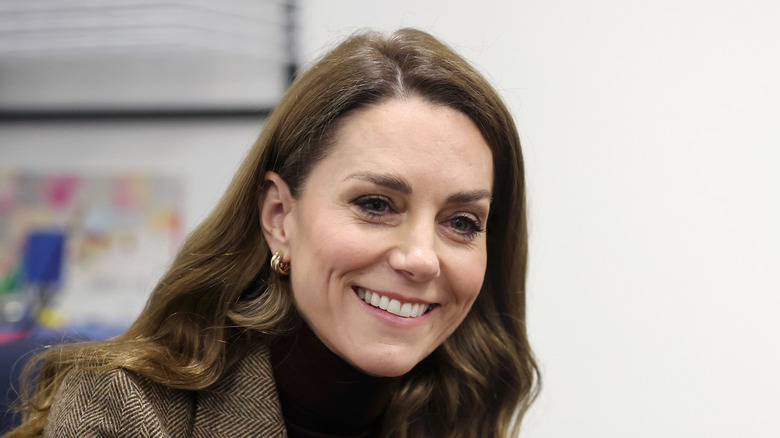
When Catherine, Princess of Wales, revealed in 2024 that she had undergone cancer treatment, the news prompted an outpouring of public support. She later shared that she had received preventative chemotherapy and, as of early 2026, had been in remission for about a year (via ABC News). Recovery from cancer therapies such as chemotherapy can affect a patient's ability to regain weight, according to the National Cancer Institute.
 Wpa Pool/Getty
Even so, by late 2025, her already thin frame seemed noticeably thinner in photographs. As a result, many fans began wondering online about what was causing her to seemingly drop pounds. Though a significant number positioned their thoughts as caring, they actually might have been making it harder for the Princess of Wales to speak up or, if needed, get help. This isn't to suggest that an eating disorder was behind Middleton's svelte silhouette; she may just as likely have been experiencing an outcome from the serious health condition she faced. However, in the era of real-time social media, your concerns could reach that person — and the world — in seconds. Vividly highlighting someone's possible health issues can lead to unintended and detrimental consequences, especially if it causes them to shy away from getting needed help.
Making it harder to seek help

It may sound counterintuitive to imagine that observing someone's dramatic weight change could cause the person to want to hide the root cause. However, a 2025 study published in the Journal of Eating Disorders shows that as stigma builds, people dealing with weight-related disorders tend to shy away from seeking a solution for their difficulties.
For the study, 146 subjects (mostly women) completed a survey and assessments to determine their level of perceived stigma around a hypothetical person with anorexia nervosa (one type of eating disorder). The results showed that the people who stigmatized the condition tended to place blame on those with the disorder. As a consequence, the study concluded that the person with the disorder was less apt to take positive behavioral steps toward treatment.
The U.S. Centers for Disease Control and Prevention has noted this relationship between feeling stigmatized and delaying help, particularly in the realm of mental health disorders. In fact, public stigma (the kind Middleton would likely experience) is one of the types of stigma that is listed. (As a side note, eating disorders are officially classified as mental health disorders.)
To be sure, Middleton's weight has brought her media attention previously. For instance, in 2011, ABC News called her "wisp-thin" when covering her wedding to Prince William. (She may have tried a fad diet at the time, according to reports.) And a 2025 piece in Yahoo! News described her as "fragile" after her chemotherapy treatments. In other words, the buzz around her weight isn't new, but that doesn't negate its potential to hinder her next health steps. With the speed and scale of public commentary, it's wise to remember that even remarks framed as concern can add pressure during an already stressful period of a person's life.