

Why Donald Trump's Reaction To JD Vance's Weight Loss Is Just As Bad As Fat-Shaming
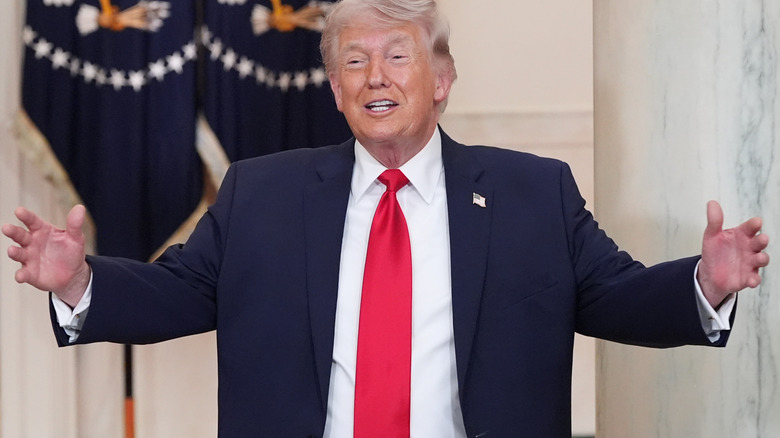
Donald Trump has a long history of talking smack about people's weight. As an NBC News collection of his fat shaming shows, Trump has insulted the figures of everyone from Rosie O'Donnell to Kim Kardashian. He also recently said his friend "was fatter than ever" after taking a GLP-1. In other words, he can be weight-focused. But he did give unexpected praise in April 2026 to JD Vance for his trimmed-down physique.
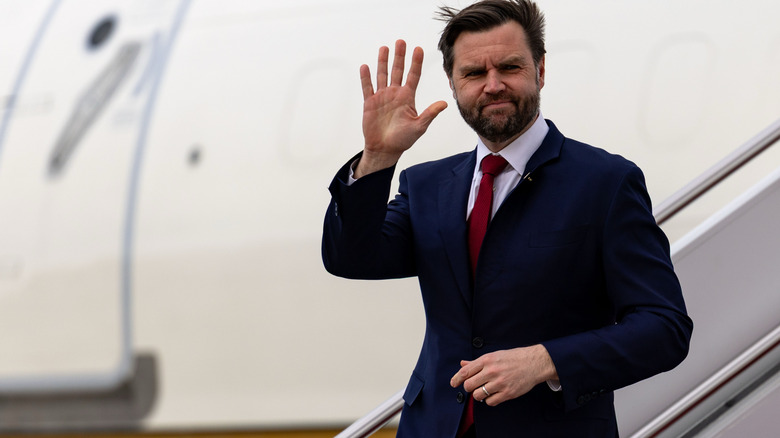
Trump complimented the vice president during a speech at the White House. Trump seemed to be unable to find Vance in the crowd at first, saying he was looking for a "heavyset gentleman" but instead found a man he described as "perfect-looking specimen" because Vance "got a little thinner."
Trump is currently at "calling ppl fat in public" level dementia https://t.co/VFDQlS2o2V
— Jay Jurden (@JayJurden) April 1, 2026
Strange wording aside ("specimen"?), Trump's comments looked on the surface like genuinely good-hearted compliments that elicited gentle chuckles from the crowd. However, medical experts say that calling out someone for losing weight can be just as bad as body-shaming them for carrying too many pounds.
What's so terrible about congratulating someone publicly for losing weight? For one, some people unintentionally get thinner due to serious illnesses or stressful life situations. And although some people have celebrated sickness-related weight loss — including Kardashian, who posted pics of herself in a skin-tight outfit on X with the comment "flu got me like..." — it's not a healthy practice.
How weight loss comments may influence self-worth
In 2017, National Eating Disorders Association's then-CEO, Claire Mysko, talked to Self about the harm that can come from heralding someone's weight loss, whether from sickness or for another reason. "It really, really emphasizes how skewed our thoughts and mindset around weight are in this culture — and that can be particularly dangerous for people who are struggling with eating disorders and disordered eating." (By the way, male eating disorders are surprisingly common.)
An associated concern revolves around the implication that weighing less is superior to weighing more. As licensed social worker Lindsey Cope explained to Verywell Mind, "When we praise weight loss, we're reinforcing weight stigma, which harms people in all sized bodies by setting thinness as the ultimate goal."
Doctor of Psychology Rachel Needle shared (via Psychology Today) that receiving compliments after losing 100 pounds made her uneasy. "I don't want my body being the focus of everyone's attention," she said. "And when people say, 'You look great now!' — what does that mean? Did I look bad before?"
Arguably, Trump's words do seem to imply that Vance has somehow "improved." With that said, Vance's weight loss journey is something that the vice president has openly talked about. In 2024, he was upfront about losing 30 pounds by skipping breakfast and exercising more. At the time, he also denied using Ozempic to help him shed some excess weight.