

Richard Simmons' Best Health Moments In Photos From The '70s To His Death In 2024
We may receive a commission on purchases made from links.
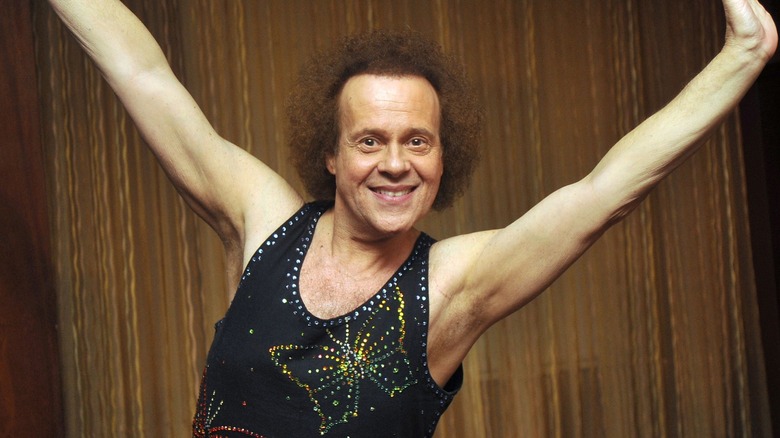
Some people were just destined to capture the public's attention for decades, like fitness icon Richard Simmons. After making his way into the celebrity scene in the 1970s, he stayed there until his death in 2024.
As a fitness instructor, Simmons strived to make workouts engaging and entertaining for people, regardless of their age, weight, or fitness goal. Before becoming a fitness influencer (and before influencers were even a sparkle in anyone's iPhone), he was one of many celebrities who have lost over 100 pounds, so his approach came from personal experience. As he told The New York Times in the early 1980s, "I was always the first in line for lunch, and the last to be chosen for sports. I know how it feels."
It was his refreshing aura of authenticity that made Simmons appealing as an exercise advocate. At a time when people were being told "no pain, no gain" (an '80s workout catchphrase that sounds ridiculous today), he stood out as a more empathetic coach — and his health moments, now immortalized in various photos throughout the decades, became ingrained in the collective psyche of people around the world who found him a motivating, fascinating figure.
1970s: Richard Simmons' breakout years
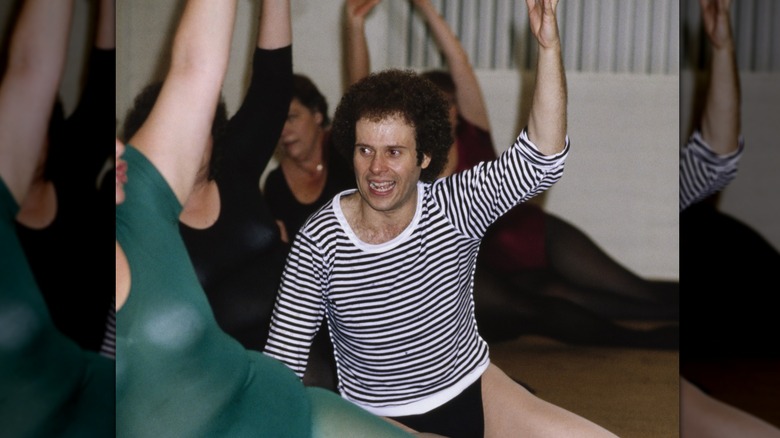
In a retrospective on Richard Simmons after his death, The New York Times heralded him for launching a different kind of aerobics in the 1970s. He added a dose of fun and what historian Natalia Mehlman Petrzela called "performativity" into his classes, while clad in what would be his hallmark exercise outfit of colorful tank tops and skinny Dolfin shorts (in 2012, he told Men's Health that he had 400 pairs, many from fans).
Simmons once described himself as "a clown and a court jester." He made the most of his bold persona as the face behind his Beverly Hills studio, Anatomy Asylum (eventually renamed Slimmons), where his journey toward becoming a health-based celeb began.
1980s: A scene-stealing soap opera guest star
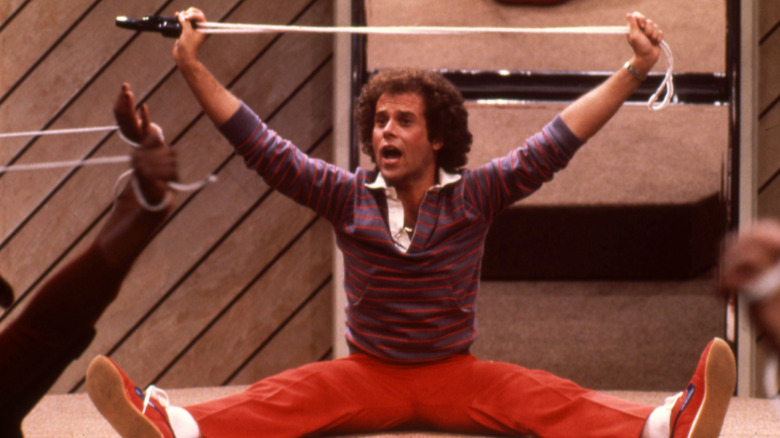
In the early 1980s, Richard Simmons played himself on "General Hospital." On screen, he gave fitness and dance studio advice to the characters. "[My character] would teach exercise classes in a disco for all the ladies on the show," he shared on his website.
Interestingly, his appearance on "General Hospital" wasn't the first time Simmons acted. As a teenager, he lived in Italy for a time and was cast in a couple of Federico Fellini films, as well as in a few commercials.
1980s: Releasing an 'inspiring' book about fitness and weight loss
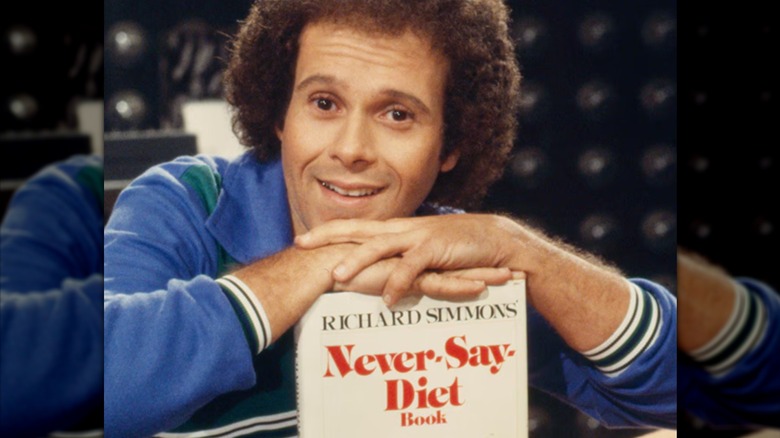
When you've lost 100 pounds and risen to fame as a workout guru, people are bound to be curious about your fitness routine and eating habits. Richard Simmons released a book titled "Never-Say-Diet" in 1982. Featuring Simmons' ”Live-It Food Plan” and peppered with colorful commentary and stories about his life, "Never-Say-Diet" became a bestseller. Currently, it has a rating of 3.68 out of 5 on Goodreads, with commenters describing the book as "innovative," "inspiring," and "refreshing" and praising Simmons' writing style.
1980s: The Richard Simmons Show
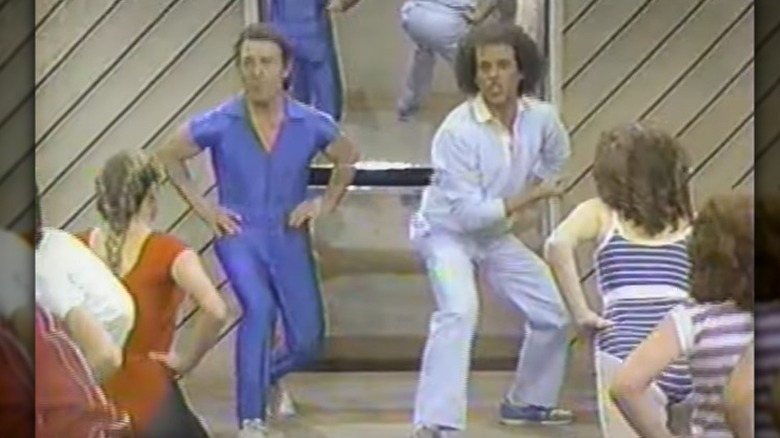
Richard Simmons landed his own show in the 1980s, aptly named "The Richard Simmons Show." It was a mix of entertainment, comedy, healthy eating recommendations, and lots of exercise and motivation.
"The Richard Simmons Show" won four out of the seven Daytime Emmy Award nominations it received. Although the show ended after four years, it only seemed to make Simmons more famous. Simmons would go on to host another show in 1999, this one called "Dream Maker," but the series, which focused on fulfilling the wishes of ordinary people, only lasted a year.
1980s: Sweatin' to the Oldies
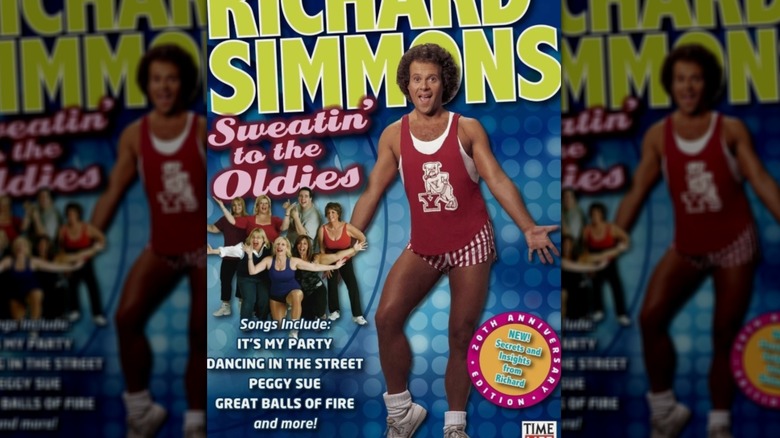
Many know Richard Simmons because of his "Sweatin' to the Oldies" series of VHS workout tapes from the '80s. In "Sweatin' to the Oldies," Simmons took viewers through a wide range of dance-like moves. His tapes sold more than 20 million copies, proving that people were hooked on Simmons' signature flamboyant style.
Though "Sweatin' to the Oldies" may sound like an outdated, cheesy exercise trend, people who have tried the workouts say that they actually still hold up quite well today, landing this outside of the camp of fitness trends that completely disappeared.
Engaging with audiences and celebrities for decades
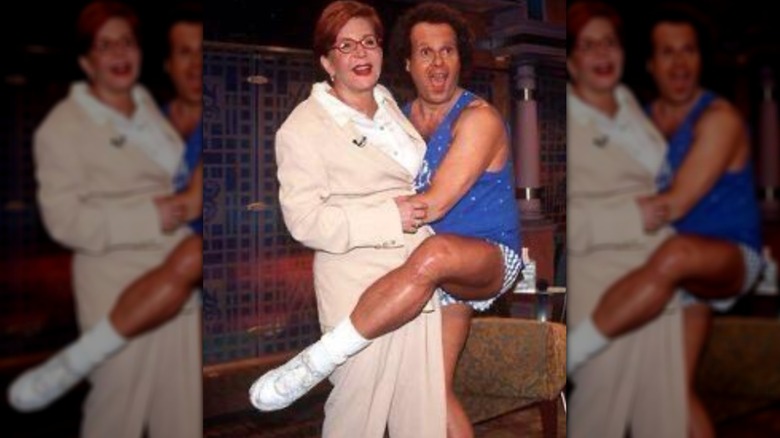
Richard Simmons became a frequent TV guest from the 1980s through the 2010s. For instance, he made Sally Jessy Raphael and Jay Leno laugh heartily in the 1990s. (Raphael tweeted at the time of his death: "I am completely devastated at the loss of @theweightsaint [...] I considered him a dear friend who changed so many lives.") In the 2000s, he appeared on "The Ellen DeGeneres Show," joking about his "illegal" shorts. He also popped up in an episode of "Whose Line Is It Anyway?" in 2003 and coached Chaz Bono and Lacey Schwimmer on "Dancing with the Stars" in 2010.
2000s: Advocating for fitness
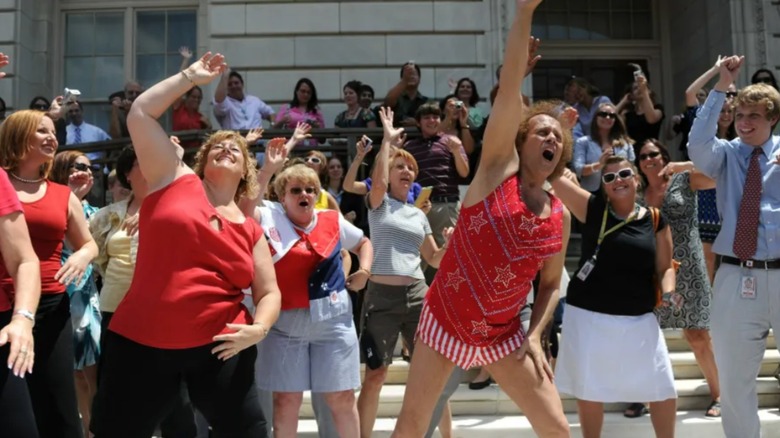
Though Richard Simmons leaned into humor during his career, he was most passionate about advocacy for fitness. In 2008, he went to Capitol Hill to talk about his vision for improved health for all children to lower rates of obesity and related conditions (via NPR). "There's a statistic that says our children today will not live as long as their parents," he testified before Congress. "What have we done to the kids of the United States of America? This is wrong!" Perhaps unsurprising, during his visit to Washington, D.C., he held a workout routine, making sure to get the political staffers moving.
2000s and 2010s: Showing off for the cameras
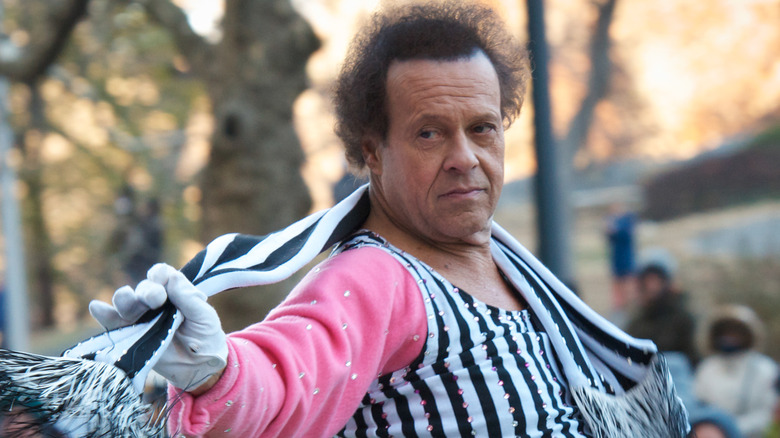
Until the mid-2010s, Richard Simmons spent much of his time in the spotlight. In 2006, he hosted a Summer Salad Fashion Show. Then, in 2013, he showed up at the Macy's Thanksgiving Day Parade on a giant turtle float. Wherever Simmons went, he drew crowds and cameras, giving him a unique platform to share his messages about inclusive fitness and positivity.
It wasn't until 2014 that Simmons began to withdraw from the public eye. In 2024, a few months before he died, Simmons posted on Facebook that he was simply "[trying] to live a quiet life."