

Are These Impractical Beds Once Loved By Boomers More Hygienic Than Most Mattresses?
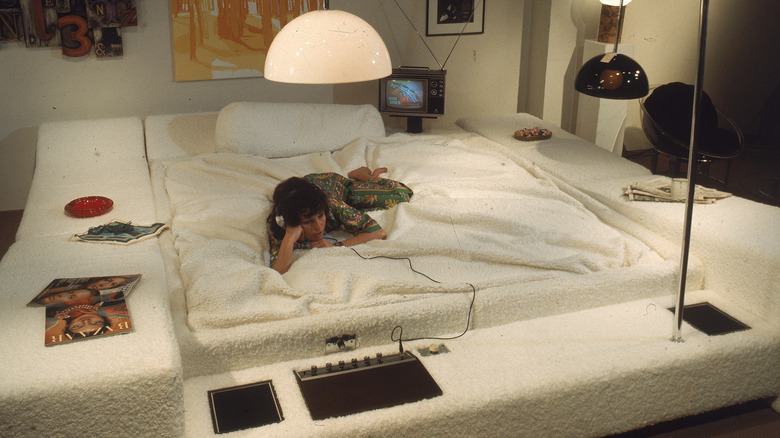
Boomers tend to dispense a lot of outdated hygiene advice that millennials can't stand. From refrigeration storage practices to handwashing routines and even boomers' deep-seated infatuation with bar soap, there's a lot that the two generations have had to learn to agree to disagree on. As it turns out, the boomers' love of waterbeds is no different. First invented for personal use in the late '60s, waterbeds are made of a non-porous material that, according to some boomers, makes these so-called "pleasure pits" not only easier to keep clean, but also less resistant to dust mites and allergens. However, there's not much real evidence that supports that notion.
In reality, mattresses can harbor some pretty serious allergens. "Over time, mattresses can accumulate sweat, dead skin cells, dust, bugs, mold, allergens and a wide variety of germs — including bacteria and viruses," Kelly A. Reynolds, professor and director of the Environment, Exposure Science and Risk Assessment Center (ESRAC) at the University of Arizona College of Public Health, told TODAY. And according to a 1991 study published in Clinical & Experimental Allergy, heated water mattresses aren't any less susceptible to accumulating dust mite allergens than their more traditional mattress counterparts. (Sorry, boomers.)
But that's not all: Waterbeds also have a bad rep for growing mold inside and on top of them, and they're prone to leaks. "Waterbeds aren't just risky for your sleep; one leak could mean serious damage to your home," David Cartlidge, vice president of product innovation at Mattress Firm, cautioned during an interview with Better Homes and Gardens about waterbeds and their purported comeback.
Are waterbed enthusiasts responsible for the hygiene claims?
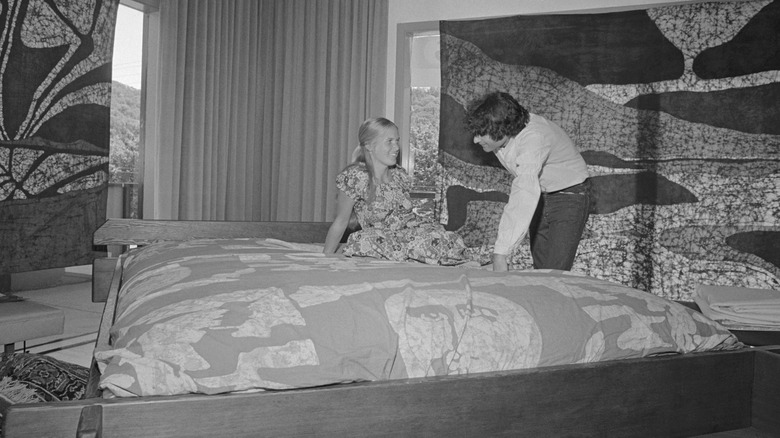
So how exactly did the rumor that waterbeds were somehow more hygienic than traditional mattresses get started in the first place? Perhaps boomers just got a tad too carried away while singing the waterbed's praises. "It was new, it was exciting, it was different, it was sexy, it was fun," Denny Boyd, former president of the Waterbed Manufacturers Association, told the Los Angeles Times in 2024. "It was our generation's bed," he declared. Basically, everyone had one in their home in the '80s (and honestly, our joints are terrified of the comeback).
But that's not all. Even Charles Hall, the inventor of the waterbed in 1968, claimed that waterbeds were the superior option in terms of hygiene. "If you weigh a regular mattress after it's been used for a few years, it will be heavier than when you bought it. That's because it will be filled with your sweat and skin cells, and the dust mites and bedbugs that feed on them," Hall told the New York Times in 2018 while showing off his brand new redesigned waterbed aptly titled "Afloat."
Are waterbeds really better for your back?

There are also claims that waterbeds are better for your back than regular mattresses, but it appears there's little evidence to support that idea as well. "Water beds are not going to do anyone any harm,” Dr. Neil Kahanovitz, the chief of back surgery at the Hospital for Joint Diseases in Manhattan, told the New York Times. ”I have never seen anyone who said his back pain began when he started sleeping on a water bed, but I also don't think water beds will make a patient with back pains better.”
According to Dr. Leigh Hanke, physiatrist and assistant professor of clinical orthopaedics at Yale School of Medicine, the best mattress for your back is one that provides the best support. "A mattress affects how your spine is supported during sleep. Sleeping for eight hours — that is one-third of the day — on a bad mattress (that doesn't offer sufficient support) can lead to poor sleeping posture and subsequent back pain," Dr. Hanke told Forbes in 2021. And unfortunately, the wrong mattress can wreak havoc on your body in a plethora of ways. "Sleeping on the wrong mattress can inhibit your body's ability to rest and recover — which can lead to 'sleep debt' that can have a domino effect causing lessened productivity, more aches and pains and a weak metabolism," internal medicine physician Dr. Vivek Cherian shared in the same article.