

Salt Pork And Roast Skunk: What Diets Were Really Like On The 19th-Century Prairie
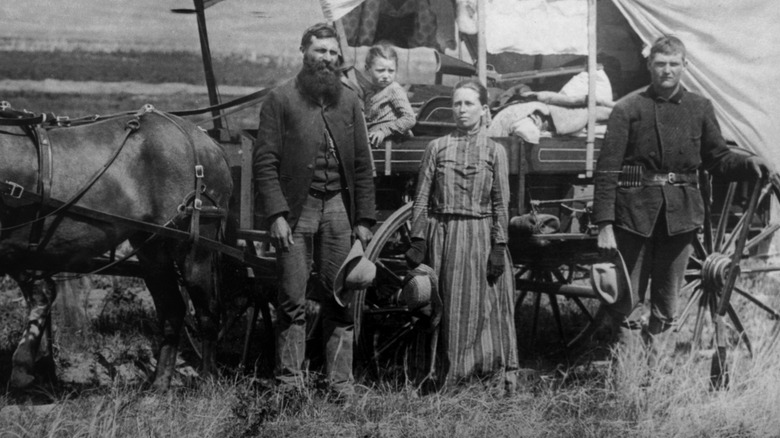
When it came to the 19th-century prairie diet, frontier folks didn't turn down anything that could potentially be edible (or just barely so). In a world where deadly frontier hygiene mistakes were common and ingredient scarcity was a semi-regular occurrence, prairie families were rather creative with their recipes.
Take roast skunk, for example. To the modern mind, a skunk is a rodent that you'd rather not hit with your car. Yet to a pioneer, a skunk might be the only meat available. There were other unusual meat sources on the menu, too; a late-1800s housekeeping guide has recipes for barbecued squirrel and broiled partridges. They also had salt pork and other preserved meats that could help them last through terrible weather conditions when food was scarce.
Basically, a pioneer's goal in preparing dishes like collagen-rich calf's foot jelly was to use whatever they could hunt or forage to sustain them and their families. That meant the average 19th-century frontier cook had to be skilled in making use of unconventional ingredients (e.g., animal innards) so as to not let them go to waste and allow their loved ones to starve.
The typical prairie diet was high in calories, fat, and carbs
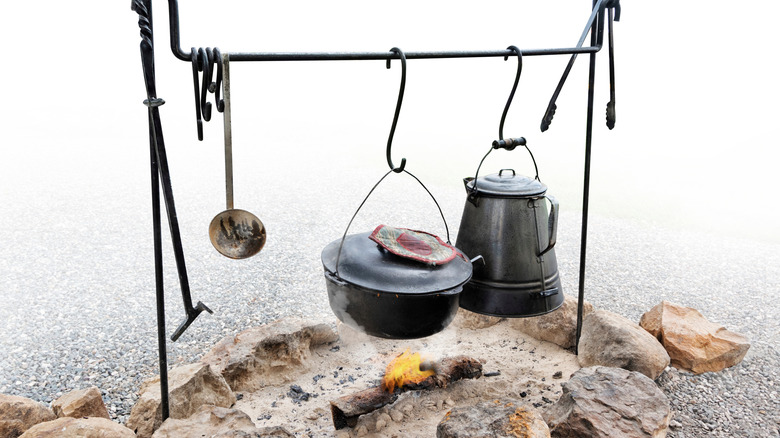
Settlers brought in and stored certain foods whenever they had the chance. A well-stocked frontier kitchen included salt, pepper, coffee, tea, flour, cornmeal, bacon or salt pork, beans, some type of animal-based fat (such as lard or butter), dried fruits, and molasses. Since most of the pioneers' cuisine incorporated those staple items into breakfasts, lunches, and dinners, the average prairie dweller consumed a lot of fats and carbohydrates, totaling around 2,600 calories per day.
This doesn't mean that prairie families didn't have fresh vegetables, fruits, meat, or dairy. When they did, they canned, dried, smoked, and preserved the perishable foods they had. However, when the remainder of their once-fresh foods ran out, they had to improvise until they could get more, which also meant subsisting on foods that were easy to prepare and made from shelf-stable ingredients (like cornmeal mush).
With such a starchy, fatty, and high-calorie diet, you might assume that the average settler would be overweight. On the contrary, pioneer men, women, and children were incredibly active and burned calories constantly because they put so much energy into their survival.
Prairie food filled bellies but lacked variation
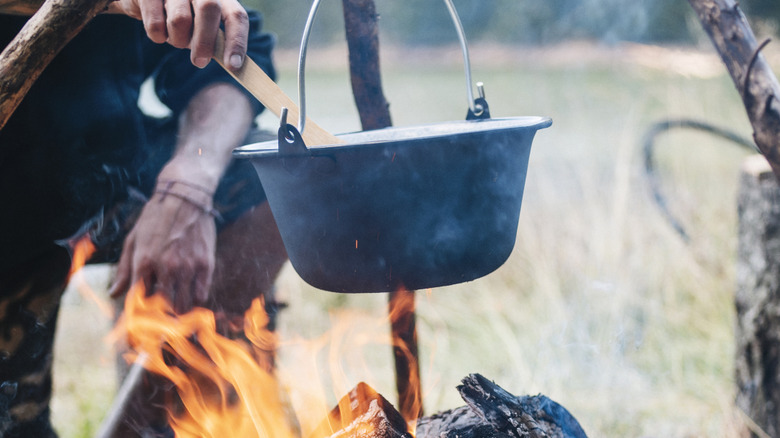
The hardest-to-accept aspect of prairie eats was perhaps the lack of variation. Folks today would be probably be bored by the fare, but if you were living more than a century ago, you'd likely just be relieved to have something to eat each day. Plenty of homesteaders ate the same dishes daily, although they tried to switch up flavors when they could.
For instance, stew was a common kitchen-table sight. Made from leftovers, stews could offer unique tastes. A popular stew was the Never-Go-Bad Perpetual Soup, which, according to travel writer Horace Kephart, was made from "clean ends of game — heads, tails, wings, feet, giblets, large bones — also the leftovers of fish, flesh, and fowl, of any and all sorts of vegetables, rice or other cereals, macaroni, stale bread, everything edible" (via Notes from the Frontier). Fresh-baked bread helped curb appetites and spruced up the taste and texture of meals as well.
While this diet provided sustenance for pioneers, it also affected 19th-century prairie life expectancy. Many ended up becoming nutritionally deficient, developing serious conditions such as scurvy (due to lack of vitamin C) and pellagra (caused by a lack of niacin). Though neither condition was the leading cause of death for pioneers, they could both be fatal.