

Is Bristol Palin's Face Still Paralyzed? Her Photo Update Leaves More Questions Than Answers

Sudden facial paralysis should always be taken seriously, as it can be one of the telltale symptoms of a stroke you shouldn't ignore. However, unexpected facial distortion isn't always caused by a potentially life-threatening cardiovascular event, as Bristol Palin discovered in January 2025 – and continues to grapple with a year later, according to a selfie taken in December 2025 (which was shared on X by The Daily Beast).

In January 2025, the former reality TV star (and daughter of politician Sarah Palin) shared on Instagram how she woke up one day to a "weird sensation" and felt her mouth "pulling" to the left (via Access Hollywood). Within hours, she had lost all sensation and facial control in that half of her face, making it impossible for her to close or blink her left eye or voluntarily move that side of her mouth.
Tests soon revealed that Palin had a condition called Bell's palsy, which is brought on by inflammation of the cranial nerve that controls facial functions. Bell's palsy doesn't have any definitive medical causes, although it may be brought on by hypertension, diabetes, or Lyme disease. In Palin's case, stress may have been the trigger.
Starting a new year with an uncertain prognosis
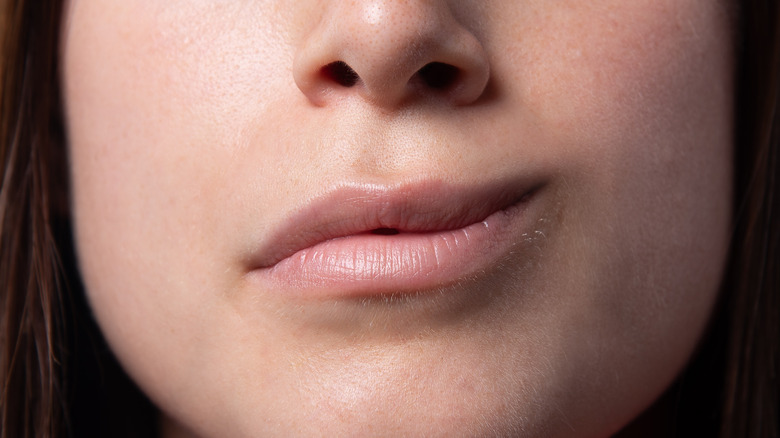
Although the outward symptoms of Bell's palsy (e.g., mouth sagging sideways, eyelid unresponsive and drooping) can be alarming, Bell's palsy isn't considered to be a serious condition. In fact, Bell's palsy usually doesn't last long and goes away within weeks or months. As explained by neurologist Dr. Timothy Hormel to Carilion Clinic, "Some might have lingering facial weakness or other issues, but this is rare. Once you've recovered from Bell's palsy, it rarely returns."
Unfortunately, the latest update from Palin indicates that she hasn't enjoyed a return to normalcy. In the December 2025 Instagram post, Palin revealed that she had made minimal progress despite varied treatments during the year, including steroids and acupuncture (both of which are accepted therapies for the disorder, per the U.S. National Institute of Neurological Disorders and Stroke). Palin may be one of the roughly 30% of people whose complete recovery is either delayed or only partial, according to a 2014 study in BMJ Clinical Evidence.
Despite her ongoing problems, Palin has remained upbeat on social media, calling attention to the "cute sunglasses" she now wears. And she said that if her condition doesn't get better, she intends to try Botox injections.